- WEB DESK
- October 17, 2026
LHC overturns order requiring woman to return 11 tolas of gold to husband for khula
-

- Talha Saeed
- September 1, 2026
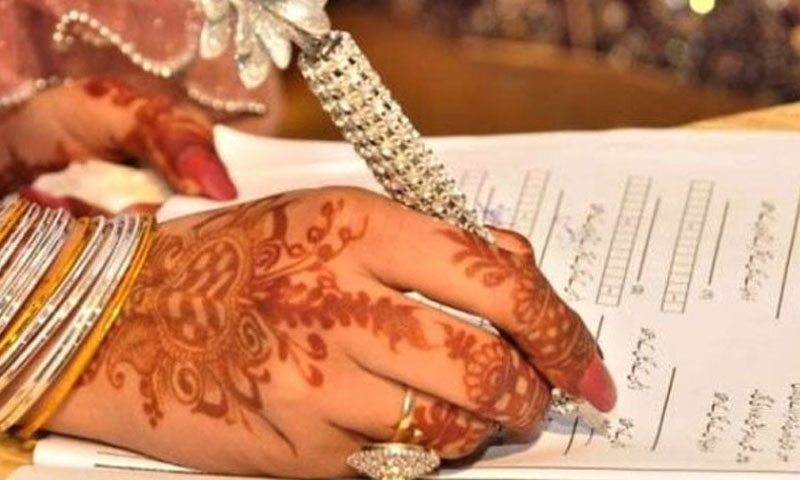
LAHORE: The Lahore High Court (LHC) has set aside a lower court’s order requiring a woman to return 11 tolas of gold, or its monetary equivalent, to her husband as compensation for obtaining khula, ruling that the record showed her father had provided the money used to purchase the gold listed as dower in the nikahnama.
LHC Judge Justice Raheel Kamran issued the detailed judgement while deciding a number of petitions and civil proceedings arising from a matrimonial dispute between Dr Rukhsana Kausar and Shahid Nazir.
The court partially allowed the woman’s petition and held that the husband was not entitled to the return of the 11 tolas of gold as consideration for khula. However, it upheld the lower courts’ findings rejecting her claim that 22 tolas of gold and other jewellery were retained by her husband.
The court also dismissed the petitions filed by the husband and maintained the lower courts’ decisions on the other disputed issues.
Background of the dispute
According to the judgment, Dr Rukhsana Kausar had filed a suit before the Family Court against Shahid Nazir on December 23, 2011, seeking dissolution of the marriage, maintenance for herself and their minor son Rohan Shahid, return of dowry articles and reimbursement of maternity-related expenses.
She had contended that before the marriage, the husband and his family had promised to provide a residential house and 11 tolas of gold as dower. However, they did not have sufficient financial resources to meet those commitments.
According to her, at the request of her husband and his family, her parents provided money for the purchase of the house as well as the 11 tolas of gold. The house and gold were subsequently entered in the nikahnama as dower.
She further claimed that her parents had given her 22 tolas of gold as dowry.
The woman alleged that because of her husband’s neglect, failure to provide maintenance and ill-treatment, she eventually left her matrimonial home with her minor son and went to live with her parents.
The husband denied the allegations, maintaining that he had purchased the house from his own resources and had also provided the 11 tolas of gold. He claimed that the woman had taken all the gold with her when she left the matrimonial home.
Family Court orders return of dower
During the proceedings, the Family Court dissolved the marriage through khula on April 28, 2012, and directed that the dower received by the woman be returned to the husband as compensation for khula. Proceedings on the remaining claims continued.
On October 31, 2018, the Family Court issued its decision on the other matters, partly accepting the woman’s claims.
It awarded maintenance for the iddat period, maintenance for the minor child and ordered the return of dowry articles. However, it rejected her claim seeking recovery of gold jewellery allegedly retained by the husband.
The Family Court also directed the woman to return the 11 tolas of gold mentioned in the nikahnama, or its value, to the husband as compensation for khula.
Her contention concerning the house was rejected because the husband had failed to establish that he had paid the purchase price.
Both sides challenged the judgment before the appellate court.
On February 20, 2020, an additional district judge largely dismissed both appeals but reduced the annual increase in the minor child’s maintenance from 15 per cent to 10 per cent.
Dispute over house purchase
The dispute over the house subsequently reached the civil courts as well.
The subsequent judgment stated that the woman had transferred the house to her father, Fazal Hussain Asim, through a tamleek — a transfer of property by its owner during their lifetime.
The husband challenged the transfer and filed a suit seeking cancellation of the tamleek. The woman’s father, meanwhile, filed separate pleas seeking possession of the house and profits from its use. The matters were tried together.
The husband’s suit challenging the transfer was eventually dismissed, while the woman’s father’s claim relating to possession was allowed and the husband was directed to hand over the property.
The parties subsequently brought challenges to those decisions before the LHC.
Court traces source of money used to buy house
While examining the dispute, the LHC found that the documentary record established a coherent financial trail showing that the woman’s father had arranged the funds through his foreign currency account abroad.
The money was converted into Pakistani currency and, through an authorised representative, a demand draft was obtained and deposited into the bank account of the husband’s brother. The amount was subsequently used to pay for the house.
The court found that the husband had failed to establish through documentary or other reliable evidence that he had himself provided the money for the purchase.
Since the house had been legally transferred and registered in the woman’s name, the court held that there was no legal impediment to her subsequently transferring it to her father.
The court also rejected the argument that the tamleek had become ineffective because possession of the property had not been transferred at the time.
Father provided money for 11 tolas of gold, court rules
The central issue before the High Court was whether the woman should be required to return the 11 tolas of gold mentioned as dower in the nikahnama as compensation for khula.
The court noted that the gold had been entered in the nikahnama as dower and had in fact been given to the woman. The crucial question, however, was who had provided the money used to purchase it.
After examining the evidence, the High Court found consistency in the woman’s account and those of her witnesses regarding the source of the money.
In contrast, the husband failed to establish through reliable evidence that he had the financial capacity or had actually provided the funds required to purchase the gold, the court observed.
The court also attached significance to a suggestion put to the woman’s father during cross-examination by the husband’s counsel.
The defence had suggested that the woman’s father had given money to the husband as a loan. The LHC held that this suggestion itself supported the woman’s position that her father had provided the money used for the purchase of the gold.
The court concluded that the lower courts had failed to properly assess the evidence concerning the source of the money and had therefore erred in directing the woman to return the 11 tolas of gold to the husband.
It accordingly set aside that part of the orders and ruled that the husband was not entitled to the return of the gold as compensation for khula.
Claim for 22 tolas of jewellery rejected
The high court, however, did not accept the woman’s separate claim that her husband was in possession of 22 tolas of gold and other jewellery.
The court noted that the woman had claimed that she left her matrimonial home for the last time wearing only the clothes she had on and that the jewellery remained with her husband.
However, the record contained inconsistencies regarding the circumstances in which she left the house.
The court also noted that her father had acknowledged that his daughter had worn jewellery at her wedding.
When the woman was asked about the production of a wedding video that could potentially shed light on the jewellery, she did not produce it.
The LHC held that, in these circumstances, the Family Court was justified in drawing an adverse inference against her and declining to accept her claim regarding the additional jewellery.
The court therefore maintained the lower courts’ findings on the alleged 22 tolas of gold and other jewellery.
Final ruling
The LHC partially allowed Dr Rukhsana Kausar’s petition and set aside the direction requiring her to return 11 tolas of gold, or its monetary equivalent, to Shahid Nazir as compensation for khula.
It held that the husband was not entitled to the return of the 11 tolas because the evidence established that the money for its purchase had been provided by the woman’s father.
The court dismissed the husband’s petition No. 26320/2020.
It also dismissed petition No. 23651/2026 and Civil Revision No. 23652/2026 concerning the house and maintained the decisions of the subordinate courts on those matters.
Thus, while the LHC granted relief to the woman on the specific issue of the 11 tolas of dower gold, it declined to interfere with the lower courts’ findings concerning her claim for recovery of 22 tolas of jewellery and other disputed matters.
You May Also Like

- AFP
- October 17, 2026