
- Reuters
- October 16, 2026
Marka-e-Haq anniversary: ISPR vows stronger response to any hostile move against Pakistan
-

- WEB DESK
- May 7, 2026
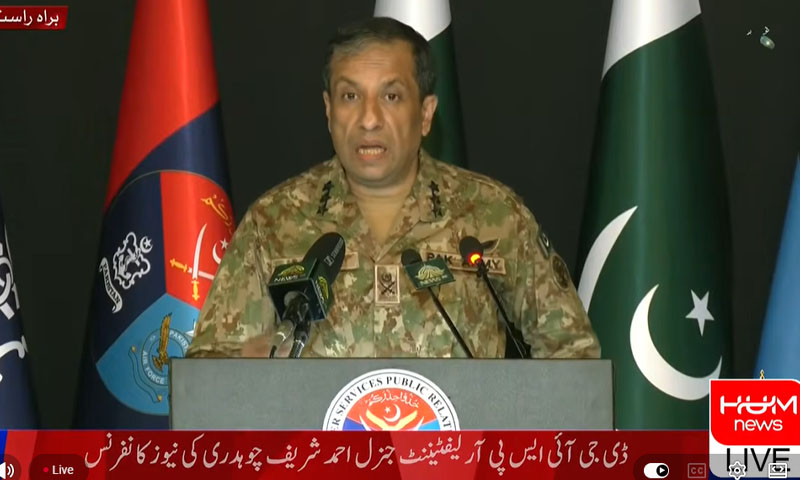
Pakistan’s armed forces have reaffirmed their commitment to safeguarding the country, warning that any future aggression would be met with a stronger and more precise response as the nation observed the first anniversary of Marka-e-Haq.
In a statement released on the night of May 6 and 7, the Inter-Services Public Relations (ISPR) said the occasion marked a significant chapter in Pakistan’s military history, particularly for the Pakistan Air Force (PAF). The military’s media wing said the operations carried out during the conflict strengthened public confidence, reinforced institutional determination, and highlighted the PAF’s growing operational capabilities.
The conflict, referred to as Marka-e-Haq, emerged after the April 22, 2025 attack in Pahalgam, which killed 26 people and sharply escalated tensions between Pakistan and India. The standoff eventually ended with a ceasefire announced on May 10 following Pakistan’s Operation Bunyanum Marsoos.
According to the ISPR, the PAF’s ongoing modernisation efforts and adoption of advanced technologies have transformed it into a future-ready force capable of handling modern aerial warfare and multi-domain operations. The statement described the military operations during the conflict as unprecedented and said they boosted national pride and resilience.
The military also stressed that Pakistan remains committed to peace and regional stability, while maintaining readiness to counter evolving security threats. It added that the armed forces continue investing in advanced systems and professional expertise to address future challenges effectively.
Reaffirming the country’s defence posture, the ISPR warned that any hostile action against Pakistan would receive a response “far stronger” than what adversaries experienced during Marka-e-Haq.
The statement also paid tribute to personnel of the Pakistan Air Force, praising their professionalism, sacrifices, and operational preparedness in defending the country’s airspace.
Tensions between the two nuclear-armed neighbours intensified after India blamed Pakistan for the Pahalgam attack, an allegation Islamabad denied. India subsequently suspended the Indus Waters Treaty, cancelled visas for Pakistani citizens, and downgraded diplomatic engagement.
The crisis escalated further on May 7, 2025, when missile strikes hit several locations in Punjab and Azad Jammu and Kashmir, causing civilian casualties. Pakistan responded by downing multiple Indian fighter jets, including Rafale aircraft. Days later, Pakistan launched Operation Bunyanum Marsoos after Indian strikes targeted Pakistani airbases.
A ceasefire was eventually announced on May 10, 2025, following overnight diplomatic efforts led by the United States.
You May Also Like

- WEB DESK
- October 16, 2026
Maryam Nawaz takes aim at Maulana Fazl over PTI support

- Reuters
- October 16, 2026
Tesla unveils flying car with rocket thrusters
- WEB DESK
- October 16, 2026