- Reuters
- October 13, 2026
Markets reopen in Peshawar as routine resumes after Centre’s emergency measures
-

- Alishba Khattak
- October 13, 2026
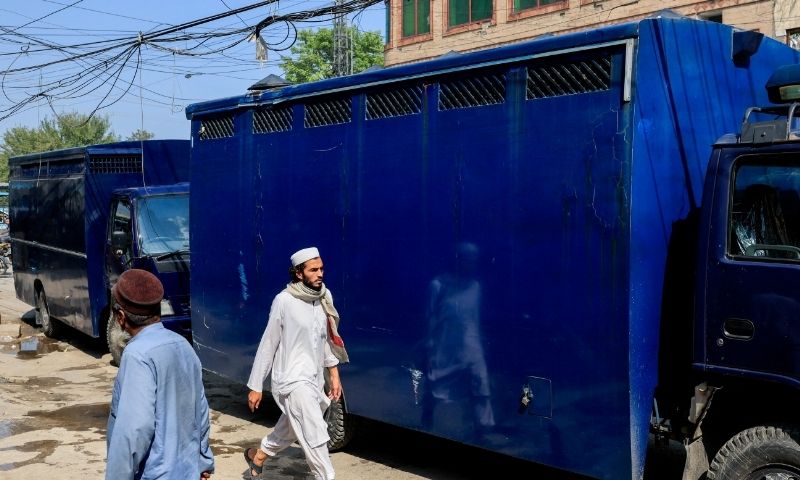
PESHAWAR: Normal life gradually returned to Peshawar on Tuesday, with major roads, markets and public transport services reopening following emergency measures and governor’s rule imposed on Sunday, although security remained tight across the provincial capital.
Authorities reopened key routes, including roads leading to the Red Zone that had been blocked with shipping containers over security concerns. The containers have been moved to the roadside, allowing traffic to resume, while police and other security personnel remain deployed in large numbers at sensitive locations to maintain law and order and prevent possible protests.
Security was tightened across the city on Monday ahead of a planned Pakistan Tehreek-e-Insaf (PTI) protest, following the federal government’s decision a day earlier to impose emergency measures and governor’s rule in KP. Authorities had blocked major roads, particularly in Peshawar Cantonment and areas leading to the Red Zone, while schools, colleges and universities were closed and public transport services suspended. Mobile phone and Wi-Fi services, which had also been disrupted, were subsequently restored.
Public transport, which had remained suspended for two days, resumed operations on Tuesday. Markets and commercial areas also reopened after closing on Monday amid security concerns, allowing routine business activities to restart.
Educational institutions have reopened in most areas, although schools remain closed in 12 districts, according to the latest update.
Despite the easing of restrictions, the road between Peshawar High Court and the Peshawar Press Club remains closed amid lawyers’ activities, with movement restricted in the vicinity of the High Court. All other major routes in the provincial capital have been reopened.
Security personnel continue to monitor the situation at key points across the city as authorities seek to prevent any untoward incident.
The return of traffic, public transport and commercial activity signals a gradual return to normalcy after days of disruption. However, security arrangements remain in place as the PTI maintains its opposition to the federal government’s measures, arguing that they undermine the province’s electoral mandate, and vows to continue its protest campaign.
Afridi, ex-KP cabinet members in ‘preventive custody’
Former KP chief minister Sohail Afridi and some members of his cabinet have been taken into “preventive custody” following the imposition of emergency rule in the province, State Minister for Interior Talal Chaudhry confirmed to Reuters on Monday.
“Yes, I can confirm that the chief minister and some of his cabinet members have been taken into preventive custody,” Chaudhry said. He said the detentions took place on Sunday, that those with cases against them would be charged and tried, and that the others would be released.
Reuters, citing witnesses and officials, reported that Afridi’s house and other important facilities nearby had been cordoned off, with a heavy presence of police, paramilitary forces and shipping containers. PTI aide Shaukat Yousafzai condemned the detentions and demanded the release of those held.
Government’s position
A day earlier, Interior Minister Mohsin Naqvi had declined to speculate on whether Afridi and his cabinet members would be arrested or remain in the province. He said anyone wanted in a criminal case would be dealt with according to law, while those in preventive custody would be released when circumstances permitted.
Deputy Prime Minister and Foreign Minister Ishaq Dar defended the move on Monday, saying the federal government had no alternative but to act to protect lives and property amid the province’s prolonged fight against terrorism. Speaking at a seminar on terrorism and regional security, he said the decision was not politically motivated. “When it comes to the safety and security of our nationals, our citizens, wherever they live in any part of Pakistan, I think it is the duty of the federal government,” he said.
What the emergency measures involve
The development follows the suspension of the PTI-led provincial government after President Asif Ali Zardari promulgated emergency rule amid a worsening security situation and rising tensions between the Centre and the PTI.
Under the measures announced on Sunday, the provincial government’s executive powers were transferred to the governor, and an 11-member advisory council was constituted to oversee provincial affairs. Twelve districts have been placed under a federal administrative arrangement overseen by the governor: Dera Ismail Khan, Tank, Lakki Marwat, Bannu, Bajaur, Mohmand, Khyber, Kurram, Orakzai, Upper South Waziristan, Lower South Waziristan and North Waziristan.
An Area Development Secretariat has been set up to oversee administration, security and development in those districts. The government has also authorised the deployment of army personnel under Article 245 of the Constitution to assist the civil administration.
The federal government has said the measures are aimed at restoring law and order and safeguarding citizens.