- WEB DESK
- October 25, 2026
Maryam Nawaz hails flamingo revival at Uchali Lake
-

- WEB DESK
- October 25, 2026
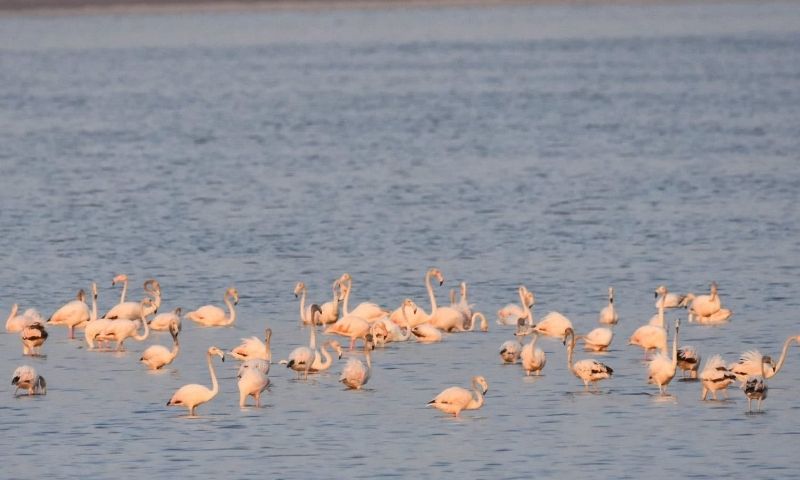
LAHORE: Punjab Chief Minister Maryam Nawaz Sharif has hailed an increase in flamingo numbers at Uchali Lake and their reported expansion into Muzaffargarh, describing the development as a milestone for biodiversity conservation, while the fragile wetlands supporting the birds continue to face environmental pressures.
In a post on X, Maryam Nawaz said that migratory and resident flamingo numbers at Uchali Lake had risen from 10 to more than 60 this season, with the birds also expanding into Muzaffargarh.
“A SPECTACULAR FLAMINGO REVIVAL IN PUNJAB!” she wrote, attributing the increase to statutory reforms, habitat restoration and stricter protection measures.
She commended the Punjab Wildlife and Parks Department for its efforts to protect natural habitats and restore biodiversity.
The announcement follows reports of flamingos returning to wetlands in southern Punjab after decades.
In June, the Punjab Wildlife Department reported the presence of eight flamingos at Rakh Khanpur Sanctuary in Muzaffargarh, describing their return as a positive sign for wetland conservation.
In July, a wildlife survey recorded 43 greater flamingos, including juveniles and a young chick, at the Rangla Wetland Complex near Muzaffargarh.
Researchers say the sighting raised the possibility that the birds were breeding locally, although further monitoring was needed to establish their movements and breeding sites.
Fragile wetlands face mounting pressure
Uchali Lake, located in the Salt Range, is part of the Uchhali Wetlands Complex, an internationally recognised Ramsar site that includes Khabbaki and Jahlar lakes.
The wetlands provide important seasonal habitat for flamingos and other waterbirds.
However, conservation assessments have identified several threats to the ecosystem, including declining water levels, rising salinity, diversion of water for irrigation, agricultural expansion, illegal hunting and disturbance caused by human activities.
The Ramsar site’s documentation has also highlighted pressure from livestock grazing, changes in land use around the lakes and the cutting of aquatic vegetation, which can reduce suitable habitat for birds.
Water quality is another concern. A 2023 study published in the journal Environmental Pollution examined heavy metals in Uchali Lake’s water and sediments, highlighting the need to monitor contamination and its potential ecological effects.
These pressures matter because flamingos depend on suitable shallow-water feeding grounds and adequate food supplies. Changes in water levels and salinity can alter wetland conditions and affect the availability of aquatic organisms on which the birds feed.
Poaching poses a direct threat
Illegal hunting remains another danger to flamingos and other migratory birds in Pakistan.
In June, the reported killing of flamingos at Islamabad’s Rawal Lake prompted concern among wildlife officials and conservationists.
An Islamabad Wildlife Management Board official said 12 to 13 flamingos were allegedly killed, although the exact number was still being established. Two people were subsequently booked in connection with the incident.
The incident underscored the importance of effective enforcement, regular patrolling and protection of birds at their resting and feeding sites.
Pakistan’s wetlands are under pressure from habitat loss, water scarcity, pollution, climate change and illegal hunting. Conservation experts have warned that degradation of these habitats threatens the many migratory species that rely on the country’s lakes, marshes and river systems.
Sustaining the recovery
The increase reported at Uchali Lake is an encouraging development, but a longer-term assessment would be needed to determine whether it represents a sustained recovery rather than a seasonal fluctuation or movement of birds between wetlands.
Conservation measures could include regular population counts, monitoring water levels and salinity, protecting feeding and potential breeding sites, preventing illegal hunting and strengthening coordination between wildlife, water management and local authorities.
Researchers have also called for more detailed tracking of flamingos in southern Punjab to establish their movements and identify possible breeding grounds that may require additional protection.
The challenge for authorities will be to ensure that the reported increase translates into a lasting improvement in the health of Punjab’s wetlands and the survival prospects of the birds that depend on them.
You May Also Like