
- WEB DESK
- October 30, 2026
Maryam Nawaz says she would let investors bring money without ‘questioning its source’
-

- WEB DESK
- October 30, 2026
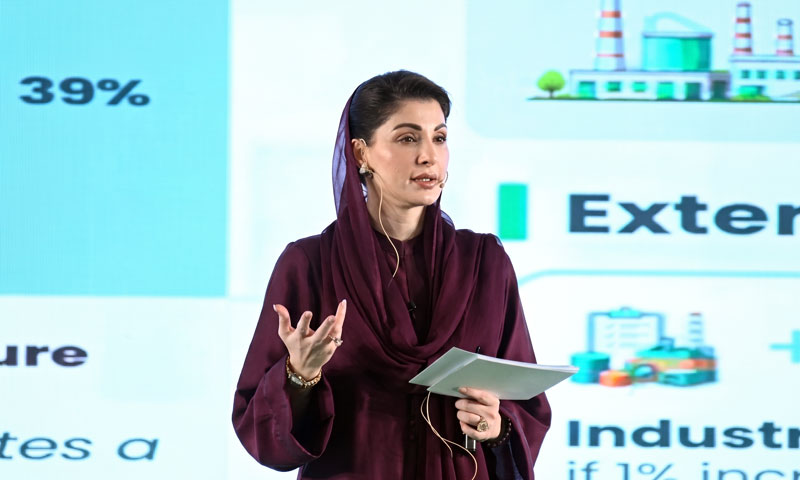
LAHORE: Punjab Chief Minister Maryam Nawaz on Friday said she would not ask investors “where their money comes from” if it were up to her, arguing that the province needs a business-friendly environment to attract investment and expand economic activity.
Speaking at the launch of the Punjab Innovation for Value Opportunity and Transformation (PIVOT) economic plan in Lahore, Maryam said she was nevertheless required to follow laws and regulations overseen by the federal government.
“If you are bringing a business, I wouldn’t ask where you are bringing the money from,” she said, adding that she had not imposed any new taxes in Punjab during the past two-and-a-half years.
Maryam described maintaining a zero-tax approach to new levies as a significant achievement and said the provincial government had worked to broaden the tax base.
She said the PIVOT plan was designed to address the problems facing businesses, including access to finance, expensive industrial land, energy costs and regulatory hurdles.
PIVOT aims to boost investment
Maryam described PIVOT as a homegrown economic transformation plan covering industrial value chains, agro-processing, livestock, aquaculture, skills development, tourism and the digital economy.
The programme aims to promote value addition, compliance, certification and export-led growth, she said.
Punjab, she added, had the country’s largest agricultural and industrial base and a substantial young population that could become an economic asset if supported by job creation and industrialisation.
She said lasting prosperity could not be built by remaining a consumer of goods produced elsewhere, arguing that Pakistan needed to become a creator, manufacturer and competitor in the global economy.
Maryam also highlighted the importance of law and order, saying businesses needed a secure environment for factories, workers and daily operations.
She recalled complaints from industrialists about workers being robbed of their salaries and factory owners facing kidnapping and extortion. Such conditions, she said, undermined the confidence businesses needed to operate and invest.
The chief minister urged government departments to avoid shutting down factories over regulatory issues without considering the impact on production and workers. She said environmental protection was important but called for warnings and compliance measures rather than immediate closures where possible.
Financing and fewer regulatory hurdles
Maryam said the provincial government had brought skills-development departments under one umbrella to better match training with the needs of businesses.
She said 400,000 young people had been trained over the past year and that another 600,000 were expected to receive training next year. The government was also working on internationally recognised certifications to improve workers’ employment prospects and earnings, she added.
On access to finance, she said the Asaan Karobar programme had provided Rs200 billion to small and medium-sized enterprises, supporting 117,000 businesses. She said the financing included both greenfield and brownfield projects, with loans available through different schemes.
Maryam also highlighted the e-Biz portal, through which businesses can apply online for licences, permits, no-objection certificates and other approvals.
She said 200,000 approvals had been issued through the system, which was intended to reduce delays and limit the need for applicants to visit government offices in person.
The chief minister urged banks participating in PIVOT to avoid excessively strict financing conditions and collateral requirements, saying businesses should not be discouraged from borrowing because of burdensome terms.
Industrial land and energy support
Maryam said the cost of industrial land could leave businesses with insufficient capital for machinery, infrastructure and working capital.
Under PIVOT, she said, businesses would be able to lease land in industrial estates and special economic zones for between Rs80,000 and Rs200,000 per acre per month, without making a large upfront payment to purchase land.
She criticised the practice of acquiring plots in industrial estates and later selling them at a profit without establishing factories or production units, saying industrial land should be used to promote manufacturing.
The plan also includes a one-time import duty waiver for machinery and equipment brought into designated industrial estates and parks, for which she cited an allocation of Rs50 billion.
Maryam said the government was also allocating Rs50 billion for solar and battery-based energy storage systems in industrial clusters to help businesses access cheaper energy.
Acknowledging the rise in energy costs, she referred to disruptions to oil supplies and the impact of the Iran-Israel war on prices. She said the government intended to address these pressures through the measures outlined in the plan.
Shared facilities for industrial clusters
The chief minister said PIVOT would establish testing laboratories, institutes and common facilities to help industrial clusters meet international standards and improve exports.
She cited Sialkot’s sports goods and surgical instruments industries, saying some businesses struggled to obtain international certification because they lacked access to testing facilities and resources.
She also referred to Wazirabad, where fans, electrical appliances and cutlery are manufactured. She said some products were sent abroad for processes such as glazing and testing because the necessary facilities were not available locally.
The government plans to provide shared facilities to help businesses complete more of these processes in Pakistan, she said.
Maryam said the programme’s financing would be open to sectors capable of driving exports and value addition, including agriculture and food processing, pharmaceuticals, information technology and digital infrastructure, engineering and advanced manufacturing, chemicals, plastics and packaging.
She said support would be linked to performance, including foreign exchange earnings, strategic growth and job creation. Businesses would be assessed against key performance indicators, with public support directed towards those that delivered results, she added.
Agriculture, livestock and aquaculture
Maryam said the government was investing in agricultural mechanisation to improve yields and reduce losses during harvesting and after harvest.
She cited Rs70 billion in mechanisation support for farmers and said 45,000 tractors had been provided or were being supplied under the government’s initiatives. She also referred to support for machinery such as super seeders and harvesters.
She said the plan would support agro-processing facilities to help turn crops such as citrus fruit, mangoes and potatoes into higher-value products, including pulp, puree, jam, frozen fries and dehydrated products.
The chief minister said the government was developing agro-processing parks and associated facilities to help farmers and businesses improve product quality and expand exports.
On livestock, she cited a Rs150 billion investment and said 400,000 animals had been tracked and traced, with a target of 600,000 for the following year. She said the government was also working on facilities to help meat exporters meet requirements for international markets.
Maryam said the province had invested Rs110 billion in aquaculture and developed farms across 8,000 acres. She said facilities for fish seed, feed and technical expertise were being developed to support the sector.
She also highlighted the potential for investment in dairy processing and other products, saying Pakistan could capture greater value from its agricultural and livestock resources by addressing gaps in processing, certification and infrastructure.
Maryam says wealth should not invite suspicion
Maryam also criticised what she described as a tendency to associate wealth with wrongdoing, saying businesspeople who earned money through hard work should not automatically be viewed as criminals.
“When people work hard and earn money, our media also assumes that everyone who has money is a thief,” she said, arguing that such perceptions were harmful to the business environment.
She urged government departments to make it easier for businesses to operate while enforcing laws and regulations fairly.
The chief minister also spoke about efforts to tackle corruption and land grabbing, saying businesses should not have to pay bribes to obtain routine approvals or resolve legitimate complaints.
She said the government was pursuing corrupt officials and action against influential people involved in occupying land, while asking ministers to avoid unnecessary protocol and visible security arrangements that inconvenience the public.
Maryam said PIVOT was intended to create an environment in which businesses could invest, expand production, employ more people and contribute to exports, with government support tied to measurable outcomes.