- WEB DESK | Muhammad Faizan Khan
- August 28, 2026
Mir Raza case: Judicial commission begins probe as family raises concerns over investigation
-

- Ghayas Uddin
- August 28, 2026
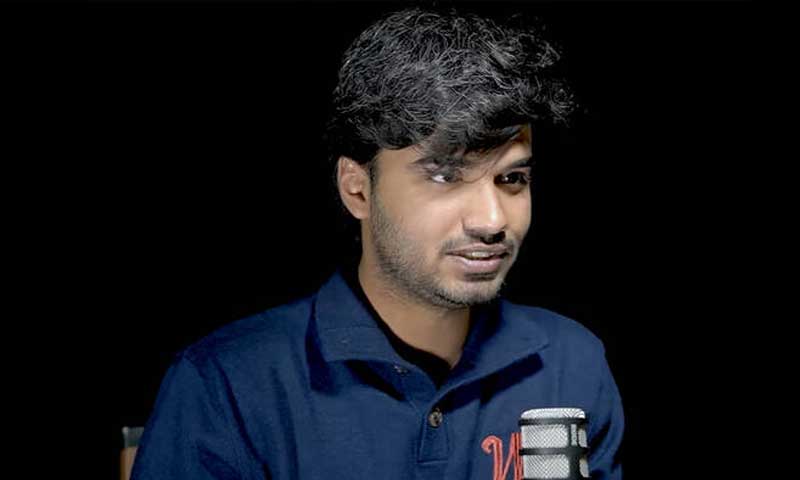
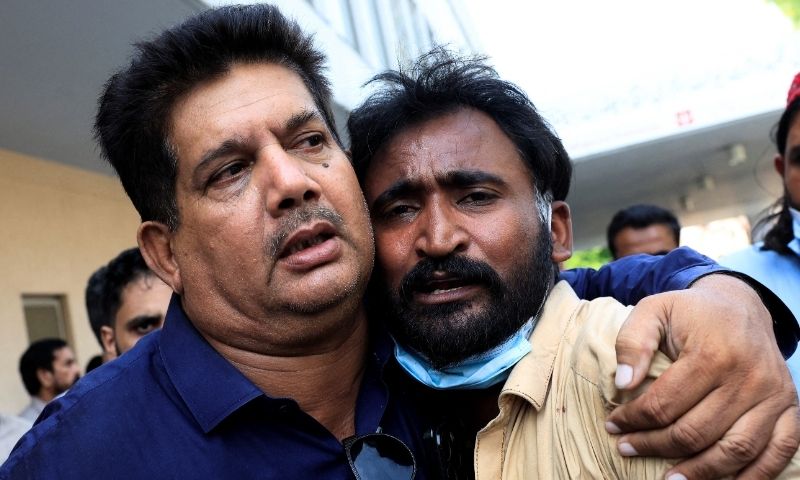
KARACHI: A judicial commission on Friday began its inquiry into the death of 26-year-old Mir Raza Ali, with his parents and lawyer Jibran Nasir appearing before the commission during its first hearing and raising concerns over the progress of the investigation.
Justice Umar Sial, who is heading the commission, expressed condolences to the family and said efforts would be made to answer all their questions. “My effort will be to reduce the pain of Mir Raza’s parents,” he said, adding that the commission would examine the forensic evidence, investigation, medical examination and other details of the case. He also said he believed the proceedings should be made public.
Mir Raza’s father Mir Hussain Ali told the commission that the family had reservations about the investigation team and that 29 days had passed without any visible progress. Justice Sial responded that the commission would look into the matter and stressed that the case was not only about Mir Raza but about every person seeking justice.
Referring to the need to maintain confidence in state institutions, Justice Sial said that the presence of one or two problematic individuals did not mean an entire institution was ineffective. “There are good institutions and capable people here who are working for justice,” he said.
Nasir told the commission that the family had previously raised questions about the investigation and those conducting it, but said the probe was now moving in the right direction.
The commission also announced plans to issue a mobile phone number through which members of the public could share information about the case. Justice Sial said a reward of Rs100,000 would be given for information that could assist the inquiry. He directed that notices be published in Urdu and English newspapers and displayed in the area where Mir Raza’s body was found.
Nasir informed the commission that some of Mir Raza’s friends had been arrested while protesting over the case. Justice Sial questioned what action the commission could take in that matter.
The commission then sought details of the events surrounding Mir Raza’s disappearance and death. Nasir said CCTV footage showed movements at 4:38am on July 28, while the body was found at around 11:45am on July 29. Two police officials arrived on a motorcycle at about 12:25pm to inspect the body, he added.
According to Nasir, nursery employees Yasir and Qaiser reported the discovery of the body, after which Mir Raza’s parents went to the hospital and identified him. An Edhi ambulance later transported the body to Jinnah Hospital, where a post-mortem examination was conducted in the presence of his father.
Nasir said police surgeon Dr Osama Sheikh carried out the post-mortem. He further told the commission that an FIR over Mir Raza’s disappearance had been registered at 3:15pm on July 28. The family had only been shown CCTV footage from the time when the body was discovered, he said, while footage from before and after the incident had yet to be provided.
Justice Sial said the commission would initially focus on establishing what happened during the three days surrounding Mir Raza’s disappearance and death. He asked the family and their lawyer to provide all relevant information, with the next hearing scheduled for Tuesday at 11am.
The Sindh Home Department has also issued a notification detailing the commission’s administrative structure. Abdul Majid has been appointed registrar, while Muhammad Amjad and Nadir Ali will serve as secretaries. Saleem Nasir has been appointed research officer and Zeeshan Saeed security administrator, with other officials assigned responsibilities including librarian, court attendant, bailiff and orderly.
Mir Raza, an IBA graduate and businessman, went missing on July 28. His body was recovered from bushes in Karachi’s Gulistan-e-Johar area the following day. Initial investigations considered suicide as a possible cause of death, but his parents rejected the theory and maintained that their son had been murdered.
The family subsequently questioned the handling of the investigation, including forensic evidence, the medico-legal examination, CCTV footage and digital evidence. A new police team led by DIG Amir Farooqi was later formed and met the family to obtain records from the earlier investigation.
Although the family initially welcomed the new team and expressed confidence in its work, the government’s decision to constitute a judicial commission has again become a point of contention. The family has maintained that it had sought the formation of a joint investigation team rather than a judicial commission.