
- Reuters
- September 17, 2026
Mir Raza case: Judicial commission grills ex-IO over ‘flawed’ investigation
-

- WEB DESK
- September 17, 2026
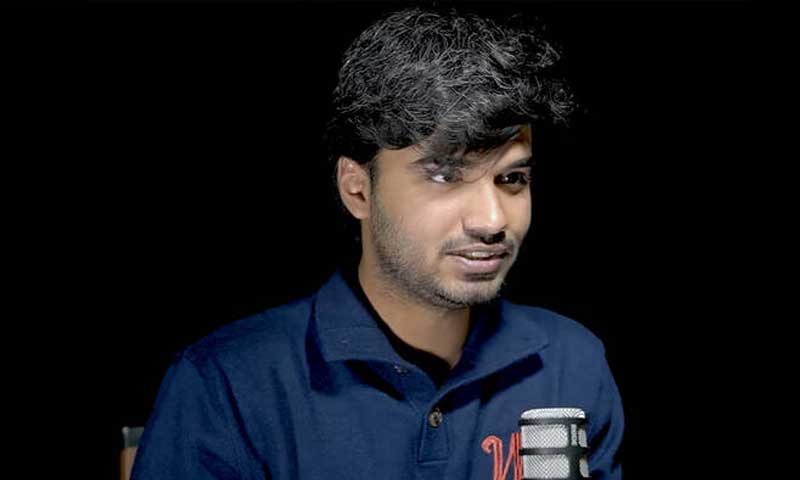
KARACHI: The judicial commission probing the death of young businessman Mir Raza Ali on Thursday expressed serious displeasure over major shortcomings in the initial police investigation, questioning the former investigating officer (IO) over missing evidence, poorly documented recoveries and gaps in the handling of the crime scene.
The commission, headed by Sindh High Court Justice Omar Sial, also questioned Mir Raza’s business partner Ahmed Bharde at length over his media interviews and directed him to meet the deceased’s family privately to address their concerns before recording his final statement.
The proceedings marked the commission’s ninth hearing and focused largely on the investigation conducted by Inspector Shabbir Laghari, the first IO in the case.
During the hearing, the commission repeatedly questioned Laghari over the manner in which evidence was collected and documented, including CCTV footage, Mir Raza’s mobile phone and Apple Watch, a pistol holster, samples taken from the body, and material recovered from the crime scene.
The commission also questioned why several potentially relevant lines of inquiry, including the activities of employees at a nursery near where Mir Raza’s body was found and records relating to a guesthouse, were not properly pursued.
Laghari told the commission that he had been assigned the investigation on July 28, between 2:30pm and 4pm, and that he went to Mir Raza’s house, prepared a memo and obtained signatures from family members. He said he also checked CCTV cameras installed in the street but did not find relevant footage.
However, the commission questioned why important investigative steps had not been properly documented and why material handed over by other police officers had not been supported by recovery memos.
At one point, the commission questioned Laghari over whether he was attempting to protect Ferozabad SHO Adeel Afzal, asking why the SHO had been present at the crime scene and involved in collecting CCTV footage when Laghari was the investigating officer.
Laghari said investigation police often worked with operations police because of a shortage of staff and that Afzal had been obtaining CCTV footage while other officers were performing different tasks.
The commission was not satisfied with the explanation and questioned why the SHO’s role and the collection of evidence had not been properly documented.
Questions over crime scene
The commission also questioned Laghari about his visit to the place where Mir Raza’s body was found.
Laghari said he visited the location on July 30 with another investigation officer and that nursery employees were questioned there. He said the SHO had already been in the area and indicated the location where the body had been found.
The commission questioned how the police knew what should be treated as evidence if the crime scene had not been properly secured and preserved.
It also questioned why a crime scene unit was not initially present and why the nursery employees were not treated as a potential line of inquiry.
The commission asked why investigators had accepted the nursery workers’ explanation that they had not heard a gunshot and why their statements had not been examined more critically.
The panel also questioned the presence of a rickshaw near the area and whether the vehicle and its occupants had been properly investigated.
The commission further noted that only a piece of a flowerpot with blood on it had apparently been found at the location, questioning whether that should have prompted investigators to consider the possibility that Mir Raza’s body had been brought from elsewhere.
Laghari told the commission that the investigation was continuing and that he could not offer a final opinion.
Mobile phone, Apple Watch evidence questioned
The handling of Mir Raza’s mobile phone and Apple Watch came under particularly close scrutiny.
Laghari said the mobile phone had been recovered about 100 yards from the crime scene by SHO Adeel Afzal, while the recovery memo was prepared in the name of another officer.
The commission questioned inconsistencies in the names of the people shown in different records as having recovered the phone.
Laghari acknowledged that the father’s name recorded in the recovery memo was incorrect. He also said the phone had been handed to him in sealed condition on August 8 after allegedly being sent to the Counter Terrorism Department for forensic examination.
The commission questioned how the phone could have been sealed when it had already allegedly been sent for forensic examination, with Laghari saying it might have been resealed.
Similar questions were raised over the Apple Watch. Laghari said the watch had been handed over to him in sealed condition on August 8 and that he had been told it had also been sent to the CTD for forensic examination.
However, he said he had no document from the CTD confirming this.
The commission also questioned why the watch had remained with police for several days and examined claims about screenshots allegedly obtained from it before it was formally processed as evidence.
The family’s lawyer, Jibran Nasir, also raised concerns about access to the watch and the handling of information obtained from it, including an alleged iCloud login.
CCTV and guesthouse records
The commission questioned the legal and evidentiary value of CCTV footage collected during the initial investigation.
Laghari said some footage showed Mir Raza throwing a mobile phone, but the commission pointed out that there was testimony suggesting the phone had not been thrown at the location in question.
The panel also questioned why footage from a guesthouse was collected but its digital video recorder was apparently not seized.
Laghari said technical matters were handled by the police station’s IT focal person.
The commission also questioned why a comprehensive investigation into the guesthouse, including its ownership and records, had not been conducted.
Forensic samples
The commission also examined the handling of samples collected during the post-mortem process.
Laghari said the samples were obtained on July 30 but were submitted to a laboratory on August 6.
He attributed the delay to the laboratory’s requirement for the post-mortem report before accepting the samples, saying the report was received on August 3 and the laboratory was closed when he went there on August 4.
The commission questioned where the samples had been kept in the intervening period and whether the procedure followed for handling case property was in accordance with the law.
Laghari said the investigation had been taken away from him after the family expressed a lack of confidence in the probe, after which the records and evidence were handed over to the new investigating officer.
‘Government money, media time being wasted’
The commission expressed strong displeasure over the quality of the investigation, telling Laghari that the shortcomings had resulted in the commission having to search for facts that should have been established during the police investigation.
The panel questioned why key evidence had not been collected or properly documented and why important investigative avenues had not been pursued.
When Laghari said he was satisfied with his work and that his conscience was clear, the commission warned him against repeatedly giving answers that could mislead the panel.
The commission also questioned whether he would have been satisfied if the victim had been his own child and the investigation had been conducted in the same manner.
The panel observed that the shortcomings had resulted in the government spending money and the media and commission spending time on matters that should have been addressed during the initial investigation. The criticism was also reported by other Pakistani media outlets covering Thursday’s proceedings.
Business partner asked to meet family
Before questioning Laghari, the commission also called Mir Raza’s business partner and friend Ahmed Bharde to the rostrum.
Justice Sial questioned Bharde about remarks he had made in media interviews, particularly his statements that he had a great deal to say about the case.
The commission said some of his comments were inappropriate given the circumstances and the difficulties faced by Mir Raza’s family, including financial problems and debts.
It also questioned why Bharde, who had previously appeared before the commission, had said relatively little despite the family having questions for him.
The commission cautioned Bharde against making further media statements and told him that if he had information relevant to the case, he should provide it to the commission.
It also made clear that Bharde had not been declared guilty and that the commission’s role was to establish facts rather than identify a suspect without evidence.
The panel subsequently asked Bharde to meet Mir Raza’s family privately so that their questions and grievances could be addressed. It directed that neither Bharde’s lawyer nor the family’s lawyer would participate in the meeting.
Bharde told the commission that he considered Mir Raza’s family his own and agreed to meet them.
Jibran Nasir said the family was willing to hear Bharde if he had information about the circumstances surrounding Mir Raza’s death. Bharde’s lawyer Khalid Mumtaz also confirmed that he would not accompany his client to the meeting.
Earlier proceedings
The questioning of the first investigating officer follows a series of hearings in which the commission has examined alleged shortcomings in the handling of the case.
The commission had earlier summoned police officials, medical officers, witnesses and Mir Raza’s business associates and examined forensic and post-mortem material. It had also raised questions about the handling of police records and evidence.
During the September 15 hearing, the commission recorded statements from several police officials and other witnesses and subsequently summoned Laghari for Thursday’s proceedings. A written order from that hearing also referred to an audio recording submitted by Nasir concerning a call received by Mir Raza’s father from a person who allegedly introduced himself as a senior government official and expressed support for SHO Adeel Afzal. The commission said portions of the recording were not appropriate for inclusion in its order.
The Sindh High Court had earlier declined the family’s request for a JIT, holding that the constitution of such a body was the government’s prerogative and declining to interfere with or supervise the ongoing criminal investigation.
Mir Raza, a 25-year-old businessman and owner of dessert outlet Wafflix, went missing on July 28. His body was found in Gulistan-i-Jauhar the following day. Following concerns over the initial investigation and a second post-mortem, the case was subsequently investigated as murder.
The commission adjourned the proceedings until September 21.
You May Also Like


- WEB DESK
- September 17, 2026
Gold prices fall in Pakistan after sharp rise
- WEB DESK
- September 17, 2026
UK sends $6.9bn in remittances to Pakistan in FY26: Aurangzeb
- Reuters
- September 17, 2026