- Reuters
- September 17, 2026
UK sends $6.9bn in remittances to Pakistan in FY26: Aurangzeb
-

- WEB DESK
- September 17, 2026
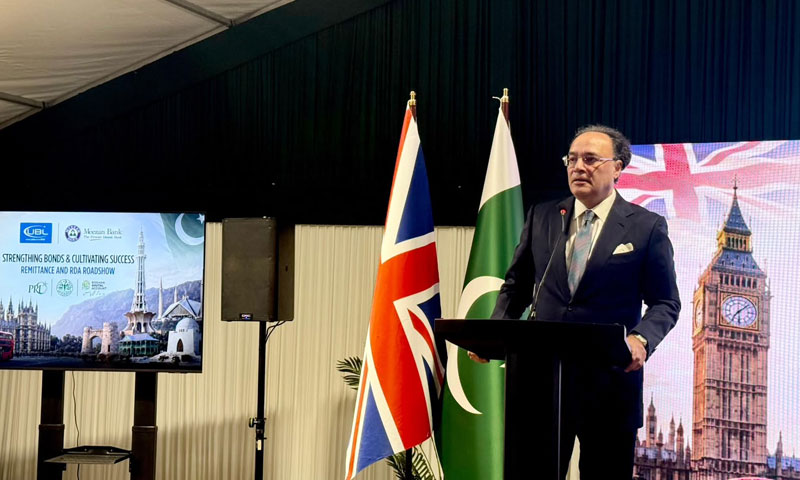
LONDON: Pakistan received $6.9 billion in remittances from the United Kingdom during the last financial year, while total remittance inflows reached $41.6 billion, Finance Minister Muhammad Aurangzeb said on Thursday, as he outlined the government’s efforts to shift the country’s economic focus from aid towards trade and investment.
Speaking at a Pakistan Investment Roundtable in London, Aurangzeb said total remittances were estimated to rise to around $44 billion during the current financial year.
He said remittance inflows had remained resilient despite the conflict in the region, with inflows from Gulf countries increasing rather than declining.
The minister also highlighted growing use of the Roshan Digital Account, saying monthly inflows through the facility had exceeded $300 million since April.
Pakistan has been seeking to strengthen its external position through higher remittances, services exports and greater foreign investment. The government has said its broader economic strategy is centred on macroeconomic stability, structural reforms, private-sector-led growth and a transition from aid towards trade and investment.
Focus on UK trade, investment
Aurangzeb said Pakistan was seeking to further increase trade and investment flows with the UK, stressing that the government’s priority was to deepen commercial relationships rather than rely on traditional aid.
The finance minister has previously said the government was working to strengthen economic cooperation with the UK in areas including trade, investment, banking, remittances, capital markets and financial services.
The latest comments came as the government seeks to attract greater private capital and integrate Pakistan more closely with international markets.
Aurangzeb said Pakistan had recently returned to international capital markets after a four-year gap through a $3 billion international bond issue, with investor orders nearly twice the amount sought. He said the diversity of the investor base, particularly participation from Asian investors, was an important indicator of international market interest.
Petroleum supplies
On energy security, Aurangzeb said Pakistan was covered for its petroleum requirements through September, while the outlook for October was also looking better.
He said planning for petroleum requirements was being carried out by the Petroleum Division and the National Coordination and Monitoring Committee (NCCMC).
The comments come amid heightened global oil-market uncertainty linked to geopolitical tensions in the Middle East. Pakistan has been monitoring international oil prices and supply conditions because of the potential impact on domestic inflation and the country’s external account.
Aurangzeb said inflation was a global phenomenon, with international factors, including petroleum prices, contributing to price pressures.
IT exports, freelancers
The finance minister also highlighted the growing contribution of the technology sector, saying Pakistan’s IT services exports stood at $4.6 billion during the last financial year.
Of this, freelancers contributed $1.6 billion, underscoring the increasing role of digitally delivered services in generating foreign exchange.
The $4.6 billion figure has also been cited by the Finance Ministry and other government institutions, while recent official statements have put freelancer earnings at around $1.7 billion depending on the period and classification used.
Aurangzeb said the government wanted to build an ecosystem that enabled young Pakistanis to participate in the economy rather than simply creating government jobs for them.
He has previously described the technology sector as an area where Pakistan could expand its exports by improving digital connectivity and developing skills in emerging areas.
The government’s broader economic strategy, according to Aurangzeb, is to move from stabilisation towards sustainable growth driven by investment, productivity and exports while continuing structural reforms.
He said the government was also seeking to improve the business environment and enable the private sector to play a greater role in economic growth.
The Finance Ministry says fiscal consolidation is already producing results through a primary surplus, deficit compression, increased revenue mobilisation and institutional reforms.
You May Also Like

- Muhammad Faizan Khan
- September 17, 2026
Govt announces austerity measures, markets to close at 9pm

- WEB DESK
- September 17, 2026