- WEB DESK
- August 23, 2026
Mir Raza case: Sindh govt announces judicial commission as parents object to move
-

- WEB DESK
- August 23, 2026
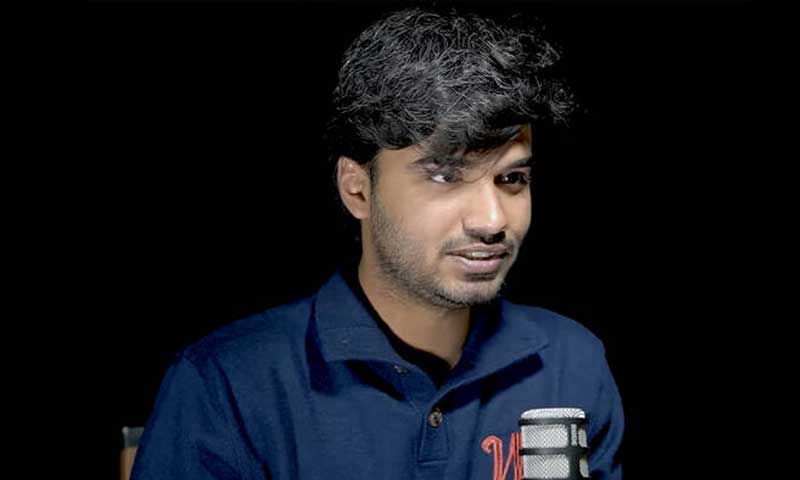
KARACHI: The Sindh government on Sunday decided to request the Sindh High Court chief justice to constitute a judicial commission to conduct an impartial and transparent inquiry into the investigation into the death of young businessman Mir Raza Ali Khan, days after his parents had sought direct supervision of the probe by the prime minister and the Sindh chief minister.
The development comes amid growing concerns raised by the family over the handling of the case, including the initial investigation, medico-legal examination and alleged gaps in the collection and preservation of forensic and digital evidence.
According to the Sindh Chief Minister’s Office, the government has taken the family’s concerns “with utmost seriousness” and will ask the chief justice of the Sindh High Court to establish the commission.
The proposed commission will examine whether the investigation into Mir Raza’s death was conducted impartially and in accordance with the law. It will also identify any investigative angle or evidence that may require further examination.
The commission will be empowered to scrutinise the role of police officers, medico-legal officials and other relevant authorities and determine whether there was any negligence, dereliction of duty, professional misconduct, suppression or manipulation of evidence, or any other unlawful act or cover-up.
It will also be able to recommend further investigation, forensic analysis and appropriate legal or departmental action if warranted.
Under the Sindh Tribunals of Inquiry Ordinance, 1969, the commission will have powers similar to those of a civil court, including summoning witnesses, recording statements on oath and requiring the production of relevant documents and records.
The Sindh government has directed all departments, agencies and officials to cooperate with the commission, while the Home Department will provide it with secretariat support, said a statement.
The commission is expected to submit its findings and recommendations to the Sindh government within 30 days of its constitution, although its tenure may be extended if required for a complete and fair inquiry.
Family rejects government’s decision
Mir Raza’s parents, Mir Hussain and Mariam Hussain, have objected to the decision, maintaining that they were not consulted before the government announced the proposed judicial commission.
However, the family has rejected the government’s decision, saying it was taken without consultation. Mir Raza’s father said the family would approach the Sindh High Court on Monday, arguing that investigating a murder was not the job of a judicial commission and demanding justice for his son.
The family’s lawyer, Advocate Jibran Nasir, also questioned why the government had decided to form the commission without taking the family into confidence and why other law-enforcement agencies had not been included in the investigation.
He also questioned the formation of a joint investigation team (JIT) and asked why the alleged criminal conduct of police officers involved in the earlier investigation had not been separately examined.
Through their lawyer Jibran Nasir, the family had earlier approached Chief Minister Murad Ali Shah seeking his direct supervision of the investigation and a departmental inquiry into members of the original investigation team.
In a 22-page letter sent to the chief minister, the family had alleged that the investigation had suffered from incompetence and political influence and claimed that the previous team had prematurely pursued a “suicide” narrative. They also called for the suspension of officers involved in the original investigation.
The family raised 24 questions about the investigation, including questions concerning Mir Raza’s communications shortly before his death, missing digital and forensic evidence and the alleged actions of his business partner before and after the incident.
The family also sought an inquiry into the handling and forensic examination of Mir Raza’s smartwatch and questioned the conduct of the original investigation team.
A case marked by controversy from the outset
Mir Raza Ali Khan, a 25-year-old businessman and graduate of the Institute of Business Administration, went missing on July 28 after leaving his home in Karachi.
His body was found the following day in bushes near Shahi Qila Ground in Gulistan-e-Jauhar with a gunshot wound.
The family maintained from the outset that Mir Raza had been kidnapped, tortured and murdered. Police, however, initially investigated the possibility that he had died by suicide.
The case took a major turn after serious questions were raised over the original post-mortem examination.
Karachi Police Surgeon Dr Summaiya Syed Tariq identified 14 shortcomings in the initial medico-legal report, including the absence of an X-ray, failure to collect hand swabs for gunshot residue testing, lack of chemical analysis of suspected firearm discharge marks and inadequate examination and documentation of firearm injuries.
Questions were also raised over the failure to conduct an internal examination of the skull and neck, the lack of forensic-standard photographs and measurements of injuries, inadequate documentation of the bullet’s trajectory and the failure to obtain a DNA sample despite concerns over the condition of the body.
The police surgeon recommended a fresh forensic examination and suggested that the body could be exhumed if the issues identified in the original report could not be satisfactorily addressed.
Second post-mortem changed direction of probe
A judicial magistrate subsequently allowed the family’s application for exhumation and ordered the constitution of a medical board.
The Sindh government initially constituted an eight-member board headed by Dr Summaiya Syed Tariq, but the board was later reconstituted, prompting objections from Mir Raza’s family. The original board was subsequently restored, and the body was exhumed on August 8.
The fresh examination found multiple injuries on the body, as Dr Syed said that samples were collected for identification, chemical analysis and gunshot-residue testing, while the cause of death was kept pending laboratory results. She also said there were multiple injuries to the head and face and that a gunshot had entered from the back and exited from the front.
Police later said the second post-mortem had ruled out suicide, while the murder charge was added to the FIR. Dawn News reported that the fresh findings indicated that Mir Raza had been shot from behind, contradicting the earlier possibility of suicide.
Investigation team also changed
The controversy led to further changes in the investigation.
The Sindh inspector general’s office reconstituted the investigation team, while the Karachi additional inspector general transferred the case from Ferozabad police station, where it had initially been registered, to Zaman Town police station.
The Sindh government had initially decided earlier this month to seek a judicial commission, but deferred the move after the family said it had confidence in the newly constituted police investigation team.
The parents subsequently changed their position after expressing dissatisfaction with the progress of the investigation and approached Chief Minister Murad Ali Shah again on August 19, seeking his direct intervention.
Parents now plan legal challenge
The latest decision has once again put the government and Mir Raza’s family at odds over how the case should proceed.
The family argues that the priority should be a criminal investigation aimed at identifying and prosecuting those responsible for Mir Raza’s death, along with accountability for any officials whose conduct may have compromised the original investigation.
Jibran Nasir has questioned the need for a judicial commission without the family’s consent and asked why other law-enforcement agencies were not brought into the probe.
Meanwhile, Mir Raza’s sister said the family has contacted the Sindh Home Minister over the decision to form a judicial commission into his killing.
She said she had messaged the home minister asking the government to provide the family with a copy of the notification if the commission had been formed.
“We do not support the decision to form the judicial commission,” she said, adding that the family learnt about the decision through the media.
The sister said the family had no confidence in the way the investigation was being conducted.
“We reject the decision to form the judicial commission and will approach the Sindh High Court tomorrow,” she said.