- Reuters
- September 14, 2026
Muted voices, silent screens and rare handshake: Inside NA budget session
-

- Muhammad Faizan Khan
- June 21, 2026
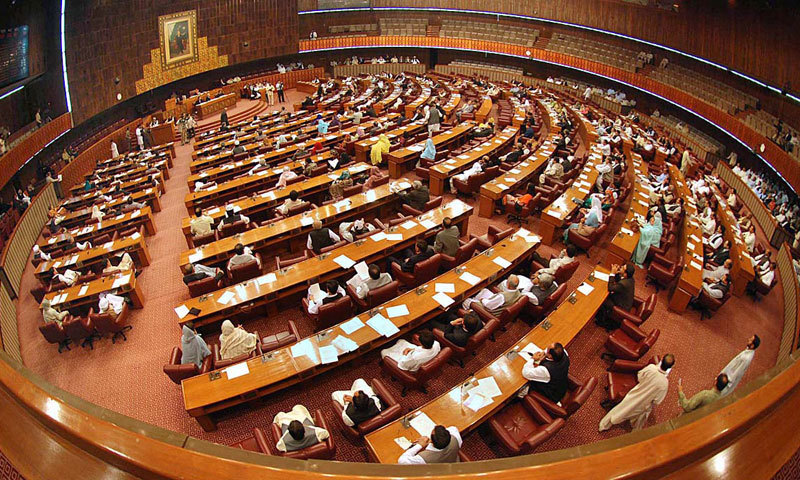
ISLAMABAD: On paper, the official statistics paint the picture of a vibrant, rigorously contested parliamentary exercise.
According to National Assembly Speaker Sardar Ayaz Sadiq, as many as 232 lawmakers participated in the high-stakes debate on the federal budget for the fiscal year 2026-27. Government benches fielded 151 speakers, while 81 members from the opposition pushed back from across the aisle. In total, the House clocked 53 hours and 31 minutes discussing the budget.
Treasury lawmakers dominated the floor for 34 hours and 33 minutes, while the opposition consumed 18 hours and 58 minutes. The Speaker even noted that opposition parties were granted an extra eight hours and 18 minutes beyond their officially allocated time.
But beyond the spreadsheet architecture of the session lies another story — one that opposition lawmakers insist will define this budget session far more than the numbers themselves.
For despite nearly 19 hours of floor time, the opposition maintains that its voice never truly reached the public square.
Throughout the marathon session, speeches by Opposition Leader Mahmood Khan Achakzai, PTI-backed lawmakers, and other opposition figures were conspicuously absent from television screens, as the state-run Pakistan Television (PTV) declined to broadcast them live. While every word uttered by treasury members and coalition allies was carried live by the state broadcaster, opposition speeches were either systematically muted or entirely omitted from official airwaves.
On the National Assembly’s dedicated channel, NA TV, the audio repeatedly cut out the moment opposition members took the floor. On the Assembly’s official YouTube stream, both the audio and video feeds vanished during opposition speeches—creating what critics described as an unprecedented, digital-age media blackout.
The issue repeatedly triggered uproar inside the chamber. Opposition members protested on multiple occasions and even took their grievances directly to Prime Minister Shehbaz Sharif, urging him to intervene and ensure equitable coverage of parliamentary proceedings. Yet despite those direct appeals, not a single opposition speech was fully aired for the duration of the budget session.
The session also suffered a rocky start, witnessing one of its most controversial disciplinary decisions on day one.
PTI-backed MNA Iqbal Afridi pointed out a lack of quorum, instantly exposing the government’s struggle to maintain required attendance in the House. Shortly after his intervention, allegations surfaced against the lawmaker, including accusations that he had physically slapped a police official on duty. Citing formal complaints, the Speaker swiftly initiated proceedings that culminated in Afridi’s suspension.
With the House approving the treasury-backed motion, Afridi was barred from attending the remainder of the budget session, and his parliamentary perks and privileges were suspended—a move the opposition slammed as excessive, retaliatory, and politically motivated.
Yet, amid the fierce acrimony and walkouts, the floor of Parliament also produced moments of rare, unexpected political theater.
In an unusual display of bipartisanship, Prime Minister Shehbaz Sharif twice crossed the floor to the opposition benches during a pivotal sitting. First, he exchanged greetings with Opposition Leader Mahmood Khan Achakzai and PTI Chairman Barrister Gohar Ali Khan. Later, the premier returned for a more substantive, huddled discussion with Achakzai, Barrister Gohar, and former Speaker Asad Qaiser.
Standing in the opposition’s territory, the Prime Minister listened directly to their immediate legislative demands before summoning Finance Minister Muhammad Aurangzeb to the floor to issue on-the-spot instructions. Defence Minister Khawaja Asif and Adviser to the PM Rana Sanaullah subsequently joined the scrum, briefly replacing the otherwise hyper-polarized atmosphere with an air of genuine political engagement.
Those behind-the-scenes interactions eventually paved the way for the unanimous passage of a joint resolution commending Pakistan’s recent diplomatic role in facilitating the historic Iran-US peace agreement—a rare moment when the treasury and opposition benches spoke with a singular voice.
As the curtain falls on the fiscal session, the Hansard will permanently record 53 hours and 31 minutes of debate and over two hundred speeches.
But for a significant portion of the house, the real legacy of the 2026-27 budget session will not be measured by how much they spoke.
It will be remembered by the fact that despite speaking for nearly nineteen hours, the country was never allowed to hear them.
Muhammad Faizan Khan is a parliamentary reporter for HUM News.
You May Also Like
- WEB DESK
- September 14, 2026