- WEB DESK
- 1 Hour ago
Oil prices surge after fresh US strikes on Iran shatter truce hopes
-

- Reuters
- 9 Minutes ago
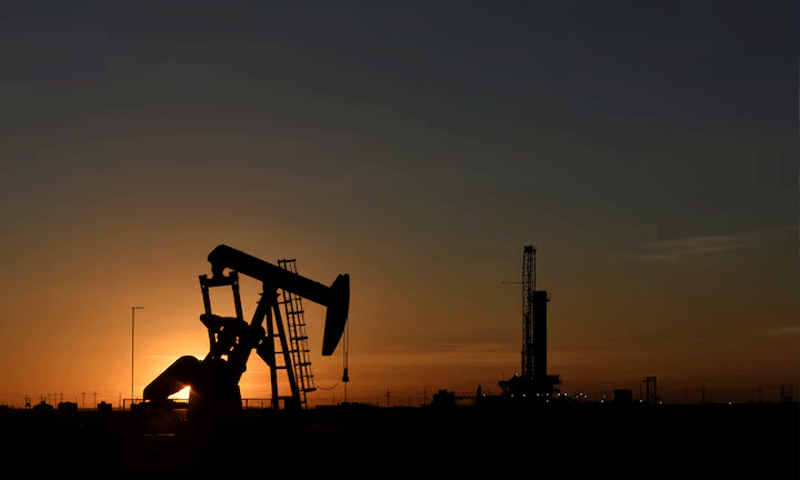
WEB DESK: Oil prices rose by more than one per cent on Thursday following a fresh wave of US military strikes against Iran. The renewed hostilities have severely dented hopes for an end to the conflict and threatened the full reopening of the strategic Strait of Hormuz, a critical maritime chokepoint that handled a fifth of global oil supplies prior to the war.
International benchmark Brent crude futures advanced by 86 cents, or 1.1pc, to settle at $78.88 a barrel. Meanwhile, US West Texas Intermediate (WTI) crude futures gained 85 cents, or 1.2pc, to reach $74.37 a barrel.
Both benchmarks had already experienced a sharp upward push late on Wednesday after the US military commenced its aerial campaign, following warnings from US President Donald Trump.
Escalation breaks fragile ceasefire
The market reaction highlights growing anxiety among energy traders that the conflict will drag on. Analysts at ING noted that the latest escalation has thoroughly undermined confidence in what was already a highly fragile ceasefire, bringing geopolitical risk premiums back to the forefront of market calculations.
According to US Central Command, American forces struck approximately 90 Iranian military targets along the coastline.
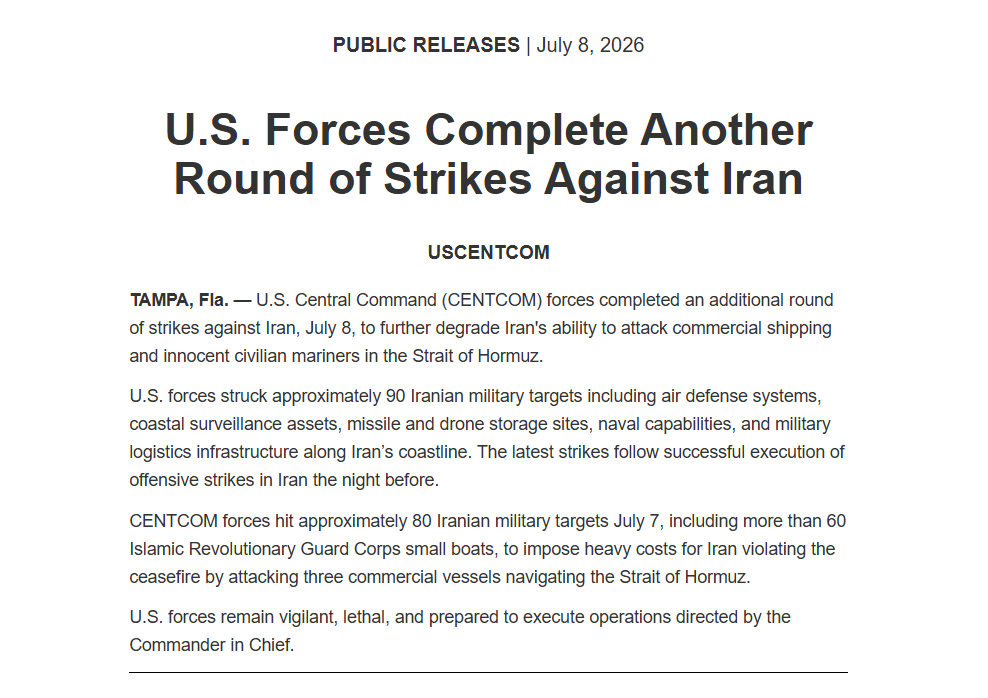
The operation, which Washington claimed was aimed at keeping the Strait of Hormuz open to international traffic, targeted air defence systems, coastal surveillance assets, missile and drone storage units, and naval infrastructure.
The action came shortly after President Trump declared an interim peace agreement to end the war “over.” In response to the initial escalation, Tehran had previously launched retaliatory strikes against US military installations in Bahrain and Kuwait.
Shipping caution and market volatility
The renewed fighting has immediately affected maritime logistics in the region. Market analysts pointed out that the brief surge in oil traffic passing through the strait in recent weeks has effectively halted, as shipowners and insurers adopt a far more cautious stance amid the threat of open hostilities.
Tehran’s leverage in the conflict relies heavily on its ability to disrupt traffic through the narrow waterway, which has been a primary flashpoint since the war began with US and Israeli airstrikes on February 28.
Energy research experts expect prolonged price volatility in the near term. Analysts from DBS Bank suggested that because Iran has significant incentives to prolong diplomatic discussions, the war risk premium embedded in oil prices is unlikely to dissipate quickly.
While the medium-term trajectory for crude may point downward due to macroeconomic factors, the ongoing uncertainty in the Middle East is expected to keep global energy markets highly volatile for months to come.
You May Also Like