- Khurram Iqbal
- November 18, 2026
‘One rule for Sindh, another for Punjab?’ PA speaker challenges Bilawal over provinces
-

- WEB DESK
- November 18, 2026
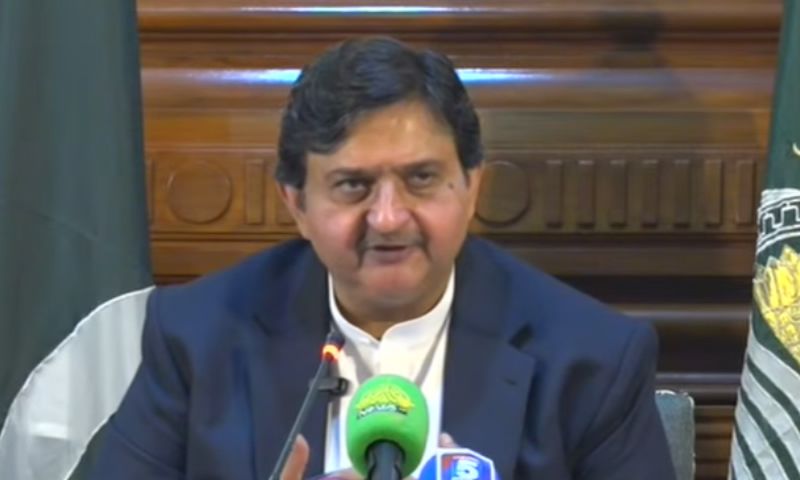
Punjab Assembly Speaker Malik Muhammad Ahmad Khan on Wednesday questioned Pakistan Peoples Party (PPP) Chairman Bilawal Bhutto Zardari’s opposition to the division of Sindh, asking why his party had historically supported creating new provinces in Punjab while rejecting the possibility of dividing Sindh.
Responding to Bilawal’s remarks at the Karachi Press Club on Tuesday during a press conference in Lahore, Malik defended the proposal to hold a referendum on new provinces and challenged the PPP chairman’s warning that forcibly dividing Sindh could lead to bloodshed.
The exchange comes amid renewed debate over creating additional provinces or administrative units following Interior Minister Mohsin Naqvi’s proposal for a referendum.
“Why does the PPP believe Sindh cannot be divided while Punjab can be?” he asked, arguing that the party’s differing positions warranted a political and constitutional debate.
Malik questioned the basis of Bilawal’s warning, asking whether the anticipated violence would be rooted in Sindhi nationalism and whether such regional identities should prevent discussion about administrative boundaries.
He maintained that debating provincial identities and political rights was neither inappropriate nor beyond the scope of democratic discussion.
The speaker also challenged Bilawal’s criticism of the 27th Constitutional Amendment and his description of Pakistan Tehreek-e-Insaf (PTI) founder and former prime minister Imran Khan as a political prisoner, accusing him of taking contradictory positions on major national issues.
Speaker invokes 2012 resolutions on South Punjab
Malik referred to parliamentary proceedings from May 2012, when the PPP-led federal government supported a resolution in the National Assembly calling for the creation of a separate South Punjab province.
He recalled that the Pakistan Muslim League-Nawaz (PML-N) had opposed the resolution and walked out of the proceedings, questioning the government’s approach to dividing Punjab.
The National Assembly passed the resolution on May 3, 2012, amid protests by PML-N lawmakers.
However, the PML-N subsequently proposed creating four new provinces, including South Punjab and Bahawalpur, while insisting that the process required constitutional amendments and political consensus.
On May 9, the Punjab Assembly unanimously adopted two resolutions supporting the creation of South Punjab and the restoration of Bahawalpur’s provincial status.
Malik said the parliamentary record established the positions taken by political parties and offered to share copies of the resolutions and proceedings with journalists.
He questioned how the PPP could support the division of Punjab while maintaining that Sindh should remain undivided.
The speaker also raised the question of what significance resolutions passed by assemblies that had since completed their terms should carry in the present debate.
‘Why would there be bloodshed?’
Malik’s remarks also addressed Bilawal’s ‘warning’ that any attempt to forcibly divide Sindh could trigger serious ‘unrest’.
“If you try to divide Sindh by force, there will be blood on the streets of Karachi, not garbage,” Bilawal said during Tuesday’s press conference.
The PPP chairman argued that creating new provinces would deepen social divisions rather than resolve Pakistan’s governance problems.
Responding to the warning, Malik questioned why a debate over provincial boundaries should necessarily lead to violence.
He argued that provincial identities and demands for political rights had developed over a long historical period, including before Pakistan’s independence.
Referring to the One Unit arrangement, its abolition and the subsequent reorganisation of provinces, Malik maintained that Pakistan’s administrative structure had evolved over time.
He also cited the constitutional renaming of the North-West Frontier Province as Khyber Pakhtunkhwa as an example of changes to provincial arrangements.
The speaker argued that existing boundaries should be discussed in their historical and constitutional context rather than treated as permanently beyond debate.
Malik questions Bilawal’s stance on 27th Amendment
The speaker also challenged Bilawal’s criticism of the 27th Constitutional Amendment, which the PPP chairman had described as having been passed through a “brute majority” rather than political consensus.
Malik recalled Bilawal’s speech in the National Assembly during proceedings on the amendment, particularly his support for restructuring the military command system and establishing the position of Chief of Defence Forces.
He said Bilawal had justified the changes by referring to developments in modern warfare and Pakistan’s military confrontation with India in May 2025.
Malik praised Bilawal’s diplomatic role following that confrontation, saying the PPP chairman had represented Pakistan effectively during international engagements.
However, he questioned why Bilawal had subsequently criticised the amendment’s passage.
“To which position should I agree? Bilawal sahib‘s position on the floor of parliament, or his public remarks yesterday?” Malik asked.
The speaker maintained that the distinction required an explanation, even while acknowledging Bilawal’s political experience and democratic credentials.
He described the PPP chairman as politically astute and said he held him in high regard.
Malik also defended judicial changes introduced through the amendment, arguing that earlier arrangements concerning judicial appointments and accountability had required reform.
The 27th Amendment, passed in November 2025, established the Federal Constitutional Court (FCC) and restructured the armed forces’ command system.
Bilawal had argued on Tuesday that the amendment lacked the broader political agreement necessary to secure public confidence in the judiciary.
Speaker challenges Bilawal over political prisoners
Malik also took issue with Bilawal’s remarks describing Imran Khan as a political prisoner and calling for the release of political detainees.
Referring to the May 9, 2023 violence following Khan’s arrest, the speaker questioned whether individuals accused of attacking military installations and damaging private property could be regarded as political prisoners.
“How can burning my house be someone’s political right? And how can a person imprisoned for burning my house be a political prisoner?” Malik asked.
He alleged that attacks on military installations were coordinated and premeditated, describing them as acts of espionage rather than legitimate political protest.
“I treat it as an act of espionage,” he said, rejecting the suggestion that such incidents could be classified as ordinary political activity.
His remarks reflected his position on the May 9 cases, in which individual criminal responsibility remains subject to the evidence and judicial proceedings.
Bilawal had earlier called for restoring PTI’s confidence in parliament, saying the political system could not function effectively without the participation of major opposition parties.
“Whether I like it or not, this country cannot function without the PTI,” Bilawal said.
The PPP chairman also called for the release of political prisoners, saying he considered Imran Khan one.
Who is responsible for the system’s collapse?
Turning to Bilawal’s broader criticism of Pakistan’s governance system, Malik acknowledged that military interventions, hybrid political arrangements and judicial decisions had contributed to the weakening of democratic institutions.
He specifically cited the judicial decision to execute former prime minister Zulfikar Ali Bhutto as one of the gravest injustices in Pakistan’s constitutional history.
Malik also criticised judicial decisions that had legitimised military interventions and the dismissal of elected governments.
However, he maintained that political leaders needed to examine their own positions and decisions when discussing institutional failures.
Bilawal had argued on Tuesday that the country’s governance system had been deliberately weakened and called for a political reset based on institutional legitimacy, parliamentary dialogue and public confidence.
“I am also responsible. I have also made mistakes,” the PPP chairman acknowledged during his Karachi address.
Malik said acknowledging mistakes was important in a democracy, but maintained that differences over documented parliamentary decisions required substantive explanations.
Referendum debate continues
Naqvi has argued that public opinion should determine whether Pakistan needs smaller administrative units to improve governance and service delivery.
Information Minister Attaullah Tarar also responded to Bilawal’s bloodshed warning on Tuesday, saying a referendum would provide a democratic mechanism for establishing the public’s wishes.
However, Article 239(4) of Pakistan’s Constitution requires any amendment altering a province’s boundaries to secure a two-thirds majority in the assembly of the province concerned, alongside the required parliamentary approval.
A referendum could gauge public opinion but would not, by itself, fulfil those constitutional requirements.