- WEB DESK
- September 15, 2026
Pakistan acts as mediator: Iranian crew of seized vessel repatriated via Islamabad
-

- Sadia Basharat
- May 4, 2026
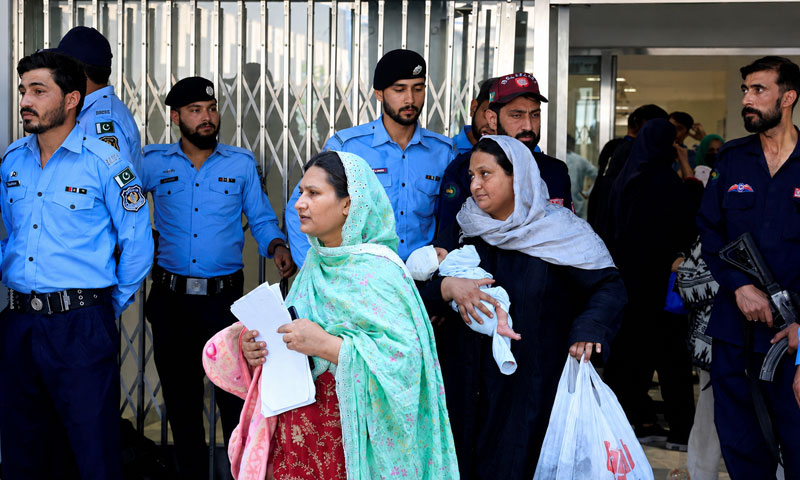
WEB DESK: In a significant diplomatic gesture aimed at de-escalating regional maritime tensions, Pakistan has facilitated the safe transfer and repatriation of 22 Iranian crew members previously detained in the Gulf of Oman.
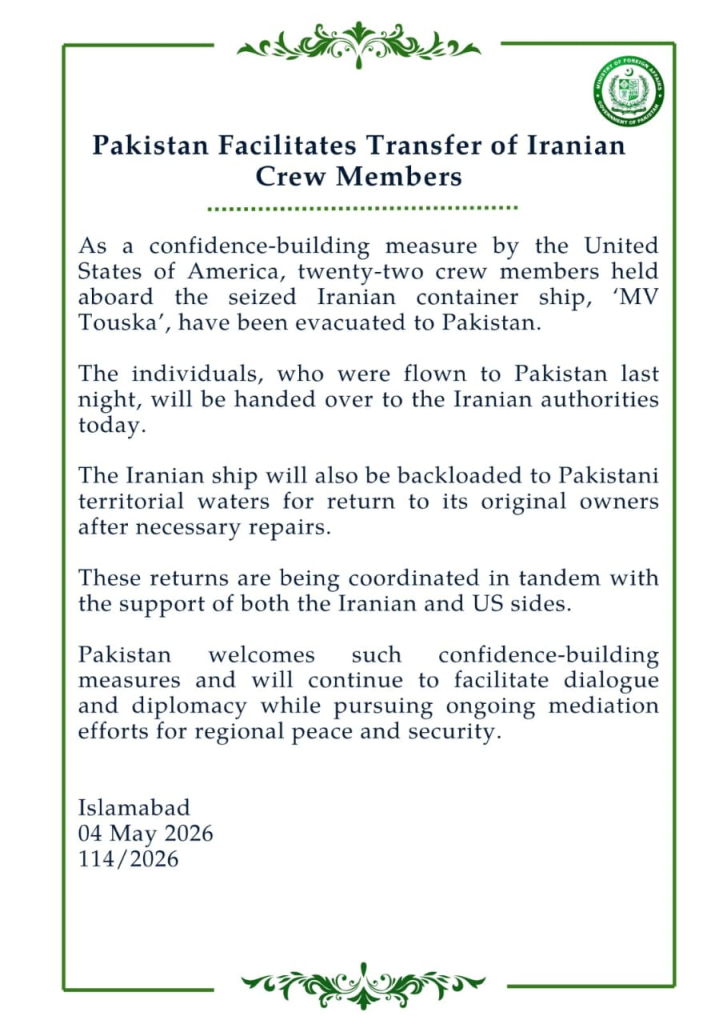
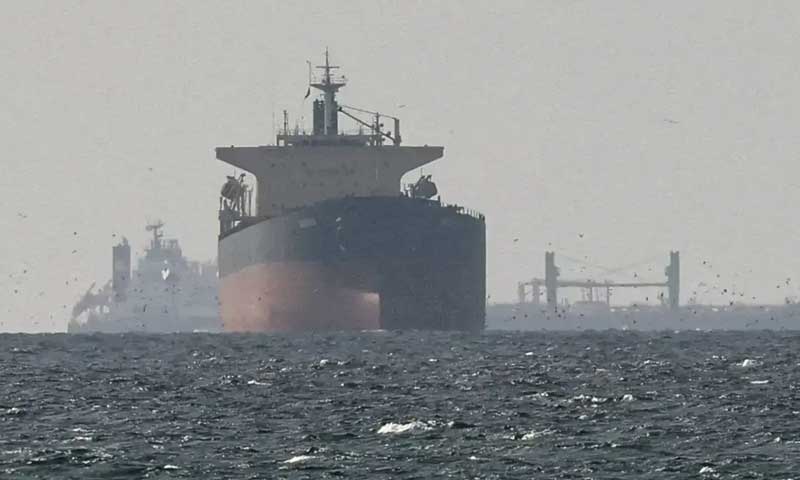
The sailors, who were aboard the container ship MV Touska, arrived in the capital overnight following successful negotiations between Islamabad, Washington, and Tehran.
The move is being viewed by international observers as a vital confidence-building measure (CBM) as Pakistan continues to position itself as a key intermediary in Middle Eastern security affairs.
Maritime de-escalation and humanitarian facilitation
The crew members had been in limbo since mid-April after their vessel was intercepted by U.S. naval forces for allegedly breaching maritime blockades.
Following their arrival on Pakistani soil, the Ministry of Foreign Affairs confirmed that the sailors are being provided with necessary consular assistance and are scheduled for a formal handover to Iranian officials in Islamabad today.
While the crew’s return marks the resolution of the immediate humanitarian concern, the MV Touska itself is reportedly being towed into Pakistani territorial waters.
The vessel is expected to undergo essential repairs under local supervision before it is eventually cleared for return to its owners in Iran.
Strategic mediation in the Strait of Hormuz
This repatriation effort highlights Pakistan’s increasingly active role in managing the “Security-Development Nexus” within critical global trade corridors.
By bridging the gap between the United States and Iran, Islamabad has demonstrated its strategic utility in preventing a further flare-up near the Strait of Hormuz.
Analysts suggest that such diplomatic successes strengthen Pakistan’s standing as a neutral arbiter capable of navigating the complex geostrategy of the region.
As the crew prepares to return to Tehran, the focus now shifts to whether this successful coordination can serve as a blueprint for broader diplomatic engagement and stability across the Arabian Sea’s vital maritime routes.
You May Also Like