
- Ameem Lutfi | Kevin Schwartz
- September 11, 2026
Pakistan at 79: Caught between hope and disillusionment
-

- Safdar Gardezi
- August 14, 2026
Ye daagh daagh ujala, ye shab-gazeeda sahar
Woh intizaar tha jis ka ye woh sahr tou nahin
This dawn that’s marked and wounded,
this dawn that night has nibbled on-
It’s not the dawn we expected;
it’s not the dawn we were looking for
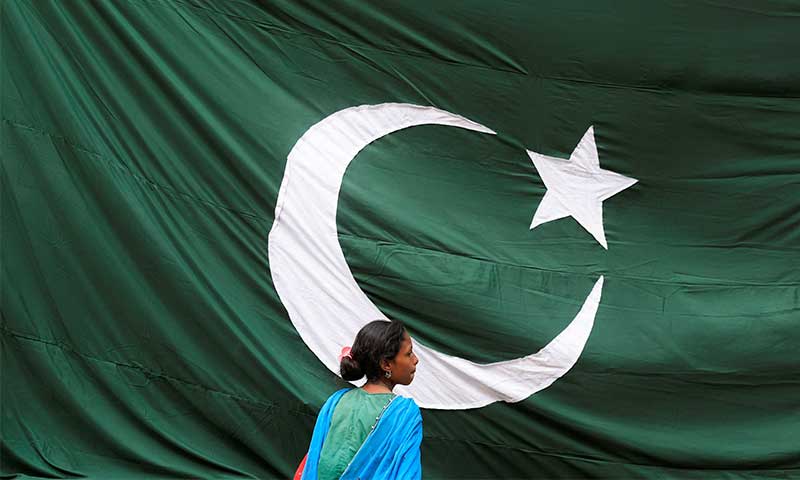
Every August, these classic lines by progressive poet Faiz Ahmed Faiz are invoked to eloquently express a sense of disappointment with Pakistan’s journey since independence and its inability to reach the ‘destination’ it once aspired to.
Independence Day has returned again this year, Pakistan’s 79th, but with a question: is life for the average Pakistani any different from what it was a year ago? For the majority, at least in terms of their economic circumstances, the answer is perhaps no.
The development and structure of an economy depend on politics, political conditions and policy, because it is the state that ultimately shapes the form and direction of politics. Over the past year, the pendulum of state, politics and economy has continued to swing between hope and despair. Pakistan’s long-standing problems have kept its politics and economy trapped in a pattern of taking two steps forward and one step back.
The global expression Prisoner of Geography carries, perhaps more for Pakistan than for most countries, both risks and possibilities. The story of Pakistan over the past year has similarly been shaped by a combination of the two.
Growing tensions along Pakistan’s western borders escalated into a limited war during the year. In the long and complicated history of Pakistan’s relations with Afghanistan, a relationship that has often swung between extremes ties with its neighbour have reached perhaps their lowest point, rooted in a history of mistrust. When Pakistan’s membership of the United Nations was put to a vote after independence in August 1947, Afghanistan voted against it.
It is a curious coincidence that Pakistan’s rivalry with its eastern neighbour, India, also began during the same period. The depth of that divide can perhaps be gauged from the fact that Pakistan even decided to celebrate its Independence Day on 14 August, in contrast to India, and did so during Quaid-e-Azam Muhamamad Ali Jinnah’s lifetime.
Last year, Pakistan’s Independence Day celebrations were marked by a distinct sense of pride stemming from what was portrayed as India’s defeat in Maarka-e-Haq and Pakistan’s extraordinary success on the military front. For the first time in the long history of hostility between the two countries, relations with Pakistan have become a measure of success and failure both in India’s domestic politics and in its international diplomacy. Following the May 2025 war, Pakistan has stood a step ahead of India in the priorities assigned to South Asia by the United States and European powers.
This Independence Day is also coloured by a sense of diplomatic recognition and a new international identity acquired by Pakistan through its global diplomacy aimed at bringing an end to the regional war in the Middle East and in the wake of American aggression against our third neighbour, Iran.
The domestic consequences of this renewed regional and global standing have further entrenched the idea of Pakistan as a “hard state”.
Last year, Pakistan’s success in confronting Indian dominance pushed internal political disputes and weaknesses into the background. This time, Pakistan’s mediatory efforts during the US-Iran war, coupled with unusually strong praise from US President Donald Trump, have made the environment less conducive for opposition forces seeking to launch public protests or political movements.
Former Prime Minister Imran Khan, who has been serving sentences in various cases since 5 August 2023, saw his party adopt a strategy aimed at reinvigorating opposition politics this January by appointing veteran politician Mahmood Khan Achakzai as Leader of the Opposition in the National Assembly and Nasir Abbas as Leader of the Opposition in the Senate. Known for his fearless style and unequivocal positions on contentious issues, Achakzai has, over the past eight months, not managed to move much beyond fiery rhetoric. He has, however, succeeded in bringing together individuals and political parties with an opposition outlook under the banner of the Tehreek Tahaffuz Ayeen-e-Pakistan.
In the past, the late Nawabzada Nasrullah Khan had the ability to bring together opposition parties of sharply differing ideological persuasions and turn those alliances into political outcomes. Achakzai’s personality has so far lacked that particular magic.
One reason for the political ineffectiveness of the opposition and anti-government efforts may perhaps be the 27th Amendment, which removed the judiciary, historically an important player in the making and breaking of governments, from that political arena.
The amendment, passed in November 2025 with the cooperation of the Pakistan Peoples Party, Jamiat Ulema-e-Islam (Fazl), Muttahida Qaumi Movement and other political parties, resulted in the creation of a Federal Constitutional Court.
In 2006, Pakistan’s political forces had agreed to the idea of a Federal Constitutional Court in the Charter of Democracy. Constitutional experts, however, had criticised its proposed structure, powers and a role running parallel to that of the Supreme Court of Pakistan as being inconsistent with democratic requirements.
The successful movement for the restoration of Chief Justice Iftikhar Muhammad Chaudhry had ushered in an era of judicial activism, as the judiciary increasingly intervened in matters relating to the powers and limits of the executive and legislature. The 27th Amendment has now placed restraints on that activism.
Pakistan Tehreek-e-Insaf (PTI) workers and Imran Khan’s sisters have continued travelling every Tuesday towards Adiala Jail, demanding a meeting with the party founder. Despite enduring government coercion and violence on the roads leading to the prison, they have been unable to meet him. Idealists within PTI sought to send a message of a more aggressive political and protest strategy from beyond Attock by placing the young Sohail Afridi at the helm of power in Khyber Pakhtunkhwa.
The party’s internal wrangling and competing interests, however, have prevented the prospects of any consequential movement from taking shape.
PTI’s announcement of a march towards Islamabad on 27 September is an attempt to consolidate its strength and capitalise on opportunities emerging from strains between the government and its allied parties.
After two and a half years of navigating both bitter and cordial phases in its relationship with the federal government, the increasingly harsh tone adopted by the Pakistan Peoples Party (PPP) is, in the view of many, an indication of changing political weather. Following elections in Gilgit-Baltistan and Azad Kashmir, disagreements between the PML-N and PPP have begun to emerge from behind the closed doors of political necessity and compromise.
The tone, language and political signals employed by the young Bilawal Bhutto Zardari during the recent elections in Azad Kashmir do not paint a particularly reassuring picture for the government.
If the interests of the powerful circles that brought these two parties together in an uneasy relationship, and that sustain the present system, so require, however, the dust raised by these allegations may settle once again.
Despite the state and the government being on the same page politically, Pakistan has been unable to reform the basic structure of its economy. A system of daily oil price determination, introduced to deal with disruptions to energy supplies caused by the Gulf war, has made life harder for millions of citizens.
Even amid the wider global economic consequences of the war, a substantial increase in remittances from overseas Pakistanis has provided some support to the country’s fragile and struggling economy. Its effect can be seen in the relative stability of the Pakistani rupee. In neighbouring India, meanwhile, the war has resulted in a significant depreciation of its currency after many years.
This is the third Independence Day since Mian Muhammad Shehbaz Sharif’s government came to power. Yet questions raised by Interior Minister Mohsin Naqvi have created waves of concern and unease over the confidence accumulated during two and a half years in power and the perception of stability surrounding the system. At a time when relations with powerful circles are considered exemplary, discussions around administrative disorder and the creation of “new units” pose both a political and psychological challenge for the PML-N government.
Against this backdrop, the Makkah Agreement between Pakistan, Saudi Arabia and Türkiye has opened new possibilities and avenues of regional benefit for the state. Built around the ideas of peace, stability and defence, this trilateral cooperation agreement has sent a message of close coordination and shared thinking between the establishment and the government on both domestic and external agendas. In such circumstances, one additional benefit of a success of this nature may be that it helps clear away the dust generated by rumours of political disagreements.
Some colours in the national picture created by the relationship between Pakistan’s state, politics and economy remain subdued. Yet its most encouraging feature is the extraordinary resolve within our society to stand firm in the face of hardship and refuse to surrender to despair, a continuing urge to struggle on.
It is for this reason that the optimists among us, those who continue to dream of a better tomorrow, imagine the future through these lines by the great Ahmad Nadeem Qasmi:
Khuda karay meri arz-e-pak par utray
Woh fasl-e-gul jisay andesha-e-zawaal na ho
May God ordain that upon my sacred land there descends
A season of flowers that shall never fear decline
Translation of Faiz’s couplet taken from Rekhta by Mahmood Jamal.