- Web Desk
- 1 Hour ago
Pakistan sees slight decline in violence as KP fatalities surge
-

- Web Desk
- 2 Minutes ago
WEB DESK: Violence linked to militancy and counter-terrorism operations in Pakistan fell by about 5 per cent in the second quarter of 2026 compared with the previous three months, although fatalities in Khyber Pakhtunkhwa (KP) surged by 53 per cent, according to a report released on Friday by the Center for Research and Security Studies (CRSS).
The Islamabad-based think tank recorded 774 violence-related deaths and 336 injuries between April and June in at least 267 incidents, including militant attacks and security force operations, compared with 813 fatalities in the first quarter.
Despite the nationwide decline, KP overtook Balochistan as the country’s worst-affected province, accounting for 475 deaths, or more than 61 per cent of the national total, the report said.
Fatalities in KP rose from 311 in the previous quarter, while 151 violent incidents were recorded, the highest among all regions.
Balochistan remained the second hardest-hit province, recording 265 deaths in 94 incidents.
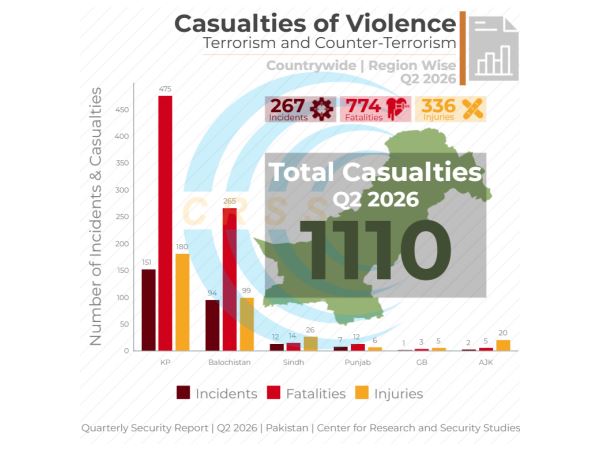
Fatalities in Balochistan fell by more than 40 per cent from 443 in the first quarter, driving the overall nationwide decline, the report said.
Together, KP and Balochistan accounted for almost 96 per cent of all violence-related deaths during the quarter.
The report said violence in KP was concentrated in the districts of Bannu, Lakki Marwat, Kurram and Bajaur, while about 60 per cent of incidents in Balochistan occurred in Quetta, Chagai, Washuk, Kech and Gwadar.
Punjab recorded a slight improvement, with fatalities falling to 12 from 14 in the previous quarter.
Sindh recorded 14 deaths, up from seven, while fatalities in Gilgit-Baltistan increased to three from one.
Five deaths were reported in Azad Jammu and Kashmir after none in the previous quarter, while the Islamabad Capital Territory recorded no violence-related deaths, compared with 37 in the first quarter.
According to the report, 453 suspected militants were killed during nearly 80 security operations, compared with 187 civilian deaths and 134 security personnel fatalities.
Although militant attacks outnumbered security operations by more than two to one, security operations accounted for a greater number of fatalities among suspected militants, suggesting they were significantly more lethal per engagement, the report said.
Civilians remained the most affected group in terms of injuries, suffering 205 of the 336 injuries recorded during the quarter. Security personnel sustained 117 injuries, while only 14 suspected militants were reported injured.
The report said civilian deaths declined by 17.2 per cent from the previous quarter, while fatalities among security personnel and suspected militants remained broadly unchanged.
The CRSS documented 188 militant attacks during the quarter, with shootings remaining the most common tactic, accounting for 67 incidents that killed 88 people. Coordinated armed assaults killed another 53 people.
The report also noted an increase in suicide attacks, with six vehicle-borne bombings killing 40 people and injuring 43, while six additional suicide attacks were foiled. It said the number of attempted suicide attacks had doubled compared with the first quarter.
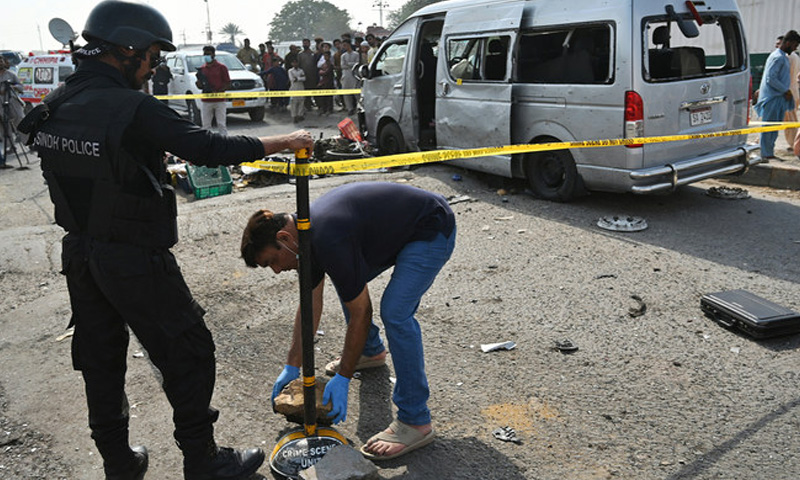
The deadliest such attack occurred near Chaman Phatak on May 25, when a vehicle bomb struck a passenger shuttle, killing 15 people and injuring 20, the report said.
Banned militant groups claimed responsibility for 22 attacks during the reporting period through June 25, resulting in 76 deaths and 29 injuries.
The outlawed Balochistan Liberation Army claimed responsibility for eight attacks that killed 41 people, making it the deadliest group during the quarter, while the outlawed Tehreek-e-Taliban Pakistan claimed seven attacks that killed 26 people.
The two groups together accounted for nearly two-thirds of the claimed attacks and more than 83 per cent of the fatalities in attacks for which responsibility was claimed, the report said.
You May Also Like