
- WEB DESK
- September 23, 2026
PHC bars deportation of 14 Afghan trainee doctors
-

- Alishba Khattak
- September 23, 2026
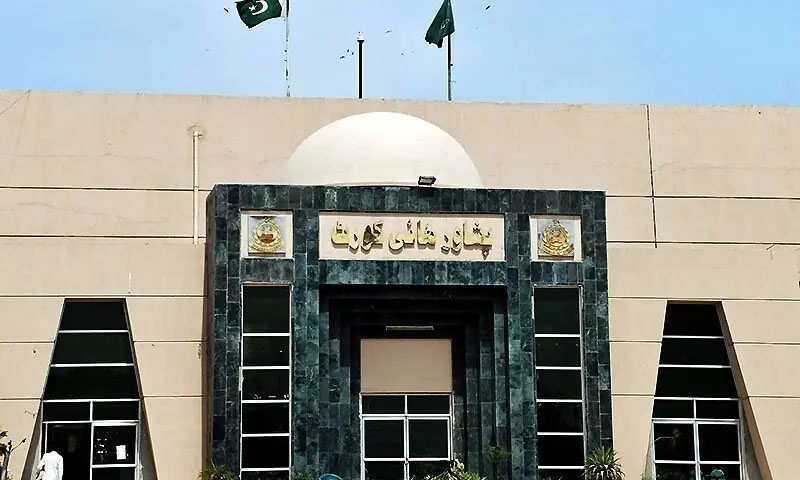
PESHAWAR: The Peshawar High Court (PHC) has stopped the deportation of 14 Afghan trainee doctors enrolled in medical and dental colleges in Khyber Pakhtunkhwa and issued notices to the Pakistan Medical and Dental Council (PMDC) and other respondents.
A PHC division bench comprising Justice Ijaz Anwar and Justice Kamran Hayat Khan heard the petition challenging the deportation of the Afghan nationals.
The petitioners’ counsel told the court that the trainee doctors had entered Pakistan on legal visas, which had since expired, and were pursuing specialised medical training at different hospitals.
The counsel said the doctors had been admitted to different medical and dental colleges under the Afghan quota through the prescribed process.
The Higher Education Commission (HEC) had also issued no-objection certificates to facilitate their visas, according to the petitioners’ counsel.
The lawyer said the PMDC had cancelled the admissions of Afghan medical students and that medical colleges subsequently issued notices to the affected students and trainee doctors following the council’s directives.
The petitioners contended that cancellation of their admissions without giving them an opportunity to be heard violated Article 25 of the Constitution and Pakistan’s international legal obligations.
The PHC stayed the deportation of the 14 petitioners and directed that they be allowed to continue their education until the next hearing.
The court sought replies from the respondents within 14 days and adjourned the hearing until October 12.
The case is the latest in a series of legal challenges to PMDC directives concerning Afghan medical and dental students enrolled in Pakistan.
PMDC directives
The controversy began on July 31, when the PMDC issued directives concerning Afghan medical students and subsequently followed them with a letter dated September 1.
Under the directives, medical and dental institutions were barred from allowing new admissions, placements, transfers and migrations of Afghan nationals during the current academic session.
The council also directed institutions to comply with its instructions concerning Afghan nationals already enrolled in medical and dental programmes and complete administrative formalities for their return to Afghanistan in coordination with the relevant authorities.
The PMDC later said its review of Afghan medical students was based on regulatory, documentation and immigration requirements rather than nationality.
According to the council, more than 200 Afghan students were studying medicine in Pakistan, while only 22 were registered with the PMDC.
The council maintained that foreign nationals could pursue medical education in Pakistan if they fulfilled the prescribed academic, registration, documentation and immigration requirements. It also said students affected by the decision were being facilitated in completing the necessary formalities and making arrangements for their return in accordance with government policy.
Lahore High Court intervention
The issue first reached the Lahore High Court, where Afghan medical students challenged the PMDC directives concerning their return to Afghanistan.
On September 11, Justice Khalid Ishaq suspended the PMDC directives of July 31 and September 1 to the extent of the petitioners before the court.
He directed that the students be allowed to continue their education, sit their examinations and return to their hostels.
The court also restrained medical colleges in Punjab from expelling the students or cancelling their examinations.
The LHC proceedings followed petitions filed by Afghan students enrolled at institutions including King Edward Medical University, Shaikh Khalifa Bin Zayed Al Nahyan Medical & Dental College and the Services Institute of Medical Sciences.
During the hearing, the PMDC’s counsel argued that the students did not have valid student visas and said the matter involved national security and government policy.
The petitioners’ counsel, however, argued that the students had been removed from their colleges without being given an opportunity to be heard and that the PMDC had exceeded its legal authority.
The LHC subsequently extended the suspension after the PMDC and a university sought more time to submit their replies.
Balochistan High Court takes different view
The Balochistan High Court, meanwhile, took a different position on petitions filed by Afghan nationals seeking permission to continue their medical and dental education and postgraduate training in Pakistan.
On September 15, a two-member BHC bench comprising Justice Muhammad Amir Nawaz Rana and Justice Abdul Qayyum Lehri dismissed the petitions, holding that foreign nationals did not have an absolute or permanent right to remain in Pakistan or pursue professional education contrary to state policy.
The court held that matters concerning immigration, the return of foreign nationals and national security primarily fell within the domain of the executive and declined to interfere with the PMDC directives concerning Afghan nationals.
At the same time, it observed that Afghan nationals must be treated with human dignity, fairness and in accordance with the law.
The BHC ruling contrasts with the interim relief granted by the LHC, where the operation of the PMDC directives was suspended for the petitioners and they were allowed to continue their studies and sit examinations pending further proceedings.
Islamabad High Court case
The issue has also reached the Islamabad High Court.
On September 16, the IHC suspended an expulsion order against Afghan national Dr Imadud Din and halted his deportation, allowing him to continue his postgraduate medical training.
IHC Justice Khadim Hussain Soomro granted interim relief in a petition filed by the doctor’s Pakistani wife.
The petitioner’s counsel argued that the PMDC’s July 31 communication could not be applied retrospectively to a doctor already undergoing postgraduate training.
The court restrained the authorities from terminating or obstructing his ongoing training solely on the basis of the PMDC communication.
The latest PHC order adds another judicial intervention to the ongoing legal challenges surrounding the status of Afghan medical and dental students and trainee doctors in Pakistan.
You May Also Like

- WEB DESK
- September 23, 2026
Abrar Ahmed dethrones Rashid Khan to become top T20I bowler

- WEB DESK
- September 23, 2026
Hesson urges facts over emotion in assessing Pakistan cricket

- WEB DESK
- September 23, 2026
