- WEB DESK
- October 18, 2026
PIMS fire: With 14 newborns dead, questions mount over years of neglect
-

- Bashir Chaudhry
- August 27, 2026
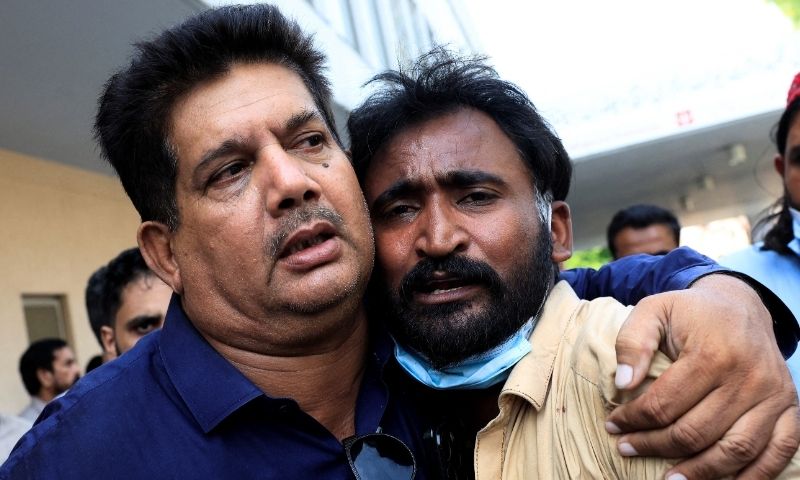
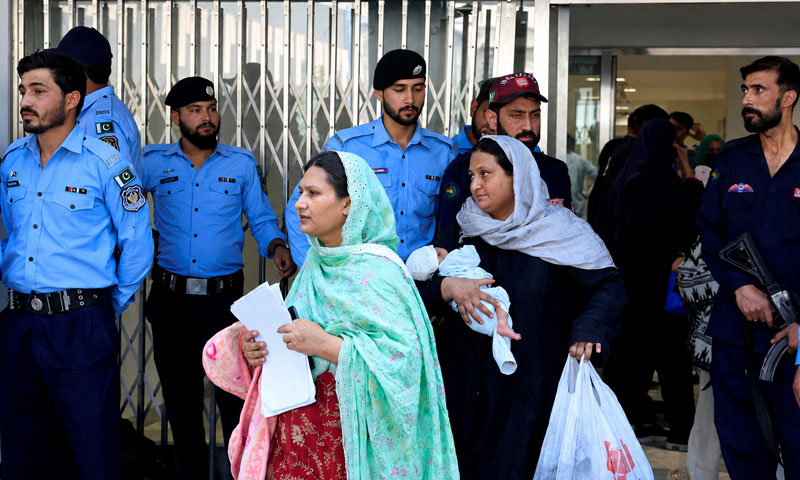
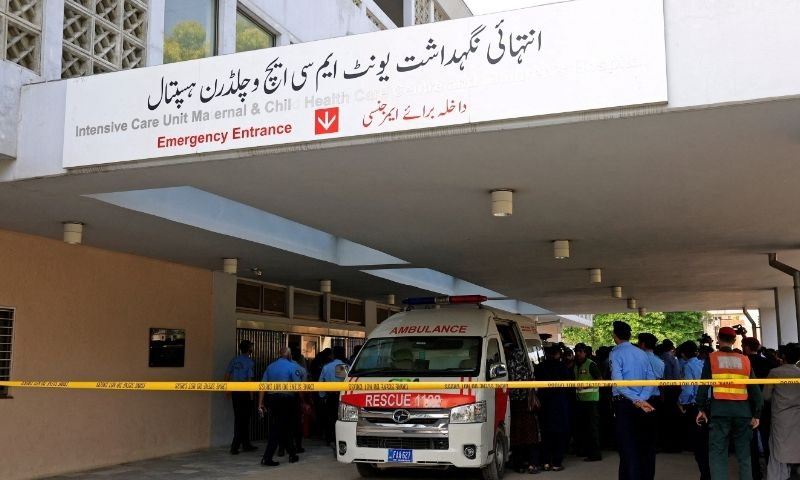
Fourteen newborns died after a fire broke out at PIMS in Islamabad on August 26, raising serious questions about fire safety, emergency preparedness and years of alleged administrative neglect.
“We left home for the hospital on Tuesday evening filled with joy, and why should we not be celebrating? After four years of marriage, we were expecting our first child and had come to Pakistan Institute of Medical Sciences (PIMS),” the father of one of the babies recalled. He said the family waited anxiously through the night before being told around 4am that they had been blessed with a baby boy.
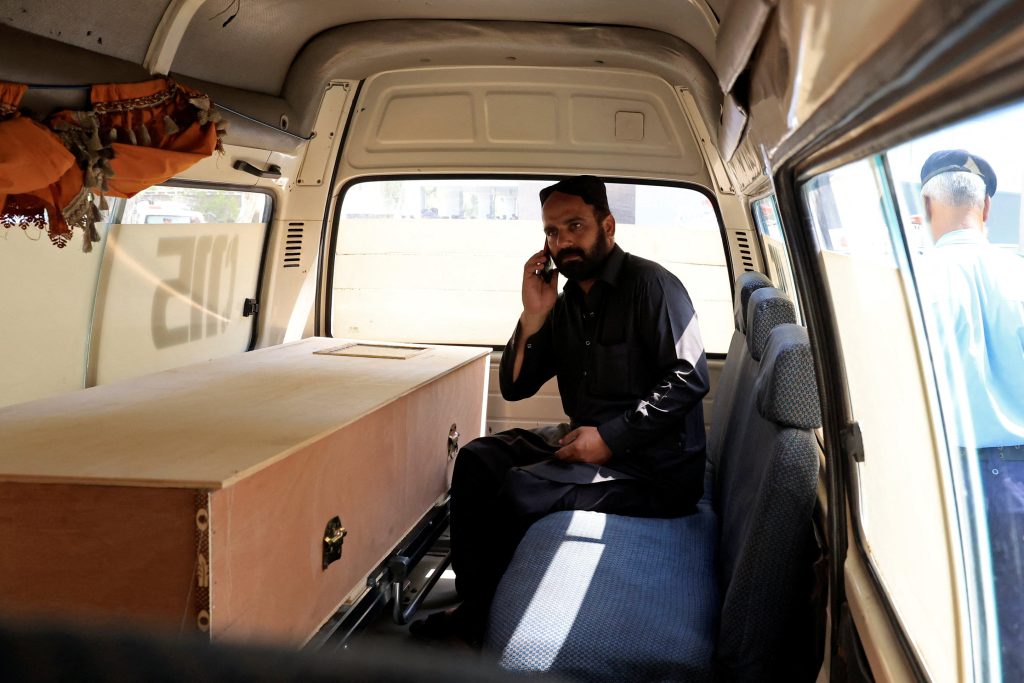
The child survived, but only for two hours. The father, who was reluctant even to disclose his name for fear of being drawn into an administrative inquiry, said he went to a masjid after receiving the news and offered prayers of thanks. Relatives and other visitors were not initially allowed inside the ward.
Then came the news of the fire.
“I ran upstairs, but instead of rescuing the babies, everyone was running outside,” he said. He eventually reached the ward and tried to enter, but the flames were too intense and he collapsed back at the entrance. He later managed to pull out some burned children, but said he could not tell whether they were still breathing.
Fire safety questions
The exact cause of the PIMS fire has yet to be conclusively established but initial possibilities included an electrical short circuit and an air-conditioner compressor failure.
A Capital Development Authority (CDA) fire incident report found that the hospital’s fire-safety and life-saving arrangements were inadequate and did not meet required standards. It also found that emergency fire exits had been permanently locked from the outside.

The report identified an electrical short circuit or an overloaded plug as a possible initial cause of the blaze.
An initial inquiry by PIMS management reportedly found that the fire was not initially widespread. This has raised a key question: why were the newborns not evacuated immediately?
According to the inquiry findings cited by Hum Digital, staff inside the neonatal intensive care unit ran outside after noticing the fire. The NICU doors had been designed so they could not be opened from outside unless unlocked from within. The arrangement had been introduced because of previous incidents involving child abductions, but it also prevented relatives from entering the ward to rescue the babies.
Another issue was access for emergency responders. Although PIMS has several gates, the gate closest to the children’s ward had reportedly been kept permanently closed for security reasons. This delayed the arrival of fire services, giving the flames additional time to spread through the ward.
Staff shortages during night shift
Hospital officials also pointed to staffing levels during the night as a possible factor.
They said morning and evening shifts generally have more staff, while only essential personnel are assigned at night. Some employees reportedly leave their designated areas after marking attendance or sleep at designated locations.
As a result, although fire-fighting equipment was available, there was reportedly no one immediately present to use it when the blaze broke out.
The investigation also uncovered repeated warnings about the air-conditioner compressors. The relevant department had reportedly written to PIMS senior management and the Ministry of National Health Services at least four times, warning that the compressors required cleaning, maintenance and repairs. The requests were allegedly deferred each time because of a lack of funds.
How did the fire spread so quickly?
According to media reports and Federal Health Minister Mustafa Kamal, the fire began at around 6:38am when a spark emerged from inside an air conditioner. Kamal said CCTV footage of the incident was available and told reporters that people began leaving the ward about a minute later.
He suggested that the presence of oxygen being supplied to the newborns may have caused the fire to intensify rapidly.
Senior health reporter Waqar Bhatti explained that oxygen cylinders are not normally kept inside the nursery, but oxygen is supplied to babies in incubators through pipes. That oxygen supply, he said, could contribute to the rapid spread of flames.
He added that where proper fire-suppression systems are absent, an oxygen-rich environment can allow a fire to spread within minutes.
Hospitals are generally expected to have multiple layers of fire protection, including automatic sprinklers, fire-detection and smoke-alert systems, as well as dedicated water lines that can automatically supply water when a fire is detected.
Who takes responsibility after major disasters?
The PIMS tragedy has once again raised questions about accountability in Pakistan and why senior officials rarely step down after major accidents.
In many countries, senior government officials resign following serious disasters, allowing investigations to proceed independently and signalling institutional responsibility. In Pakistan, however, resignations after such incidents remain rare.
The pattern has also raised concerns that government agencies sometimes respond to disasters by creating new opportunities for enforcement and revenue generation rather than addressing the underlying safety failures.
Following the Gul Plaza fire in Karachi, the Punjab government launched a drive to install safety equipment and raise fire-safety awareness in markets, private institutions and buildings. Complaints subsequently emerged alleging that Civil Defence personnel demanded between Rs15,000 and Rs20,000 from shopkeepers, hotel owners and businesses in exchange for fire-safety certificates and even sought payment for arrangements that did not actually exist.
The complaints reached the chief minister’s office, prompting action and an order for an inquiry against the officials involved.
Why does negligence persist?
Former federal secretary Hashim Popalzai said government departments and institutions do have mechanisms intended to prevent disasters, but administrative negligence, incompetence and inadequate funding often leave important work unfinished.
“The machinery and institutions exist to prevent accidents, but they still cannot always be prevented,” he said. He identified administrative negligence, incompetence and a lack of funds as major reasons why necessary work is delayed until it eventually contributes to a disaster.
Pakistan has few examples of senior officials voluntarily resigning after major accidents. Following the PIMS fire, the prime minister removed the federal health secretary from his post. The federal health minister, however, remains in office and has said he is prepared to face accountability.
Former federal secretary Muhammad Rauf said resignation by a minister or senior official is generally not viewed in Pakistan as a solution to the causes of an accident. Officials, he said, often argue that they are not personally responsible for individual components such as electrical wiring, pipes or minor repairs.
He said lower-level employees are frequently made scapegoats while senior officials remain in place and can potentially influence investigations.
Rauf argued that a system in which ministers and senior officials temporarily resign and submit themselves to an independent investigation could make inquiries more credible. If cleared, he said, they could return to office with their reputation strengthened rather than weakened.
Administrative affairs expert Dr Amina Mahmood attributed the problem partly to an outdated civil-service training system.
She said training institutions continue to operate on an old model that emphasises protocol and privileges rather than public service and citizen-focused governance. As governments around the world increasingly shift towards service delivery and public-centred administration, she argued, Pakistan urgently needs to modernise the training and institutional culture of its civil service.
The PIMS fire, therefore, is not only a story about a spark that killed 14 newborns. It is also about locked exits, delayed maintenance, inadequate emergency preparedness, staffing gaps and repeated warnings, and whether anyone in authority will ultimately be held responsible.