
- WEB DESK
- September 13, 2026
PM announces fuel relief scheme for motorcyclists, rickshaw and small-car users
-

- WEB DESK
- September 13, 2026
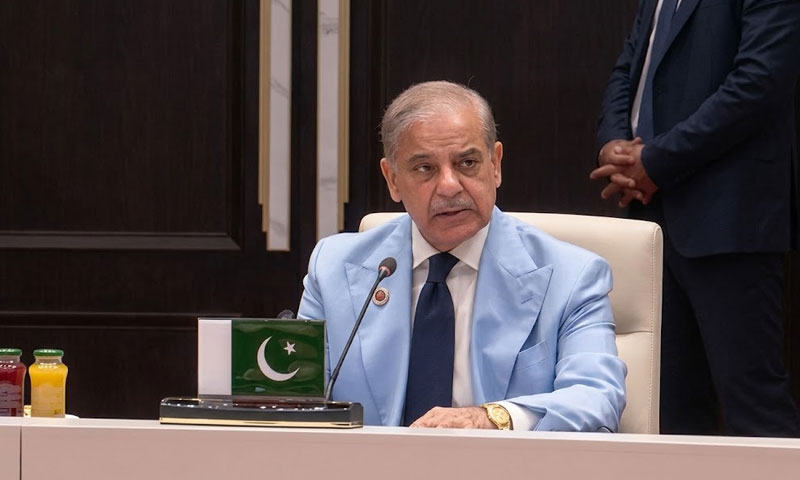
ISLAMABAD: Prime Minister Shehbaz Sharif on Sunday announced a special relief scheme to cushion the public from the impact of rising petrol prices, offering a discount of Rs100 per litre to motorcyclists, rickshaw and small-car users.
“There is an awareness of the burden the increase in oil prices has placed on the people,” Sharif said while announcing the scheme.
“We will not leave the people alone in this difficult time,” he said.
Under the scheme, motorcyclists, rickshaw and Qingqi users will receive a Rs100-per-litre relief on up to 20 litres of petrol per month, the prime minister said.
Owners of cars with engines up to 800cc will be eligible for the same Rs100-per-litre relief on up to 30 litres of petrol per month.
The scheme will benefit users of motorcycles, rickshaws, Qingqi three-wheelers and small cars, according to the prime minister.
The scheme will take effect in Islamabad from the night between Monday and Tuesday, while it will be rolled out across the country, including Azad Jammu and Kashmir and Gilgit-Baltistan, from the night between Wednesday and Thursday, Sharif said.
Registration for the special relief scheme has opened from Sunday, the prime minister said, adding that an awareness campaign would also be launched to inform eligible citizens about the programme.
The announcement comes as petrol prices have risen sharply, increasing pressure on households and transport users.
The government has been under growing pressure to provide relief from higher fuel costs as global oil prices have climbed amid the ongoing conflict in the Middle East.
The prime minister said the government was taking steps to ensure that people, particularly lower-income groups and users of smaller vehicles, received relief from the impact of higher fuel prices.
Levy cut resisted
According to sources, the finance ministry has resisted calls to cut the petroleum levy and use a contingency fund to offset the resulting revenue loss.
The government is currently charging a petroleum levy of Rs106 per litre on petrol, equivalent to around 28 per cent of its retail price. The levy on diesel stands at Rs101 per litre, or about 25 per cent of the retail price.
The plan comes as the government faces growing public pressure over rising fuel prices, which have climbed sharply amid the war in the Middle East and higher global energy costs.
Prime Minister Sharif has held meetings with senior officials to explore measures to ease the impact of higher fuel prices, while the Jamaat-e-Islami has called for a march on Islamabad on September 20 to press the government to reduce the petroleum levy.
The proposed targeted relief, however, does not address calls from some cabinet members to reduce the petroleum levy itself.
Several federal ministries have again proposed lowering the levy, with any resulting revenue shortfall to be covered from the Rs430 billion contingency allocation in the current fiscal year, government officials said.
The finance ministry has resisted the proposal, arguing that using the contingency funds to reduce the petroleum levy could jeopardise Pakistan’s commitments under its International Monetary Fund programme, the officials said.
The ministry also maintains that the contingency allocation was not intended to finance a reduction in the petroleum levy.
An IMF third review report, however, said that amid unusually high uncertainty over the budget, an adequate contingency reserve would be important to cushion fiscal risks, including those arising from the impact of the Middle East war.
Petroleum Minister Ali Pervaiz Malik had proposed in May, before the current fiscal year’s budget was finalised, that the petroleum levy be capped at Rs50 per litre, with an annual collection target of Rs1 trillion.
The finance ministry spokesman did not respond to questions about whether the ministry had rejected the proposal by cabinet ministers to use the Rs430 billion contingency allocation to compensate for any revenue loss resulting from a reduction in the levy.
The spokesman also did not respond to questions about the ministry’s position that the contingency allocation could only be used to address fiscal pressures or how those pressures were defined.
Contingency funds
The government had Rs389 billion in contingency funds approved by parliament for the previous fiscal year. Budget documents show that Rs276 billion was spent from the allocation, leaving Rs113 billion unutilised.
Government officials said some of the funds were not used for their original purposes, while part of the allocation was diverted to meet requirements arising from the prime minister’s directives.
The finance ministry did not respond to questions about how the Rs276 billion was spent.
The government also collected around Rs100 billion more in petroleum levy revenue last fiscal year than initially targeted, according to the report.
Petroleum levy collections rose 28 per cent year-on-year to Rs1.567 trillion, as the government relied increasingly on fuel taxes to bolster revenues.
The additional revenue and unspent contingency funds together amounted to around Rs213 billion, which could have been used to reduce the petroleum levy, according to government officials who support a reduction in fuel taxes.
The government instead maintained high levy rates as it sought to compensate partly for a shortfall in Federal Board of Revenue tax collections.
IMF programme
The dispute over the petroleum levy comes as Pakistan seeks to maintain fiscal targets agreed with the IMF under its $7 billion programme.
The finance ministry has argued that reducing the levy could undermine those commitments, although government officials supporting a tax cut say the current increase in fuel prices is primarily linked to the Middle East conflict and that a temporary reduction in fuel taxes could be justified.
The government also exceeded its IMF target for the primary budget surplus last fiscal year. According to finance ministry data, the unadjusted primary surplus reached Rs3.63 trillion, Rs464 billion above the IMF target of Rs3.16 trillion and equivalent to 2.8% of gross domestic product.
The finance ministry spokesman did not respond to questions about whether a reduction in the petroleum levy would put the IMF programme at risk.
You May Also Like


- WEB DESK
- September 13, 2026
Maryam Nawaz’s daughter Mahnoor Safdar ties the knot at Jati Umra

- WEB DESK
- September 13, 2026
Mahira Khan reveals pregnancy, expecting second child
- WEB DESK
- September 13, 2026