- Web Desk
- 3 Minutes ago
PM Shehbaz to visit Iran to attend Ayatollah Ali Khamenei’s funeral: FO
-

- Web Desk
- 2 Hours ago
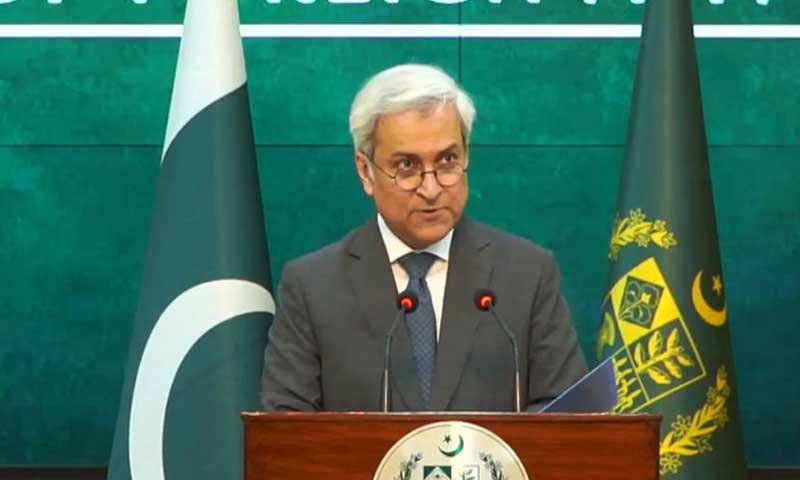
ISLAMABAD: Prime Minister Shehbaz Sharif will undertake official visits to Iran and Türkiye from July 3 to 5, Foreign Office spokesperson Tahir Andrabi announced during a weekly press briefing on Thursday. The spokesperson said the prime minister will travel to Iran to attend the condolence ceremony for the country’s former Supreme Leader, Ayatollah Ali Khamenei. During the visit, Shehbaz will convey Pakistan’s condolences and express solidarity with the Iranian government and people on behalf of the government and people of Pakistan.
Following his visit to Iran, the prime minister will also travel to Istanbul at the invitation of Turkish President Recep Tayyip Erdogan.
Providing an update on diplomatic efforts surrounding the US-Iran agreement, Andrabi said Pakistan had intensified its engagement in line with the Islamabad Memorandum of Understanding (IMoU).
He added that the recent negotiations in Doha had made significant progress, with both the United States and Iran agreeing to continue talks after the burial of Ayatollah Ali Khamenei.
The spokesperson said Pakistan remained actively engaged in efforts to facilitate dialogue between the two sides under the framework of the Islamabad MoU, aimed at advancing the US-Iran peace process.
Afghan envoy summoned over captured militant
FO spokesperson also mentioned that Afghanistan’s chargé d’affaires was summoned after an Afghan national was captured alive while allegedly carrying out a terrorist attack. Andrabi said a formal demarche was issued to the Afghan chargé d’affaires on June 29 following the arrest of the Afghan national.
“The security of Pakistan’s citizens is non-negotiable,” the spokesperson said.
Andrabi also announced that Pakistan would launch “olive diplomacy” after securing membership of the International Olive Council, attributing the achievement to the country’s improved performance in olive cultivation.
On consular matters, the spokesperson said Pakistan had shared with India a list of 750 Pakistani nationals believed to be imprisoned in Indian jails, adding that the government remained committed to securing their release and repatriation.
Commenting on reports about a letter written to the prime ministers of Pakistan and India, Andrabi declined to comment, saying the individuals who wrote it had acted in their personal capacity. Responding to remarks related to water issues, the spokesperson said no country, including India, could turn Pakistan into a barren land, adding that Pakistan was a strong country.
Addressing reports regarding a gurdwara in Farooqabad, Andrabi said the site was not being used for religious rituals and had become structurally unsafe, posing a risk to nearby buildings and residents. He said an attempt had been made to demolish the structure without the approval of the Evacuee Trust Property Board, which intervened and halted the demolition the same day.
The spokesperson also urged India to take concrete measures to protect its religious minorities instead of, he said, creating controversy over Pakistan’s administrative matters.
‘Water cannot be used as a weapon’
Andrabi also rejected any unilateral actions affecting the decades-old water-sharing agreement adding that the Deputy Prime Minister and Foreign Minister Ishaq Dar had made it clear during the Indus Water Treaty seminar that the more than six-decade-old Indus Waters Treaty could not be unilaterally revoked.
The spokesperson said Pakistan’s position is that the core issue between Islamabad and New Delhi is not terrorism, but what he described as a mindset within the Indian leadership that seeks to use water as a weapon.
Separately, Andrabi said Pakistan had facilitated the release of a crew of 22 Iranian fishermen through its diplomatic efforts.
He added that, with Pakistan’s assistance, the number of Iranian citizens who have returned to their homeland has now reached 70.
You May Also Like