
- Reuters
- October 27, 2026
PM Shehbaz, Vance withdraw from Switzerland ceremony after Islamabad MoU signed
-

- Zoya Anwer
- June 19, 2026
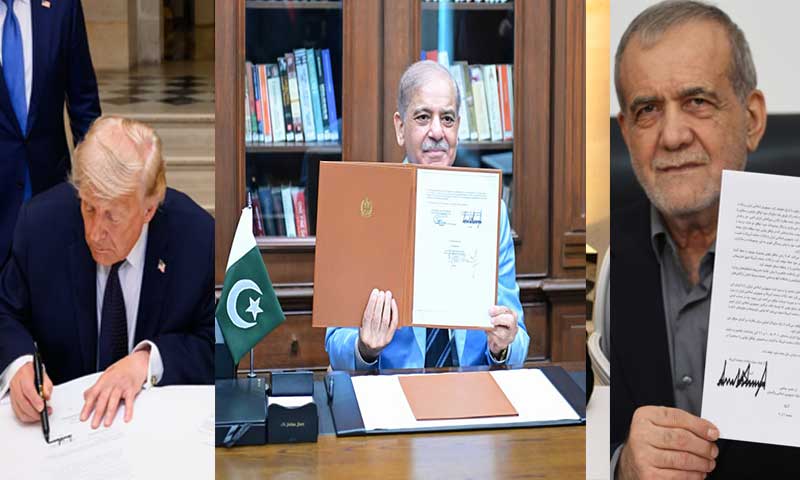
Prime Minister Shehbaz Sharif and US Vice President JD Vance have cancelled their planned trips to Switzerland after the Islamabad Memorandum of Understanding (MoU) between the United States and Iran was signed remotely, eliminating the need for a formal signing ceremony.
Switzerland has also confirmed that planned talks between the United States and Iran, scheduled for Friday at the Burgenstock mountain resort, will no longer take place. The Swiss foreign ministry said the meeting, which was expected to focus on the implementation of a recently reached US-Iran agreement, has been called off, without providing further details on future arrangements.
The White House had also announced that Vice President JD Vance had also postponed his planned trip to Switzerland, where discussions on implementing the US-Iran agreement were expected to take place.
“The logistics of these negotiations have never been simple or predictable. As of now, the Vice President is not departing tonight,” a White House spokesperson said.
The spokesperson did not provide a revised schedule for the visit but stressed that Washington remained committed to advancing the diplomatic process. “We look forward to beginning technical talks as soon as possible,” the spokesperson added.
According to US officials, logistical and scheduling issues around the negotiations have complicated preparations for the follow-up talks. Despite the cancellation, both sides have previously indicated that diplomatic engagement will continue, with future technical-level discussions expected to be arranged at a later stage.
Deputy Prime Minister and Foreign Minister Ishaq Dar on Thursday had confirmed to Dawn that the prime minister would no longer travel to Switzerland. Explaining the decision, Dar said the planned ceremony had become unnecessary after the agreement was electronically signed on Thursday by US President Donald Trump and Iranian President Masoud Pezeshkian, followed by Prime Minister Shehbaz Sharif in his role as mediator.
“As the signing has been completed remotely this morning after the US and Iranian presidents signed, followed by PM Shehbaz signing as mediator, tomorrow’s ceremony has been cancelled,” Dar said.
The ceremony had been scheduled to take place on Friday at the Buergenstock resort in Switzerland, where the Pakistan-facilitated agreement was expected to be formally signed.
The developments come after the signing of the Islamabad MoU, which aims to end months of conflict between Washington and Tehran. While the formal ceremony has been cancelled, officials from the United States, Iran and mediating countries are expected to continue coordinating technical and diplomatic discussions on implementing the agreement in the coming weeks.
What is in the MoU document?
The text of the Pakistan-mediated MoU outlines a framework for ending hostilities between the United States and Iran and paving the way for a permanent peace agreement.
Under the framework, both sides commit to permanently halt military operations against each other and their allies, including a cessation of hostilities in Lebanon. The agreement also requires respect for sovereignty and non-interference in internal affairs.
The US is to gradually lift its naval blockade on Iran within 30 days, while Iran will ensure safe passage through the Strait of Hormuz and waive transit fees for 60 days. Tehran is also tasked with clearing shipping lanes of military obstacles and entering talks with Oman on the future management of the strategic waterway.
The accord provides for immediate sanctions relief, the unfreezing of Iranian assets and a proposed $300 billion reconstruction and investment programme for Iran. It also reaffirms Iran’s commitment not to pursue nuclear weapons, with enriched nuclear material to remain under international monitoring.
A joint mechanism will oversee implementation, while both sides work toward a final treaty that would ultimately require approval through a United Nations Security Council resolution.
You May Also Like

- WEB DESK
- October 27, 2026
Punjab govt moves to provide life insurance cover to employees
- AFP
- October 27, 2026
