
- Reuters
- October 16, 2026
‘Satluj’ banned: Diljit Dosanjh’s best work dares to revisit Indian Punjab’s darkest decade
-

- Zoya Anwer
- July 21, 2026
TW: Mentions graphic violence
Spoiler alert
I would like to think of myself as someone who does not enjoy concerts, especially the loud, boisterous kind. However, I am willing to make an exception for a singer who has mastered another craft just as spectacularly: Diljit Dosanjh. So, when the conversation surrounding his latest offering, Satluj, became what many called “controversial”, I had to see what the scuttlebutt about the banned film was. I will be honest. By the time the two-hour-and-43-minute film ended, I was not prepared for the emotions it left behind.
When Diljit takes the stage, it is said to be an experience of a lifetime. The energy, aura and command with which the Punjabi superstar performs are second to none.
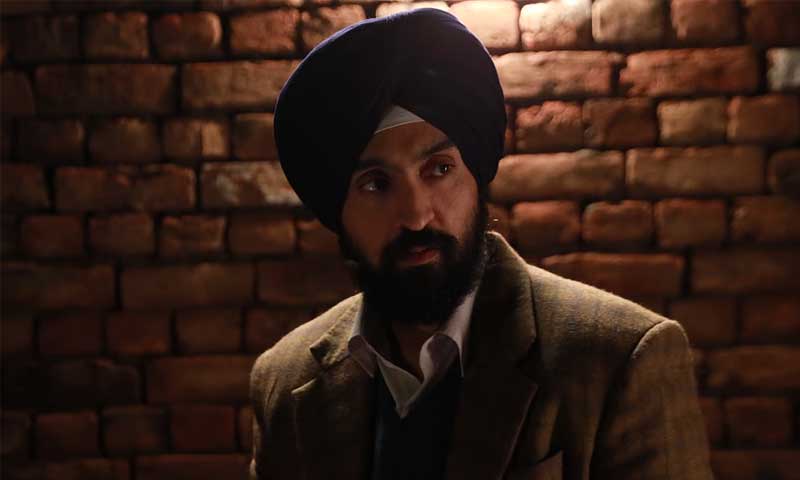
Then you see him as Jaswant Singh Khalra, the human rights activist who exposed the alleged secret cremation of thousands of Sikhs killed during enforced disappearances and extrajudicial operations in Indian Punjab. Suddenly, the same man known for filling stadiums appears quiet, vulnerable and almost ordinary.
That is what makes the performance so haunting.
Directed by Honey Trehan, the film which, according to Variety, took three years to complete and underwent two title changes, from Ghallughara to Punjab ’95 and eventually Satluj, was released without cuts on Zee5 on July 3. It was taken down two days later.
The premise
Set in Punjab during the mid-1990s, Satluj follows Jaswant, a banker whose life changes when people around him begin disappearing.
His search for a missing woman leads him to hospital morgues, cremation records and the names of people whose bodies were allegedly disposed of as “unclaimed”, despite the authorities having access to their identities and addresses. What begins as an attempt to help one family gradually becomes an investigation into a system of abductions, extrajudicial killings and secret cremations.
The deeper Jaswant goes, the more dangerous his work becomes.
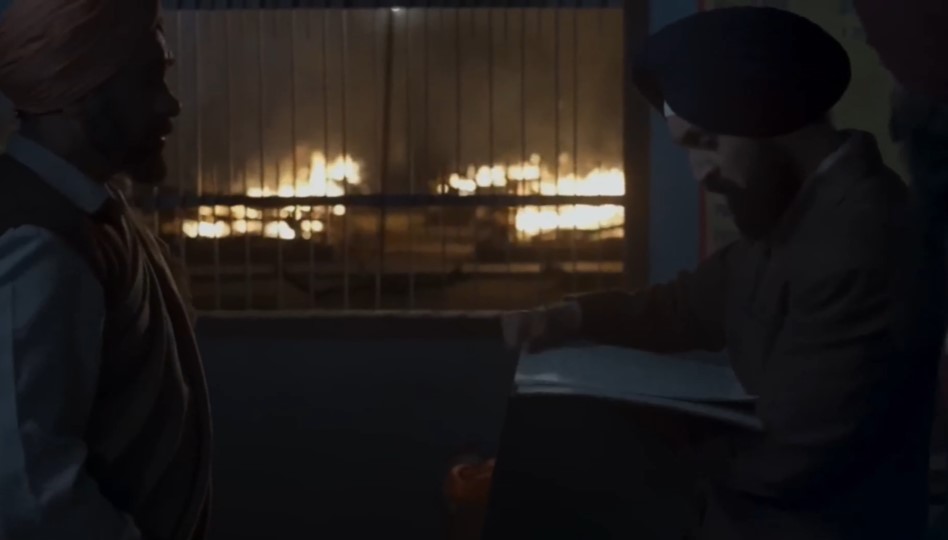
He challenges police officials, gathers evidence and demands accountability from institutions that appear more interested in protecting themselves. He is repeatedly warned to stop. His friends are killed, and even those within the police who try to help him find themselves trapped by the same machinery.
Yet Jaswant refuses to stop.
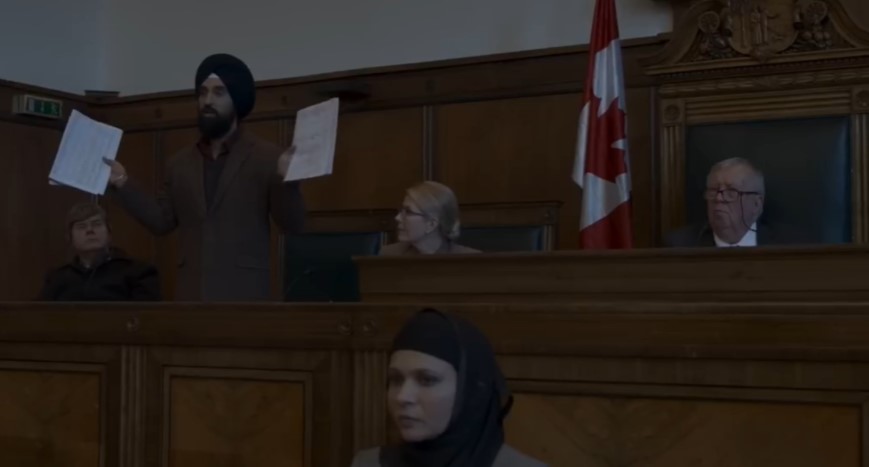
The film also follows his efforts to take the evidence to the courts and the international community. He refuses asylum abroad and declines offers of personal security. Leaving, for him, would mean abandoning the families whose loved ones had vanished.
Eventually, Jaswant is abducted by policemen and disappears himself. His wife, Pammy, is left to continue the search as the courts demand his production and the investigation slowly closes in on those responsible.
The final testimony confirms what the audience already fears. Jaswant was tortured, murdered and thrown into the Sutlej, the river that gives the film its name.
Diljit’s performance
Diljit is extraordinary as Jaswant. Anyone who saw him in Amar Singh Chamkila knows he can deliver a biopic.
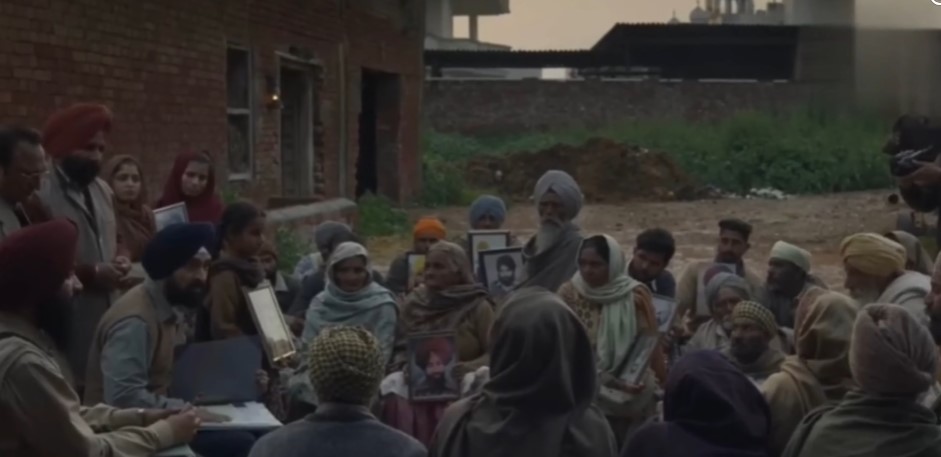
Jaswant’s strength lies in simplicity. Save for the final act, when his line, “I challenge the darkness”, appears, there are no exaggerated speeches designed to announce a “serious” performance. His courage grows gradually, shaped by each register he reads, each grieving community member he meets and each official lie he is expected to accept.
Diljit’s Jaswant is not fearless. He understands the danger and repeatedly warns his loved ones about it. You see it in the pauses before he answers a police officer, in the way he studies a room and in the concern that flashes across his face whenever his family is mentioned.
He continues despite that fear.
Diljit also allows Jaswant’s warmth to survive. He remains a husband, a father, a friend and, above all, a member of his community. He jokes, smiles and sits with his family. These moments prevent him from becoming a distant symbol of sacrifice. He feels like an ordinary man whose life is consumed by an extraordinary injustice.
Even when you know what happened to the real Jaswant Singh Khalra, Diljit keeps you clinging to the hope that he might return alive. That hope mirrors the fragile belief sustaining families of the disappeared, who survive each day thinking a door may open, a phone may ring or someone may finally come home.
His physical performance becomes especially powerful in the final act. The man who once walked into police stations demanding answers is reduced to a bruised and swollen body, yet his dignity remains intact.
One scene stayed with me after the credits rolled. A tortured Jaswant sits on a windowsill and tells SPO Kuljit how cold it is “back there”, where water runs through the gash in his body. Diljit delivers the line almost gently. His exhaustion carries the horror, and that restraint makes the moment unbearable.
That restraint also makes Diljit’s own reaction to the film’s removal more striking.
Responding during a livestream, he said he felt “deeply satisfied” that the film had finally reached people and that Jaswant Singh Khalra was now being discussed in homes. He also conceded the removal had been expected. He had thought the film might survive until Monday, but it disappeared on Sunday evening.
For Diljit, the censorship was especially difficult to justify because the film was not presenting an unresolved allegation. “The film is only talking about what has already been decided by the courts,” he said, questioning why Khalra’s story was still being suppressed in 2026 after his voice had first been silenced in 1995.
He also spoke of the frustration of carrying the unreleased film for years. Even while working on songs or performing shows, he said the thought that the film remained unseen would return and leave him upset.
Its brief release, however, appears to have given him some closure.
“This is your film now,” he said. “It cannot be stopped anymore.”
That may be the most fitting description of both the film and his performance. Diljit gives Jaswant a voice that is quiet, restrained and impossible to ignore. Once heard, it is much harder to silence.
The impact
Indian Punjab’s darkest decade was not simply a conflict between Sikh militants seeking an independent Khalistan and Indian security forces. It was also a period in which ordinary families lived with raids, arbitrary detention, disappearances and the fear that someone taken away might never return. The Indian state defended its actions as necessary to suppress militancy, but human rights organisations documented torture, extrajudicial killings and a system in which accountability often came second to the preservation of state power.
That is the history Jaswant Singh Khalra stepped into. His investigation was not limited to numbers in cremation registers; it was an attempt to restore names, identities and dignity to people whose bodies had allegedly been disposed of without their families’ knowledge. His own disappearance and murder in 1995 exposed the danger of challenging that silence.
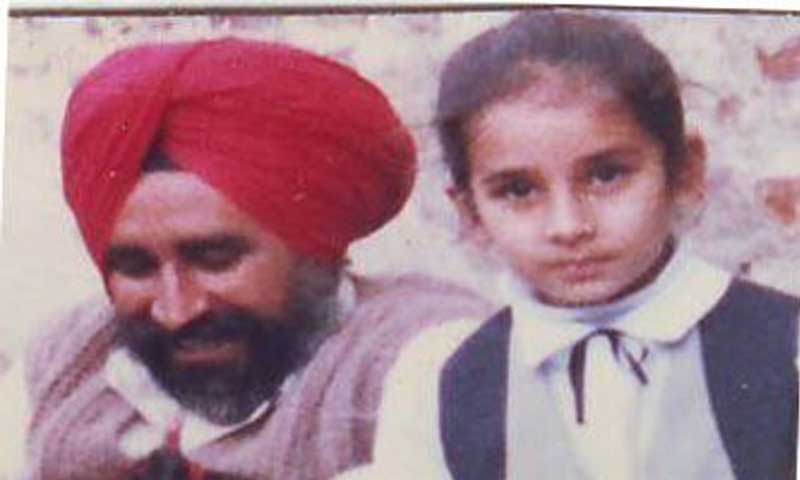
Although several Punjab police officers were later convicted, justice remained painfully narrow when measured against the scale of what had been uncovered. For many families, the struggle was never only about punishment. It was about being heard, being believed and being allowed to mourn.
That struggle did not end with the insurgency. It shifted from streets and police stations to courtrooms, archives, newsrooms and cinema screens. The battle became one over memory: whose version of Punjab’s darkest decade would survive, which records would be accepted and whether families of the disappeared could speak on their own terms.
Satluj therefore joins a troubling record of Indian films encountering censorship when they confront histories the state, political groups or cultural gatekeepers would rather leave undisturbed. Paanch (2003), a violent crime drama about five young musicians whose staged kidnapping spirals into murder, remains officially unreleased. Black Friday (2004), which examined the 1993 Bombay bombings, was held back until the related trial concluded. Parzania (2005), centred on a child’s disappearance during the Gujarat riots, was effectively kept out of cinemas in Gujarat despite winning a National Award. Inshallah, Football (2010) was denied certification over its treatment of IOK, while Unfreedom (2015) was barred for addressing queer identity, religious extremism and terrorism.
These films differ greatly in subject and form, but their treatment reveals a recurring discomfort with cinema that refuses to soften politically sensitive realities. Suppression does not erase such stories; it merely confirms how threatening remembrance can be.
That is why Satluj will stay with you for days.
The film does more than memorialise Jaswant. It asks what happens when institutions decide who deserves due process, whose death requires an explanation and which families are entitled to mourn. It captures how state violence spreads beyond its immediate victims. It enters homes, fractures communities and forces people into silence. Those who witness abuse are threatened; those who document it become targets; and those who survive are left searching for bodies, records and answers.
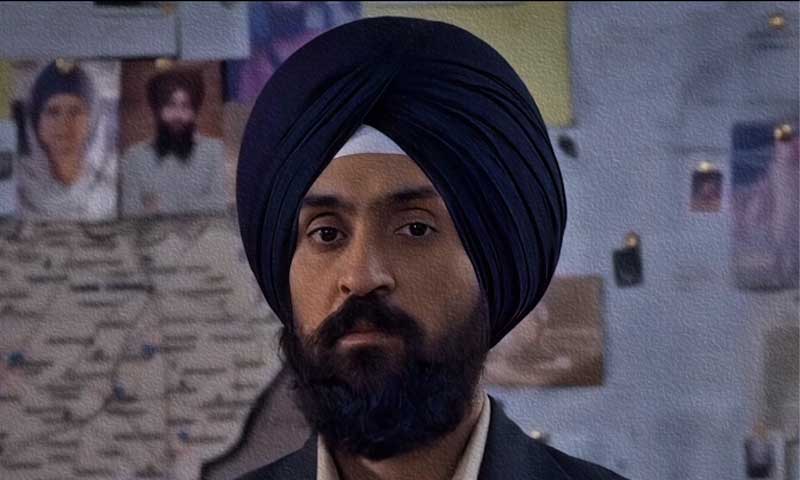
Diljit’s participation gives the story a reach it may otherwise never have received. His stardom brings an audience to a chapter of history that many would prefer to keep buried. That makes his later choices harder to reconcile. After filming Satluj, he visited Indian-occupied Kashmir to showcase its beauty and hospitality and thanked Indian soldiers for “maintaining peace”, appearing to gloss over allegations of the same human rights violations and extrajudicial practices the film asks audiences to confront.
Perhaps that contradiction reflects the compromises demanded of artists working within powerful industries and political systems. Perhaps it exposes the limits of the convictions expressed through their work.
Nevertheless, Satluj deserves to be watched for the questions it raises about disappearances, impunity and the power of the state. It shows how unchecked authority can instil fear, erase evidence and leave families trapped between grief and hope, irrespective of which side of the border they may be.
The cast includes Diljit Dosanjh, Arjun Rampal, Suvinder Vicky, Kanwaljit Singh, Geetika Vidya Ohlyan, Varun Badola and Saurabh Sachdeva. The film’s rating, which was 9.5 on IMDB, was removed after it was taken off air, according to Hindustan Times.
You May Also Like
- WEB DESK
- October 16, 2026
Maryam Nawaz takes aim at Maulana Fazl over PTI support

- Reuters
- October 16, 2026
Tesla unveils flying car with rocket thrusters
- WEB DESK
- October 16, 2026