Saudi Arabia approves 2027 budget with projected 190bn-riyal deficit
-

- Reuters
- November 24, 2026
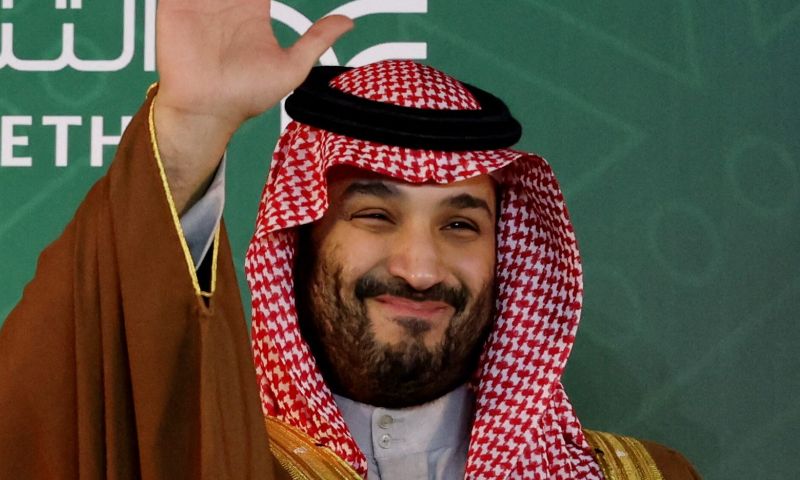

Saudi Arabia is budgeting for a narrower 2027 deficit of 3.6% of GDP, from an estimated 4.9% this year, despite an escalating war with the Houthis in Yemen, and is “resilient enough to withstand a prolonged conflict” with the group, the finance minister said.
In a briefing with journalists, Finance Minister Mohammed al-Jadaan called the idea that strikes on civilian assets, or “blackmail by missiles,” could make Riyadh compromise on national security “a total mistake”.
The Houthis have struck Saudi Arabia with missiles and drones as part of the group’s stated goal of pressuring the kingdom to end its support for the Yemeni government.
The budget projects revenue of 1.2 trillion riyals ($319.84 billion) and spending of 1.39 trillion riyals ($371.76 billion), leaving a 190 billion riyal ($50.67 billion) shortfall.
GDP shrank 2.1% this year on lower oil output, Jadaan said, but the budget projects a 10.9% rebound in growth in 2027.
The contraction is deeper than neighbour the UAE’s, which projects slight 2026 growth, but far shallower than double-digit contractions expected for Qatar and Kuwait, which lack alternative export routes to the Strait of Hormuz.
Still, the war has struck at the heart of Saudi Arabia’s economy as it was already in a period of transition from years of heavy spending on so-called gigaprojects, some of which made insufficient returns.
As the Houthi conflict drags on, Jadaan said growth would be driven by domestic consumer demand, which was in turn keeping foreign investors interested, and the resilience of the oil economy.
But, he warned: “It’s not a rosy world… and it is unlikely to be until we die.”
Total revenue was expected to reach 1.191 trillion riyals in FY 2026, an increase of 7.1% compared with the previous year and 3.7% above the budget estimate, the finance ministry said.
Total expenditure increased by 3.4% to 1.43 trillion riyals in 2026, compared with the previous year.
Vision 20230, re-tooled
The conflict has landed as Vision 2030, Saudi Arabia’s multibillion-dollar programme to diversify the economy away from oil, modernise society and position the kingdom as an investment and tourism hub, was already being pared back.
Spending has been reduced on some of the gigaprojects, such as the giant cube-like Mukaab structure in Riyadh and steel-and-glass tower The Line at the NEOM desert megacity.
With Houthi strikes on the main airport in Riyadh keeping it closed to most international flights, the war has also upended the showcase events calendar. The country’s flagship investment conference, the Future Investment Initiative, has been postponed by a full year and soccer’s Asian Cup to December next year.
Without naming projects, Jadaan said Vision 2030 was greater than any single one, and that tools and initiatives not right for the moment would be changed.
“If some needs to be accelerated we’ll accelerate them, if some needs to be warehoused, we will warehouse them,” he said, calling Vision 2030 “our north star”.
Where the money goes
The budget does not read like a war budget. Military spending rises just 2.2% to 263 billion riyals ($70.1 billion).
“We have invested in advance in a lot of the systems that now are relevant,” Jadaan said. If fighting demanded more, there was “no price tag or cap” on funds for the military, he said.
Logistics and transport spending, watched closely by investors, will be down roughly 3 billion riyals ($800 million) from actual spending in 2026, the budget shows.
Jadaan said 2027 was largely a design, not a building, year for the transport sector, with much of that expected to happen in 2028, including new infrastructure to help transport oil outside the Strait of Hormuz.
Money was flowing into services instead. Municipal spending would rise to 93 billion riyals ($24.8 billion) from 83 billion riyals ($22.1 billion), driven by Riyadh’s needs and quality-of-life projects, he said.
The big mover is “general items”, mostly debt service as interest costs climb on floating-rate borrowing, as well as social security payments.
Debt is forecast at 35.9% of GDP in 2027, rising to 39% by 2029, below a 40% ceiling Jadaan saw no reason to raise, saying the self-imposed limit “is serving us well”.
Homemade economy
The non-oil economy, which Vision 2030 is meant to build, has held up, he said. It grew 1.8% in the third quarter and could expand 2.5% this year, despite the near-closure of east coast ports and widespread disruption.
The engine was domestic demand. Inbound tourism was down 7%, but Saudis travelling domestically had more than filled the gap, he said, and consumption remained healthy.
Saudi unemployment in the second half of 2026 remained down from last year, at 6.5%.
Jadaan said the war would not stop reforms, such as subsidy cuts. “There will never be a good time to reform,” he said. “You go with the plan.”
Higher electricity and water tariffs take effect on January 1 for households and businesses. To soften the burden, King Salman directed a 500-riyal monthly allowance for citizens in government jobs, retirees and social security families.