- Web
- 20 Minutes ago
SC to take up petition challenging CJ’s Powers on Monday
-

- Web Desk
- Sep 16, 2023
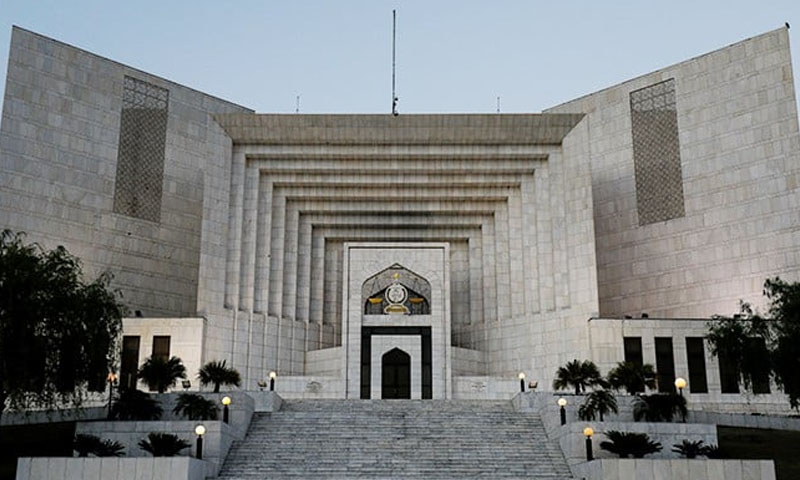
ISLAMABAD: The Supreme Court has scheduled a hearing for a review petition challenging the SC (Practice and Procedure) Bill, 2023, which seeks to curtail the authority of the Chief Justice of Pakistan (CJP) to take suo motu notice individually. The hearing is slated for September 18, which falls on Monday.
The Registrar’s Office has issued notifications to all relevant parties, and it is anticipated that a full court session will be convened to address this matter. Chief Justice-designate Qazi Faez Isa will lead the bench after taking the oath of office.
The outgoing government PDM had passed the Supreme Court (Practice and Procedure) Act, 2023, with the aim of limiting the CJP’s powers to form benches and assign cases to himself. The bill received parliamentary approval earlier. However, its implementation was halted by an eight-judge bench, including the CJP, following a trio of petitions challenging its validity.
Supreme Court orders reopening of corruption cases worth Rs700 billion
The SC (Practice and Procedure) Bill, 2023, serves multiple purposes, including the delegation of suo motu notice-taking authority to a three-member committee comprising senior judges, including the chief justice. The bill’s objective is to ensure transparency in court proceedings and protect the right to appeal.
The bill outlines the formation of benches, specifying that a committee consisting of the chief justice and the two most senior judges will be responsible for constituting benches to handle cases, with decisions being made by majority vote.
In cases invoking the apex court’s original jurisdiction under Article 184(3), the bill mandates that they must first be presented to the aforementioned committee for consideration.
Furthermore, the bill empowers the committee to establish a bench comprising at least three judges from the Supreme Court, which may include members of the committee itself, to adjudicate on matters of significant public importance relating to the enforcement of fundamental rights.
You May Also Like