
- Reuters
- September 17, 2026
Scaloni’s revolution: Building Argentina’s success beyond Messi
-

- Reuters
- July 13, 2026
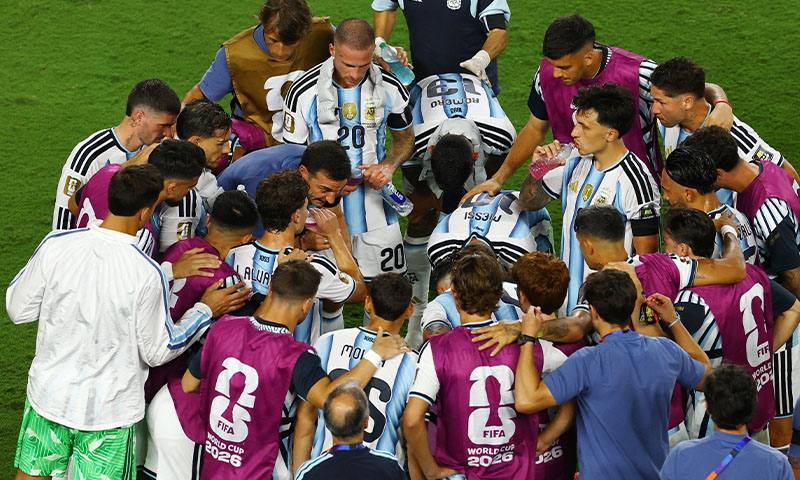
WEB DESK: When Lionel Scaloni took charge of Argentina, few expected him to become the architect of one of the greatest eras in the country’s football history.
At the International Football Summit in Bilbao in 2020, Scaloni was hardly among the biggest names on the stage. Brazil’s Tite attracted attention, while renowned coaches such as Fabio Capello, Unai Emery and Ernesto Valverde commanded the spotlight. Scaloni, only months into one of football’s most challenging jobs, appeared like an outsider among coaching royalty.
But away from the cameras, his personality began to leave an impression. During lunch, the quiet former Argentine defender opened up through humour and relaxed conversation, winning over even the famously serious Capello.
Years later, Scaloni stands among the elite. The coach from the small town of Pujato has guided Argentina to another World Cup semi-final, putting the team within reach of a second consecutive final and the possibility of joining an exclusive group of nations that have won back-to-back World Cup titles.
Yet Scaloni’s greatest achievement has not only been Argentina’s trophies; it has been transforming a team that once depended heavily on Lionel Messi into a complete and united football force.
When he inherited the national team after the disappointing 2018 World Cup in Russia, Argentina was facing uncertainty. Messi had stepped away from international football after years of criticism that he could not replicate his Barcelona success with the national side.
Scaloni’s appointment came after several high-profile coaches, including Mauricio Pochettino and Diego Simeone, declined the pressure-filled role. Many saw him as a temporary choice rather than a long-term solution.
He quickly proved otherwise.
Working alongside former Argentina internationals Pablo Aimar and Walter Samuel, Scaloni’s first major task was to bring Messi back into the national setup. But his bigger challenge was to create a team where Argentina’s success did not depend solely on its captain.
The turning point came at the 2021 Copa America final in Rio de Janeiro. Angel Di Maria’s goal against Brazil at the Maracana ended Argentina’s 28-year wait for an international trophy and delivered Messi his first major senior title with his country.
That victory became the foundation of Argentina’s golden era, culminating in the 2022 World Cup triumph over France in Qatar.
Under Scaloni, Argentina evolved from a side carrying the weight of Messi’s expectations into a balanced team where every player understood their role. The coach managed to embrace Messi’s greatness without allowing it to overshadow the collective strength of the squad.
Scaloni’s leadership style has been built on humility rather than personal glory. In a football culture often associated with strong personalities and dramatic figures, he has remained away from the spotlight, allowing his players to take centre stage.
“I’m not a coach because I like the 4-3-3,” Scaloni once said. “I like being in a group with colleagues, drinking mate, eating asado, playing cards. If you only think about football, you eventually burn out.”
His approach reflects a wider Argentine coaching tradition that has influenced world football. During recent World Cup qualifiers, most South American teams were led by Argentine coaches, highlighting the country’s reputation for producing elite football thinkers.
Scaloni’s success is also linked to his discipline and preparation. Former Barcelona and Brazil defender Sylvinho recalled how Scaloni, while still playing in Spain, travelled to Madrid to attend coaching courses alongside fellow professionals, showing his commitment to learning long before becoming a manager.
That dedication helped shape a coach who understands responsibility, teamwork and long-term development.
Scaloni has had every opportunity to become the face of Argentina’s success. Instead, he has consistently stepped aside, allowing Messi and the players to remain the protagonists.
His emotional reactions after dramatic victories have revealed the depth of his connection with the team. His tears after Argentina’s comeback win against Egypt in the World Cup knockout stage and his disbelief after winning the 2022 final showed a coach who experienced every moment alongside his players.
Perhaps Scaloni’s biggest achievement has been solving the most difficult challenge in international football: managing Lionel Messi.
Rather than building a team that simply serves Messi, he created a squad inspired by him — one where players feel responsible for extending the captain’s legacy.
As midfielder Leandro Paredes said: “We work so that Messi’s last game never arrives.”
Scaloni’s revolution has shown that Argentina’s success is no longer built around one superstar alone. It is based on unity, belief and a collective identity — a transformation that has turned an underestimated coach into the leader of a football dynasty.
You May Also Like
- WEB DESK
- September 17, 2026
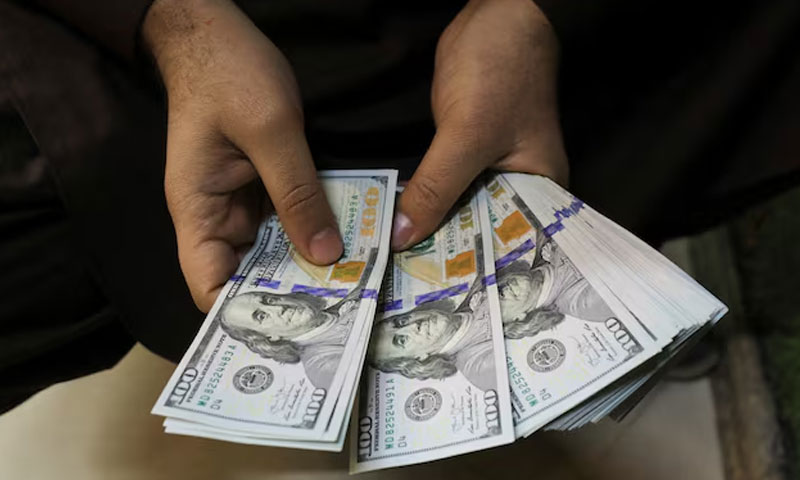
Pakistan forex reserves climb to $21bn after Eurobond proceeds

- WEB DESK
- September 17, 2026