
- WEB DESK
- October 25, 2026
Sohail Afridi sets six conditions to call off PTI’s Islamabad march
-

- WEB DESK
- October 4, 2026
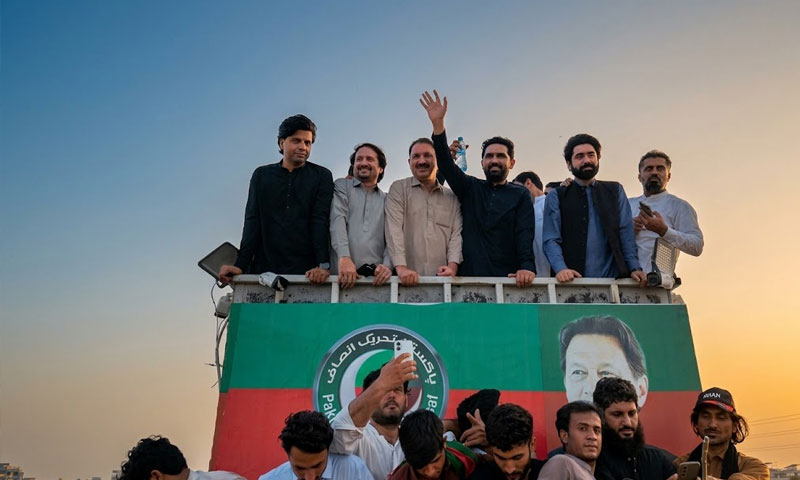
ISLAMABAD: Khyber Pakhtunkhwa Chief Minister Sohail Afridi has laid out six conditions for the Pakistan Tehreek-e-Insaf (PTI) to call off its planned long march on Islamabad, hours after government-opposition talks ended in deadlock.
Afridi made the demands public in a post on X, saying the draft he had sent to the opposition negotiating committee contained no demand that was “unconstitutional or unlawful”.
The development came after two days of negotiations between government and opposition teams failed to produce an agreement, with counterterrorism policy in Khyber Pakhtunkhwa and access to PTI founder Imran Khan among the key points of disagreement.
“The entire nation should know that not a single one of these demands is unconstitutional or unlawful,” Afridi said, adding that the PTI was being treated as a “second-class citizen” and that the state was treating the province like a “stepmother”.
He said the demands were aimed at ensuring political stability, supremacy of the Constitution and law, continuity of the democratic process, national unity, peace and order, and resolving political and national issues through consultation and dialogue.
Six demands
Under the first demand, Afridi called for regular meetings between the prime minister and the leaders of the opposition in both houses of parliament to discuss major political, national, constitutional, legal and democratic issues, particularly pending matters.
He proposed that the sides ensure “effective and practicable progress” towards resolving these issues through consultation and negotiations within two months.
The second demand calls for the prime minister to establish a joint political negotiating committee comprising representatives of the ruling coalition, the Pakistan Peoples Party (PPP) and opposition parties.
According to the proposal, the committee would hold continuous talks with the opposition on national and political issues, differences between the sides and other important matters, and seek mutually agreed solutions.
The committee would also ensure significant progress towards resolving the issues within one month of its formation, with its recommendations presented to the relevant leadership.
Afridi also called for complete freedom for democracy, politics, the judiciary and the media.
The third demand relates to the legal, humanitarian and medical rights of Imran Khan and his wife, Bushra Bibi.
Afridi said the two should be provided all rights guaranteed under the jail manual, Constitution and applicable laws. He also called for their personal or nominated doctors to be taken into consideration in providing necessary medical care and treatment, where legally applicable.
The fourth demand seeks to ensure Imran and Bushra have access to family members, nominated lawyers and authorised or nominated associates in accordance with jail rules and relevant laws.
The proposal states that such meetings should be held under applicable legal and jail regulations and should not be used for political or other purposes prohibited by law.
The fifth demand calls for the authorities to begin or complete, where legally possible, within 10 days the process of considering appeals against sentences and other legal applications filed by Imran, Bushra, women, elderly and sick prisoners and other detainees.
Afridi said cases should be decided by the relevant courts and legal forums without unnecessary delay and in accordance with the Constitution, law, transparent judicial procedures and principles of justice.
He also called for the early release on humanitarian grounds of women he described as political prisoners, particularly elderly PTI leader Yasmin Rashid and Bushra.
Counterterrorism strategy
The sixth and final demand focuses on counterterrorism in Khyber Pakhtunkhwa.
Afridi called for “effective, continuous and meaningful consultation” between the federal and provincial governments to eliminate terrorism, protect the lives and property of citizens and establish lasting peace in the province.
He proposed a formal review of existing policies and measures, with changes made where necessary.
Under the proposal, authorised representatives of the federal and provincial governments would meet within 72 hours and, through mutual consultation, formulate a clear, comprehensive and workable strategy for maintaining peace and security.
Implementation of the strategy, within the framework of the Constitution and law, would be the joint responsibility of the federal and provincial governments, according to the draft.
The counterterrorism demand is significant because it was one of the main issues over which the latest round of government-PTI talks broke down.
Government negotiators had sought assurances from the KP government on cooperation with the federal government and security forces in the fight against militancy, while PTI negotiators maintained that counterterrorism measures in the province should be based on consultation and agreement between the federal and provincial governments.
Condition for calling off march
Afridi said the PTI would call off its planned long march only after the federal government provided written assurances that the proposed commitments would be implemented effectively.
However, he said the PTI would retain its right to peaceful, democratic and lawful protest if the government violated the agreed assurances, the negotiating process or constitutional and legal requirements, or deliberately stalled the dialogue.
The conditions came as the PTI prepared to launch its march towards Islamabad after the latest round of negotiations ended without an agreement.
Afridi said the long march would begin on Sunday, while also calling on PTI organisations across Sindh, including Karachi and Hyderabad, to implement their plans for protests.
The government, meanwhile, has said it will not allow the protest to enter Islamabad, setting the stage for a renewed political confrontation after the failure of the talks.
You May Also Like
- WEB DESK
- October 24, 2026
