- Reuters
- November 5, 2026
Tarar calls for stronger social media regulation, fact-checking to curb disinformation
-

- WEB DESK
- November 5, 2026
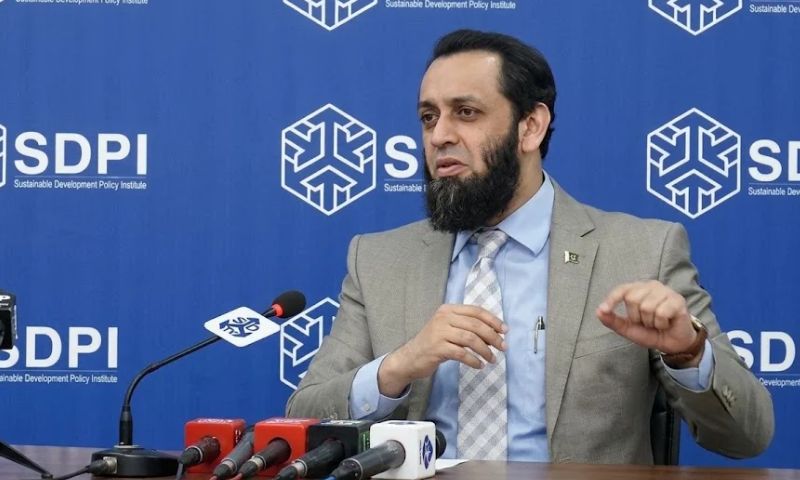
ISLAMABAD: Information Minister Attaullah Tarar on Thursday called for stronger regulation of social media platforms, improved fact-checking mechanisms and greater public awareness to counter misinformation, disinformation and fabricated content.
Speaking at the Sustainable Development Policy Institute (SDPI) in Islamabad, Tarar said social media algorithms prioritised engagement — including views, clicks, likes and reposts — rather than the accuracy of information.
“In a typical media set up, the gatekeeper of information was the editor. But now … the gatekeeper of information is an algorithm,” he said, adding that algorithms had no inherent system of verification and were designed to maximise engagement.
He said the government was engaging with social media platforms to promote the labelling of artificial intelligence-generated content, adding that TikTok had made AI labelling mandatory for content fully or partially created using artificial intelligence.
Tarar said a more robust regulatory framework was needed for social media, where editorial filters that existed in traditional electronic media were largely absent.
He also called for stronger internal fact-checking mechanisms on platforms such as X, citing its Community Notes feature as an example of how users could be alerted when old footage was shared as a recent event.
The minister said three areas required attention: better coordination with social media platforms and stronger fact-checking systems; capacity-building and public awareness; and collaboration with educational institutions to introduce courses on algorithms, digital media and fact-checking.
Government’s digital communication system
Tarar said the government had established Pakistan’s first Digital Communication Department after he took over as information minister, following changes to the ministry’s rules of business.
He said the department brought together graphic designers, video editors, content creators and scriptwriters to verify information and communicate it in formats suited to different audiences and platforms.
He stressed that there could be no “one size fits all” approach to digital communication, as content suitable for TikTok might not work on Instagram, Facebook or X.
The minister said the government was also working with the United Nations Development Programme (UNDP), the Institute of Business Administration (IBA) and other ministries to strengthen its capacity to verify information. He called for specialised courses in mass communication, journalism and digital media.
Information flow during crises
Responding to a question about balancing the need to share information quickly with the requirement to verify facts during emergencies, Tarar said information should be released gradually as details were confirmed.
He said authorities could initially report that an incident had occurred, while its different aspects and details could be shared later in coordination with relevant agencies.
He said effective crisis communication required coordination among the government, state institutions, media organisations and social media platforms.
Referring to the conflict with India during Marka-e-Haq, Tarar said false and fabricated information had been circulated by India before, during and after the conflict.
He said Pakistan had countered such claims by sharing evidence, including video footage and verified accounts of events.
Tarar also praised Pakistani journalists, anchors, reporters and young social media users for what he described as responsible conduct during the conflict. He particularly cited memes created by Gen Z users, saying they had become part of the public response.
He said coordination with Director General of Inter-Services Public Relation Lt-Gen Ahmed Sharif Chaudhry had helped ensure that information was shared in real time with television channels and across digital platforms.
The minister said verified information, coordination and communication tailored to different platforms were essential to countering false claims.
You May Also Like


- AFP
- November 5, 2026