- WEB DESK
- October 21, 2026
Tarar urges Afghan Taliban to move away from ‘militant mindset’ for lasting peace
-

- WEB DESK
- September 29, 2026
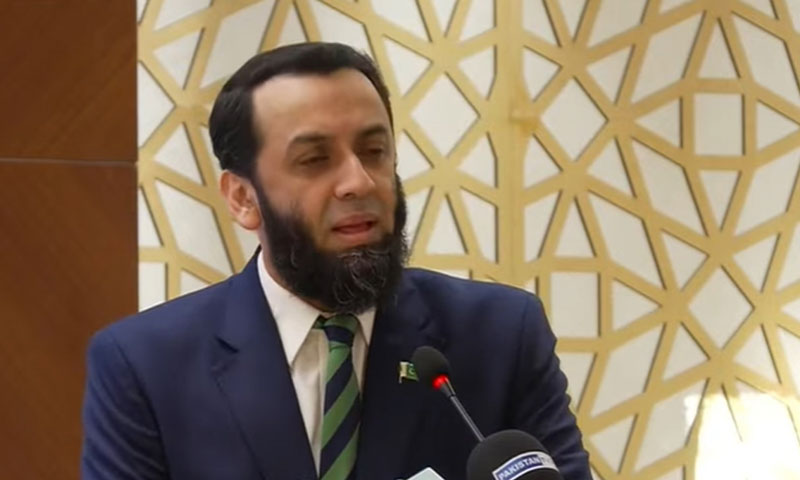
ISLAMABAD: Information Minister Attaullah Tarar on Tuesday urged Afghanistan’s interim government to move away from a “militant mindset” and work for the betterment of its people and lasting peace in the region.
He also warned that Islamabad’s desire for peace should not be mistaken for weakness.
Addressing a conference in Islamabad on Afghanistan and prospects for peace, Tarar said that Pakistan wanted peaceful coexistence with its neighbour but that a sustainable resolution to the longstanding tensions required a change in the Afghan government’s approach.
“The Afghan interim government needs to move out of its militant mindset into a mindset of a statesman or a state,” Tarar said.
He said that Pakistan had repeatedly sought negotiations to resolve disputes with Afghanistan and had sent several high-level delegations to Kabul. Talks had also been held in Istanbul and Doha, he said.
“Pakistan believes in peace, Pakistan has always believed in peace and we believe in peaceful coexistence,” Tarar said.
“But is there a will to achieve peace? The answer unfortunately is no.”
Relations between the two countries have deteriorated sharply in recent weeks, with Pakistan accusing Afghanistan’s Taliban government of allowing militants to operate from its territory and Kabul rejecting the allegations. Pakistan has carried out strikes inside Afghanistan following attacks and drone incursions that Islamabad has blamed on militants based across the border. ([Reuters][1])
Militancy and trade
Tarar said Afghanistan had significant potential to become a regional trade corridor linking landlocked Central Asian states with Pakistan’s ports.
“If peace is achieved and we are able to create an environment where trade routes can be established from Central Asia through Afghanistan to Pakistan, people of both countries will be able to prosper,” he said.
He said Central Asian states could use Afghanistan as a route to reach the Arabian Sea, including through Pakistan’s ports of Karachi and Gwadar.
“The only problem that exists is violent extremism and militancy,” Tarar said, alleging that Afghanistan continued to provide safe havens to terrorists and members of internationally proscribed organisations.
Pakistan has repeatedly accused Afghanistan’s Taliban authorities of allowing the Tehreek-e-Taliban Pakistan (TTP) to operate from Afghan soil, a charge Kabul denies. The dispute over militant sanctuaries has been a central source of tension between the neighbours.
Tarar said Pakistan had raised its concerns about the use of Afghan territory for attacks against Pakistan during negotiations.
“Through these talks what have we tried to achieve? We have tried to highlight this problem that they have to come out of this mindset and peace has to be achieved through a viable and sustainable model,” he said.
Rights and economic development
Tarar also criticised policies of Afghanistan’s interim government that he said had excluded sections of the population from economic and social life.
He pointed to Afghanistan’s young population and said a large number of Afghan women were excluded from the workforce.
He said some sections of Afghan society were being denied opportunities to contribute to economic development and alleged that basic rights were being denied on the basis of an ideology imposed by the authorities.
“That disconnect between the government and the citizen has led to a lot of problems within Afghanistan where people are now raising their voice for a change,” Tarar said.
He said Afghans deserved the right to education, assembly, association, peaceful coexistence and economic freedom.
“Only peace can lead to prosperity,” he said, adding that there was a “big disconnect” between the Afghan interim government and the country’s population.
Tarar said Afghanistan faced two forms of what he called “denial”: denial of the problem of terrorism and safe havens, and denial of basic rights for its population.
He said the Afghan government would eventually have to recognise the need to change its approach and work for the betterment of the Afghan people.
Pakistan warns against attacks
Tarar said Pakistan had continued to pursue dialogue despite repeated security concerns.
He said Islamabad had also responded militarily to attacks that it attributed to militant groups operating from Afghan territory.
“In the recent past Pakistan has raised its reservations regarding the use of Afghan soil for attacks in Pakistan and the support that these proscribed terrorist organizations receive from Afghanistan,” he said.
“And you have seen that Pakistan has also responded through strikes in retaliation of these terrorist attacks.”
Pakistan carried out air strikes on 10 locations in Afghanistan on Sept. 23-24, saying the targets were involved in launching or storing drones used against Pakistan. Afghanistan said the strikes killed civilians and denied involvement in the attacks.
Tarar said Pakistan’s pursuit of peace should not be interpreted as weakness.
“I must also express that Pakistan’s desire for peace must not be misconstrued as its weakness,” he said.
“Any attempt from Afghanistan to disrupt peace in Pakistan, these attempts to destabilize Pakistan have been responded to and shall be responded to.”
Regional connectivity
Tarar said peace in Afghanistan could open up wider economic opportunities for the region, including greater trade and investment between Central Asia and Pakistan.
He said there was a regional desire to achieve peace and increase trade.
“My friends from Russia, from Central Asian states understand this conundrum that if peace is achieved within the region then sky is the limit,” he said.
“Trade will be boosted, investments will come in and out of these countries.”
He said Central Asian states had long wanted access to Karachi and Gwadar through regional trade routes.
“The trade route to Karachi and Gwadar which has been the long desire of Central Asian states will become a reality,” he said.
Tarar said Pakistan wanted an “amicable solution” to the situation through negotiations.
“The people of Afghanistan deserve a better, prosperous future,” he said, adding that there needed to be consensus within Afghanistan and that its people should have a voice in deciding their future.
Pakistan has hosted millions of Afghan refugees over several decades, Tarar said, noting that the two countries would remain neighbours regardless of the current tensions.
“Pakistan and Afghanistan are neighbours, have been neighbours, will always be neighbours,” he said.
Tarar said Pakistan would continue to support dialogue and negotiations to find an acceptable and friendly solution to the dispute.
You May Also Like