
- WEB DESK
- August 24, 2026
The ‘TAJ’ Story: why is India so eager to erase history?
-

- Zoya Anwer
- October 18, 2025
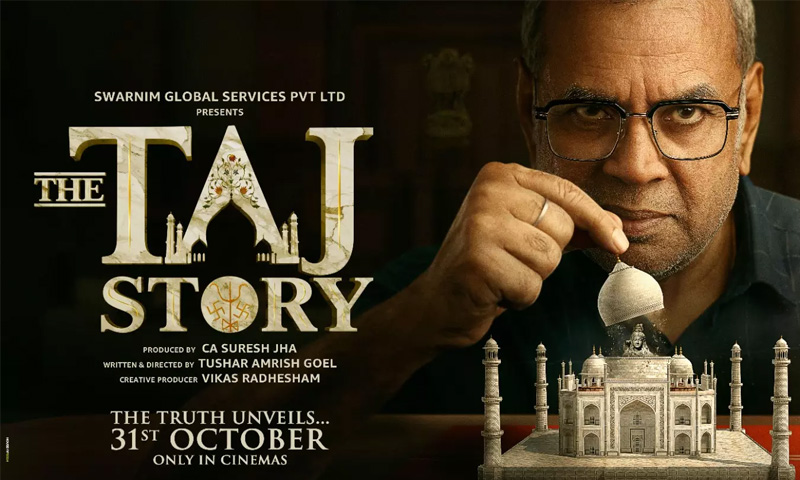
WEB DESK: There was a time when children in schools were taught about Wonders of the World and Agra’s Taj Mahal, a gift of Shah Jahan to his wife, Mumtaz Mahal was amongst the list with tourists flocking and getting their photos taken in front of the white monument. But while Taj Mahal became the face of India globally, in the last decade or so, the Narendera Modi government led by Bharatiya Janata Party (BJP) has left no stone unturned to destroy the cultural and religious diversity India was once known for. Film The TAJ Story, featuring Paresh Rawal as a tourist guide investigating supposed ‘secrets’ of the monument is just another propaganda feat, produced to reignite preposterous myths about the Wonder.
The film has drawn criticism for questioning well-documented facts about one of India’s most iconic landmarks. According to The Indian Express, speculation about the “22 locked rooms” inside the Taj Mahal is far from new. In 2022, the Allahabad High Court rejected a petition demanding these rooms be opened to uncover the “real history” of the monument, observing that such matters should be left to historians and scholars, not courts.
Paresh Rawal, who has never shown any qualms about his political leanings and biases has often given statements which reflect his dislike for the Muslims in India. Last year, a film called Chhaava featuring Vicky Kaushal also attempted the same by spreading propaganda against Mughal emperor Aurangzeb.
Experts from the Archaeological Survey of India (ASI) told the newspaper that the so-called “rooms” are simply arched corridors built for structural reasons. The spaces are cleaned regularly and contain no inscriptions, carvings, or hidden chambers. Officials clarified that the basement is closed off purely for security and conservation, given that the UNESCO World Heritage Site attracts nearly 100,000 visitors daily.
Former ASI Regional Director (North) K. K. Muhammed also confirmed that there are no religious motifs or idols inside the basement, adding that similar substructures exist in other Mughal-era monuments such as Humayun’s Tomb and Safdarjung’s Tomb.
The Indian Express further reported that claims suggesting the Taj Mahal was once a Hindu temple have been repeatedly dismissed by historians, the ASI, and even the Supreme Court. The monument, commissioned by Mughal Emperor Shah Jahan between 1632 and 1648 in memory of his wife Mumtaz Mahal, remains an architectural masterpiece and a global symbol of love, not a mystery waiting to be solved.
The film will be out on October 31.
You May Also Like


- WEB DESK
- August 24, 2026