- Reuters
- August 3, 2026
Time for a ‘PCB revolution’ first, Khawaja Asif tells Mohsin Naqvi; ‘no PM, no parliament’ to blame there
-

- WEB DESK
- August 3, 2026
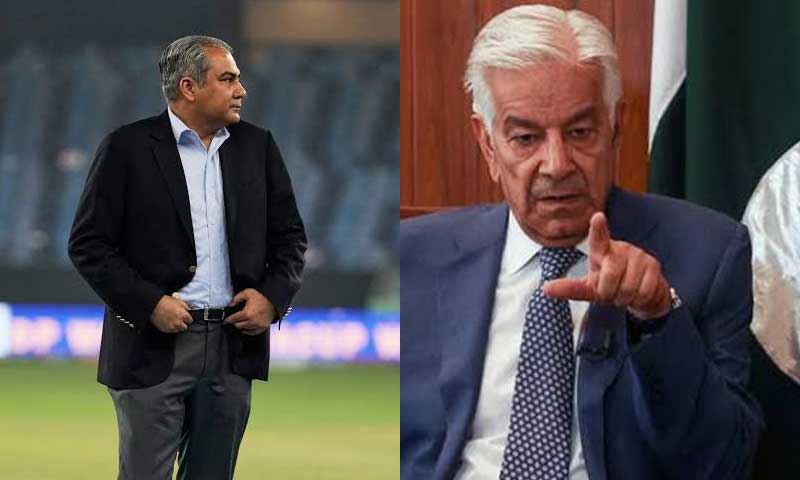
WEB DESK: Defence Minister Khawaja Asif on Sunday called for sweeping reforms in the Pakistan Cricket Board (PCB), saying the board had no institutional or political hurdles preventing meaningful change and urging its leadership to deliver results amid growing public dissatisfaction. Asif’s comments come days after Interior Minister Mohsin Naqvi, who is also PCB Chairman, triggered a nationwide political debate with his own remarks on institutional reform.
Asif said that “systems are constantly evolving, and they should continue to evolve.” Referring to the PCB as an example, he remarked that cricket fans were largely dissatisfied with its performance and questioned why meaningful reforms had not been introduced. “Bring about a real transformation in the PCB,” he said, adding that the board faced no political constraints. “You hold complete authority there. There is no prime minister, no parliament and no outdated political system standing in your way,” he added.
Naqvi’s call for a fundamental restructuring of Pakistan’s governance system, including the creation of new administrative units and provinces, set off a wide political controversy, drawing pushback from the PPP, Sindh’s chief minister, Lahore’s legal community and Sindhi nationalist groups. Speaking at the Pakistan Economic Summit in Islamabad on Thursday, Naqvi said the ‘existing system of governance had broken down entirely’ and was incapable of solving the country’s problems. He urged political parties to come together and resolve all outstanding issues in one go, including carving out new provinces, warning that without such structural change, the same disputes would remain unresolved a decade from now. He argued new administrative units would bring government services closer to citizens, called for fresh political leadership, and said the country’s youth wanted justice, merit and employment rather than stipends or handouts.
The PPP responded by referring the matter to its Central Executive Committee. Secretary General Nayyar Bokhari told Dawn that any restructuring must follow constitutional procedure rather than come through executive action, noting that new provinces or boundary changes require two-thirds majorities in the relevant provincial assembly, the National Assembly and the Senate. He said if there was genuine intent behind proposals like a South Punjab province, the matter should go through parliament, and called on Khawaja Asif, whose party governs Punjab and the Centre, to initiate the process in his own province, pointing to a pending Punjab Assembly resolution on the issue. Bokhari added that federal ministers should raise the matter in cabinet, after which Prime Minister Shehbaz Sharif should consult PPP Chairman Bilawal Bhutto-Zardari, with the CEC ultimately deliberating in line with constitutional and democratic principles. He also said criticism of the system belonged in parliament, not the media.
Sindh Chief Minister Murad Ali Shah also rejected the proposal outright, calling it a stereotype the people of his province would never accept. Speaking in Bhit Shah, he said he was unclear what exactly had “collapsed,” noting that all four provinces currently had functioning governments under different parties, and suggested Naqvi bring concrete proposals instead.
The Lahore High Court Bar Association called the statement unconstitutional, arguing that those responsible for weakening the existing order were now proposing to replace it. It said the country’s stability depended on strict adherence to the Constitution and judicial independence, and demanded the release of political workers it said were detained on fabricated charges, along with an end to state interference in politics.
DG ISPR backs Naqvi’s call, says good governance essential for security
On Friday, DG ISPR Lieutenant General Ahmed Sharif Chaudhry weighed in on Mohsin Naqvi’s call for new administrative units, telling a press conference that the military, as a key security stakeholder, had long maintained that good governance was essential to Pakistan’s security and stability, without which none of the country’s problems could be resolved.
He said the National Action Plan’s 14-point agenda, backed by consensus among all political parties, could not be implemented without good governance, calling it “quintessential for Pakistan.” On how to achieve it, he said that was for politicians and political parties to decide, though he added it warranted serious discussion.
Citing Pakistan’s population of 240-250 million against just four provinces, he said it was worth examining whether the current structure was serving good governance, and that the debate should be held sensibly by those in power, past office-holders, and elected representatives responsible to the public.
He stressed that the will of the people was supreme, and that any administrative reset, if good governance required one, must come through constitutional methods, legal procedures and political representatives, not outside them.