- Waqas Buneri
- November 4, 2026
Trump says he will work with Democrats after midterm losses, claims he would have ‘won in a landslide’
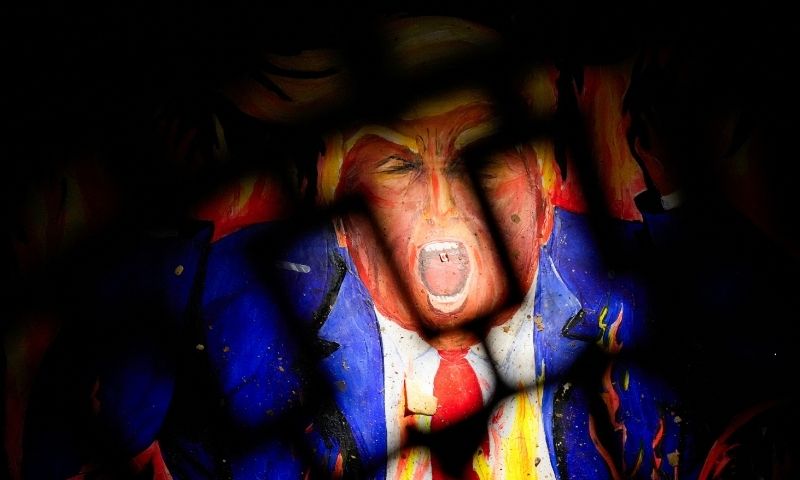
WASHINGTON: US President Donald Trump has said he is prepared to work with Democrats following the midterm elections, as his Republican Party faced losing control of the House of Representatives, while also claiming he would have won by a landslide had he been on the ballot.
In an interview with The New York Times on Tuesday, Trump said he would accept the election outcome and cooperate with Democrats. “We’ll work with the Democrats, and we’ll, you know, look forward to working with them. We’ll probably work something out,” he was quoted as saying.
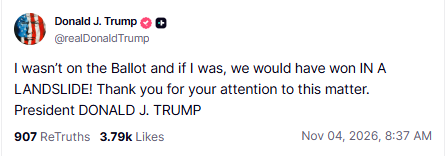
However, in a post on Truth Social on Wednesday, Trump insisted his absence from the ballot was decisive, writing: “I wasn’t on the Ballot and if I was, we would have won IN A LANDSLIDE!”
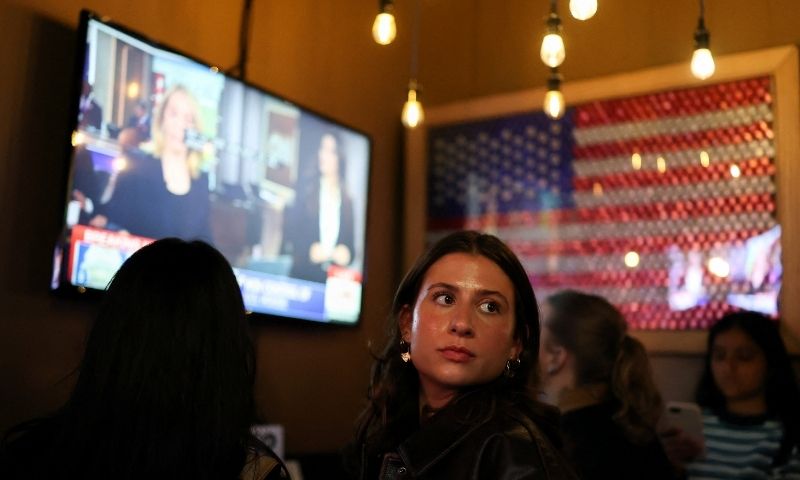
Media projections indicated Democrats were on course to regain the House, dealing a setback to Trump and congressional Republicans. Democrats also made gains in Senate races in South Carolina and North Carolina, bringing them halfway towards the four-seat net gain required to take control of the chamber.
US-Israel military assistance under review
On November 3, Trump said he had reached an agreement with Israeli Prime Minister Benjamin Netanyahu to end $4 billion in annual US funding to Israel by the close of 2026, while maintaining Washington’s commitment to sell weapons to its Middle Eastern ally. Speaking to Fox News as Americans voted in the November 3 midterm elections, Trump said Israel no longer needed the financial assistance and that the two leaders had agreed months earlier to stop the payments. He offered no details about how the arrangement would be implemented.
The announcement raised questions because the existing US-Israel Memorandum of Understanding provides $3.8 billion in annual military assistance and remains in force until September 2028. Although discussions have been under way about the future of US support beyond that date, it was unclear which funding Trump was referring to or why he chose to announce the decision during election day. Neither the White House nor Netanyahu’s office responded to Reuters’ requests for comment.
Growing political opposition to aid
Trump linked the proposed funding halt to growing criticism of US assistance to Israel among Democrats and left-wing politicians, arguing that the issue was being used against Republicans. He specifically cited Democratic Senate candidate Abdul El-Sayed of Michigan, who has opposed unconditional military assistance to Israel and argued that US funds should prioritise American citizens. El-Sayed, who could become the first Muslim elected to the US Senate, was among the candidates challenging longstanding US policy towards Israel.
The debate reflects a wider shift in public opinion since the Gaza war began in 2023. A June Quinnipiac University poll found that 48 per cent of voters and 66 per cent of Democrats believed Washington was too supportive of Israel. When the question was first asked in 2017, the corresponding figures were 16 per cent and 20 per cent.
Uncertainty over future US support
Criticism of Israel has also grown within parts of Trump’s own Make America Great Again movement, with some members accusing Netanyahu’s government of drawing the United States towards a confrontation with Iran. Meanwhile, Democratic candidates critical of Israel have gained support, while some traditionally moderate lawmakers have become more willing to question decades of US military assistance.
Although Congress passed legislation in 2020 authorising the funding, annual appropriations bills must still be approved by both the House and Senate to release the money. Netanyahu himself acknowledged the changing political climate in an October interview, saying Israel should prepare for the possibility that it would no longer receive the level of American assistance secured in the past.
The announcement came amid uncertainty over the political future of Netanyahu, whose governing coalition lost its majority in Israel’s October 27 election, setting the stage for potentially lengthy negotiations over a new government.