
- WEB DESK
- October 9, 2026
Trump says Russia to supply diesel to global markets as US eases sanctions
-

- Reuters
- October 10, 2026
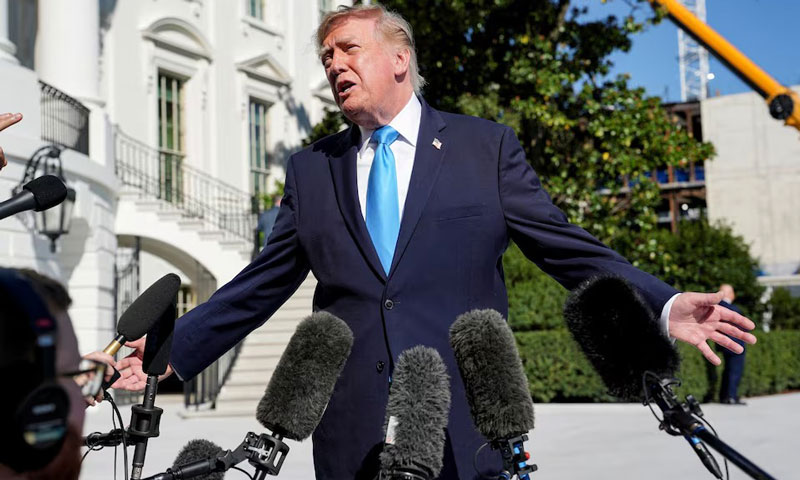
WASHINGTON: US President Donald Trump said Russia had agreed to supply more than 300,000 metric tonnes of diesel to the United States and global markets, as his administration temporarily eased sanctions on Russian fuel in a bid to bring down prices.
Trump said on Friday that he had held a “highly successful” discussion with Russian President Vladimir Putin, during which they agreed on the immediate supply of diesel equivalent to about 2.25 million barrels.
The announcement comes as diesel prices approach record levels, putting pressure on Trump’s fellow Republicans ahead of the November 3 congressional elections, which will determine whether the party retains its narrow control of Congress.
Diesel prices fell following the announcement, Reuters reported, although analysts cautioned that the proposed supply might not be enough to keep prices down.
Sanctions relief raises questions over Russia’s war revenues
The US imposed sanctions on Russian oil companies in October 2025 over Moscow’s war against Ukraine, which began in 2022.
The temporary easing of restrictions could allow Russia to generate billions of dollars in additional revenue, potentially helping Putin sustain the war, according to Reuters.
Trump’s announcement did not include further details about the arrangements governing the diesel supplies.
Following the call, Kirill Dmitriev, an envoy for Putin, praised US-Russia cooperation in a post on X.
Sources familiar with the matter told Reuters that Dmitriev had asked US officials during a visit to Washington last month to grant export licences to all major Russian oil companies seeking to supply diesel to the US market.
The proposed shipment comes against the backdrop of significant US diesel consumption. The United States exports about 1.5 million barrels of diesel per day, according to Reuters.
Zelenskiy criticises decision
Ukrainian President Volodymyr Zelenskiy criticised the agreement, calling it a “weak decision on the part of strong partners”.
The announcement came as a Ukrainian delegation was in the United States to discuss efforts to find a resolution to the war with Russia.
The move highlights the competing priorities facing Washington as it seeks to ease fuel price pressures while maintaining its policy response to Moscow’s invasion of Ukraine.
The proposed Russian supplies could help increase fuel availability in international markets, but their impact on prices and the implications for sanctions enforcement remain uncertain.
“Gifts to Putin will not bring peace or any benefit to the civilized world. Russia will ‘repay’ the diesel with further terror and perfidy,” he said on X.
The deal was also criticized by US lawmakers including Trump’s fellow Republican, Representative Don Bacon, who said it is time to apply more sanctions that Congress passed recently, not lift the measures.
“Now is the time to use those sanctions to squeeze Putin’s war machine, not reward a dictator by putting more money in his hands while he continues targeting and killing Ukrainian civilians,” Bacon said on X.
The US Treasury Department issued a license allowing importation of Russian diesel until April 7.
Trump said Russia would supply another 500,000 tons in November and a further 1 million tons “immediately thereafter.” Even more would follow, Trump said, “based on the condition of their diesel refineries,” which have been damaged by Ukrainian attacks.
‘Nothing burger’
Analysts said the agreement was unlikely to lead to sustained lower fuel prices. “I cannot overstate how much of a nothing burger this is,” Rory Johnston, an oil market researcher and founder of CommodityContext.com, said on X, adding that Russia usually exports much more diesel than volumes in the deal when its refinery fleet is not under attack.
“It’s clearly not a fix, but another stream to aid a very tight diesel market,” said Jim Mitchell, an analyst at consultancy Wood Mackenzie.
Diesel prices, which are often a big driver of inflation, are up 70% since the US and Israel launched the war with Iran on February 28. The wars in Iran and Ukraine have triggered a severe global fuel supply crunch, pushing average US diesel prices to $6.28 a gallon on Thursday, according to the AAA motorist group.
Prices have stayed high despite two recent moves by Trump to boost supplies of the fuel: pressuring allies to release emergency reserves and expanding access to tax-exempt red-dyed diesel, which is normally used for farm equipment.
US diesel futures HOc1 fell almost 5% following news of the deal and were trading at $4.64 a gallon.
“Lower prices for Americans, especially our Great Farmers, Ranchers, and Truckers, is my Greatest Priority,” Trump said.
Defense production act
Three industry sources said earlier on Friday that Trump will issue a directive in the coming days to some US department heads to find ways to control diesel prices.
The directive, which they said could take the form of a presidential memo, will push officials to find ways to bypass local and state regulations blocking energy production and use the Cold War-era Defense Production Act to increase output of oil and fuel.
Under the DPA, the president can authorize US-backed loans or loan guarantees to expand domestic manufacturing of critical materials and to require companies to prioritize government contracts for essential goods.
The White House has been weighing how to use the DPA to expand refining capacity as the war with Iran exposes US vulnerability to supply disruptions and price spikes.
Refining executives told administration officials last month that federal money would be better directed toward making refineries more efficient or expanding plants rather than financing a new refinery, which would be more costly and take years to complete.