- WEB DESK
- October 8, 2026
Trump’s latest comments hint at trade progress with China
-

- Reuters
- October 29, 2025
SEOUL: US President Donald Trump wrapped up his five-day tour of Asia on Wednesday with a stop in South Korea, expressing optimism about trade negotiations with both Seoul and Beijing despite renewed tensions on the Korean Peninsula.
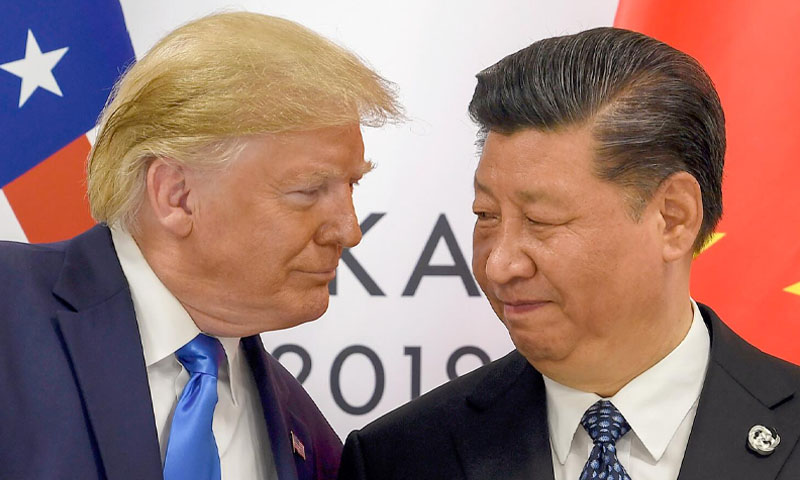
Arriving from Tokyo just hours after North Korea test-fired a nuclear-capable cruise missile, Trump was greeted by South Korean President Lee Jae Myung in the historic city of Gyeongju, where the Asia-Pacific Economic Cooperation (APEC) forum is being held this week. The visit precedes his closely watched meeting on Thursday with Chinese President Xi Jinping.
Speaking to reporters aboard Air Force One before landing, Trump downplayed the significance of Pyongyang’s latest missile test, insisting his focus remained on economic and security talks with regional leaders.
“I think we’re going to have a very good outcome for our country and for the world,” Trump said, hinting that an agreement with China could lead to reduced tariffs.
Trump confirmed he is considering lowering US tariffs on Chinese imports in exchange for Beijing’s stronger enforcement against the export of chemicals used to make fentanyl. The Wall Street Journal reported that such a deal could see the current 20% tariffs cut by half.
TRADE TALKS WITH SOUTH KOREA FACE STALEMATE
At an APEC CEO summit earlier in the day, Trump predicted a trade deal with South Korea would be finalised “very soon,” though negotiators from both countries have acknowledged limited progress in recent weeks.
Under a preliminary framework reached in July, South Korea agreed to invest $350 billion in the United States to avoid higher US tariffs. However, the two sides remain divided over how the funds will be structured and delivered.
During their meeting at the Gyeongju National Museum, President Lee awarded Trump the Grand Order of Mugunghwa, South Korea’s highest civilian honor. Trump joked that he wanted to wear the medal immediately.
At a working lunch, Lee pledged to increase defense spending and sought US approval to reprocess nuclear fuel for submarine reactors – something prohibited under a longstanding bilateral agreement. Trump responded by promising to help address Seoul’s challenges with its northern neighbor, though he confirmed no meeting with North Korean leader Kim Jong Un was planned for this trip.
XI MEETING LOOMS AS BEIJING RESUMES US SOY PURCHASES
Trump will skip the main APEC leaders’ summit but plans to hold several bilateral meetings, including a dinner with Xi on Thursday. Officials say the two countries have sketched out a framework to pause escalating tariffs and Chinese restrictions on rare earth exports, a development that sent global markets soaring earlier this week.
In a possible sign of easing tensions, China recently resumed purchases of US soybeans for the first time in months, according to exclusive Reuters reporting. The move is seen as a boost for American farmers who have faced heavy losses due to the trade standoff.
Trump said he also intends to discuss restrictions on high-end Nvidia AI chips during talks with Xi, describing semiconductor exports as a “critical sticking point” in negotiations. When asked if Taiwan would come up, Trump replied he was “not sure yet.”
Since taking office in January, Trump has vacillated on US policy toward Taiwan, balancing his push for a trade deal with Beijing against support for the self-governing island. Taiwanese Foreign Minister Lin Chia-lung said this week he was confident Trump would not “abandon” Taipei in his meeting with Xi.
FINAL STOP ON A HIGH-STAKES TOUR
Trump’s visit to South Korea concludes a whirlwind regional trip that has included stops in Malaysia and Japan, countries deeply affected by his tariff policies and the US-China trade rivalry.
In Malaysia, Trump unveiled new trade agreements and witnessed the signing of a peace accord between Thailand and Cambodia following months of border clashes. A day earlier in Tokyo, he praised Japan’s first female prime minister, Sanae Takaichi, for her defense buildup plans and for signing major deals on rare earths and trade.
Japan also confirmed a list of projects tied to its $550 billion pledge in US investments, loans, and guarantees aimed at securing tariff relief. Washington has sought a similar package from Seoul, though South Korea insists it cannot provide the full $350 billion upfront, proposing instead phased payments and investment commitments.
Trump departs Asia on Thursday, hoping to leave with momentum toward resolving some of the region’s most pressing trade and security challenges.