
- WEB DESK
- October 6, 2026
US-Iran deadlock persists over uranium, Hormuz tolls despite cautious optimism
-

- Sadia Basharat
- May 22, 2026
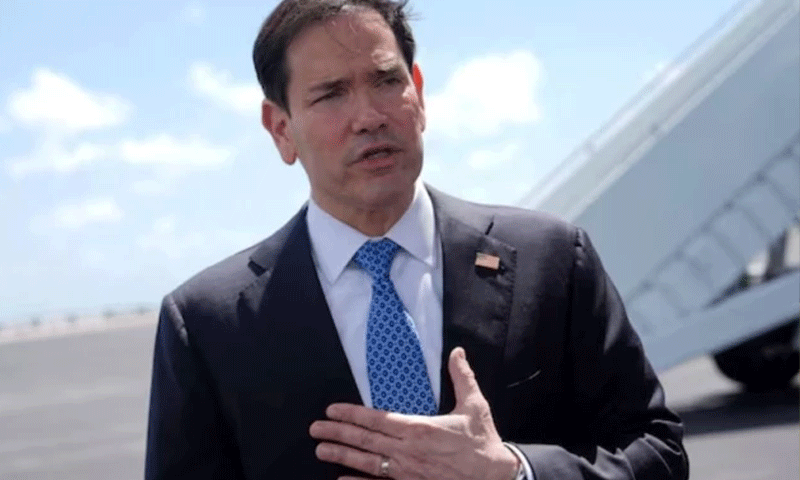
WEB DESK: The United States and Iran remain locked in a tense diplomatic stalemate over Tehran’s highly enriched uranium stockpile and maritime controls in the Strait of Hormuz.
Despite the deeply entrenched opposing stances, US Secretary of State Marco Rubio noted there have been “some good signs” during ongoing negotiations to resolve the conflict, though he cautioned against over-optimism, according to The Express Tribune.
A fragile six-week ceasefire mediated by Pakistan has temporarily halted active military hostilities, but a comprehensive peace deal remains elusive.
The impasse continues to reverberate through the global economy, driving crude prices higher and stoking fears of a prolonged energy shock.
White House officials have issued stark ultimatums to Iran’s new leadership, warning of unprecedented military repercussions if a diplomatic breakthrough is not achieved in the coming days.
Standoff at sea and the nuclear red line
The primary obstacles to a diplomatic resolution center on control of the Strait of Hormuz a vital maritime chokepoint through which roughly a fifth of the world’s oil and natural gas transits and the fate of Iran’s near-weapons-grade uranium.
The Persian Gulf Strait Authority (PGSA) recently declared a new oversight zone, requiring all transiting commercial vessels to obtain prior authorization from Iranian authorities.
Tehran has also floated plans to impose shipping fees or tolls on vessels utilizing the waterway, limiting access strictly to “friendly countries.”
Secretary Rubio forcefully rejected these measures, declaring that any attempt to enforce a tolling system or restrict passage through an international waterway would render a diplomatic deal unfeasible and would be considered “completely illegal.”
Concurrently, US President Donald Trump reiterated Washington’s firm stance on Tehran’s nuclear program, asserting that the US will eventually secure and destroy Iran’s stockpile of 60pc enriched uranium.
However, Iran’s newly established Supreme Leader, Ayatollah Mojtaba Khamenei, has issued a strict directive forbidding the removal of the highly enriched uranium from Iranian soil, viewing the stockpile as a critical deterrent against prospective foreign aggression.
Economic pressure and the mediation effort
The ongoing maritime blockade and political stalemate are severely straining global energy markets. The International Energy Agency (IEA) has warned that the conflict has induced the worst energy shock in modern history, raising alarms that surging summer fuel demand could push global markets into a critical “red zone” by July.
This energy crunch has directly impacted the American domestic landscape, pushing US crude over $101 a barrel and Brent crude past $107, leaving President Trump facing significant domestic political pressure ahead of November’s midterm elections.
In a bid to break the deadlock and accelerate communication, Pakistan has stepped up its mediation efforts, with senior Pakistani officials holding direct talks with Iranian Foreign Minister Abbas Araghchi in Tehran.
While Iran confirms it is reviewing Washington’s latest text proposals, US intelligence assessments indicate that Tehran’s military industrial base is recovering faster than expected, with drone production lines already restarting during the truce.
With White House Deputy Chief of Staff Stephen Miller warning that Iran faces either an acceptable peace agreement or military punishment “the likes of which has not been seen in modern history,” the diplomatic window remains exceptionally narrow as both sides prepare for the critical days ahead.
You May Also Like
- Reuters
- October 6, 2026
India among seven countries vying for 2036 Olympics, IOC says
- Waqas Buneri
- October 6, 2026
