- WEB DESK
- October 6, 2026
US pauses £11bn Taiwan arms sale amid Iran conflict munitions crunch
-

- Sadia Basharat
- May 22, 2026
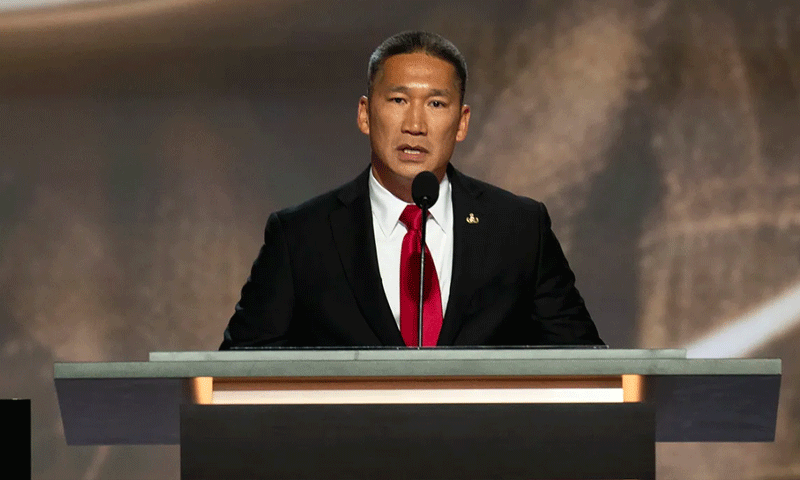
WEB DESK: The United States has paused a major $14b(£11b) arms sale to Taiwan, citing the need to safeguard its own ammunition stockpiles during the ongoing conflict with Iran.
Speaking before a Senate Appropriations Defense Subcommittee hearing on Thursday, Acting US Navy Secretary Hung Cao confirmed the temporary halt, stating that the pause was necessary to ensure the American military retains sufficient munitions for its current operations, according to The Hill.
Cao insisted that the US still possesses “plenty” of missiles and interceptors, despite mounting scrutiny from lawmakers over Washington’s dwindling stockpiles after 12 weeks of conflict in the Middle East.
“Right now we’re doing a pause in order to make sure we have the munitions we need for Epic Fury,” Cao told Senator Mitch McConnell, adding that foreign military sales would resume once the Trump administration deems it appropriate.
The ultimate decision to approve the sale will now rest with Defense Secretary Pete Hegseth and Secretary of State Marco Rubio.
Munitions stockpiles under pressure
The pause comes amid growing anxiety in Washington over the rapid depletion of advanced American weaponry.
Since the war with Iran began on 28 February, the US has reportedly burned through thousands of missiles, nearly exhausting its entire stockpile of long-range stealth cruise missiles.
Stores of Tomahawk cruise missiles, Patriot interceptors, and ATACMS ground-based missiles have also been severely depleted.
To address the shortage, the White House is preparing to ask Congress for a supplemental war budget of between $80b and $100b.
A significant portion of these funds will be used to backfill the costly and sophisticated weapons expended during the conflict, which has been under a tense ceasefire since early April.
While Defense Secretary Pete Hegseth has dismissed these concerns as “foolishly and unhelpfully overstated,” the halting of the Taiwan deal suggests a more cautious approach behind the scenes.
Diplomatic friction and Taiwan’s response
Cao’s justification for the delay appears to directly contradict President Donald Trump’s stated rationale.
Last week, President Trump suggested to Fox News that he was holding back the arms package to use as a “negotiating chip” in discussions with Beijing, noting that he had discussed the matter “in great detail” with Chinese President Xi Jinping.
This admission has raised eyebrows in Washington, as it seemingly violates the “Six Assurances” a 1982 Reagan-era policy principle stipulating that the US will not consult China regarding arms sales to Taiwan.
The decision has caused deep unease in Taipei, where officials view American military hardware as a vital deterrent against potential Chinese aggression.
Responding to the delay, Alexander Yui, Taiwan’s representative to the US, urged the administration to honor the agreement.
“If we want to prevent a war from happening, I think it’s best that Taiwan is strong, able to defend itself,” Yui said, emphasizing that the island must be permitted to acquire the weapons necessary to maintain a robust defense.