- WEB DESK
- October 6, 2026
US Senate blocks Democratic bid to curb Trump’s Iran war powers
-

- Zafar Ali
- May 14, 2026
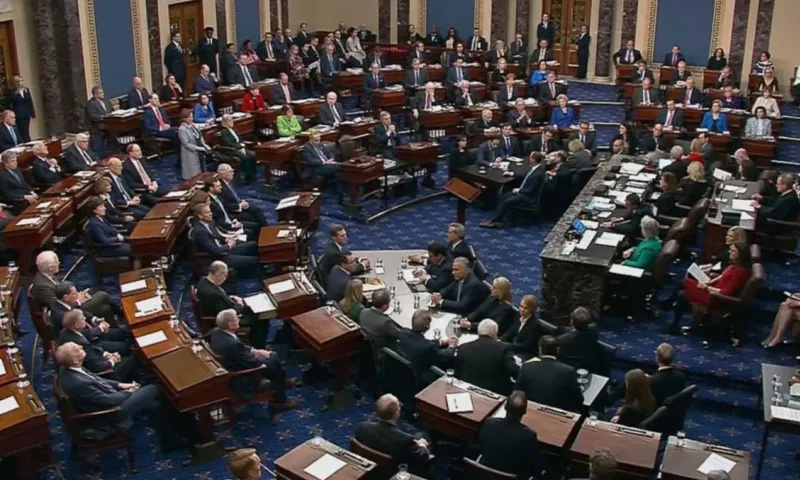
WASHINGTON: The US Senate on Wednesday blocked a Democratic-led effort to limit President Donald Trump’s authority over military operations related to Iran, though the measure gained increased bipartisan backing as three Republicans broke ranks to support it.
The Senate voted 50-49 not to advance the war powers resolution, which sought to require congressional authorization for continued U.S. military action in the Iran conflict. The result fell largely along party lines.
Three Republicans — Rand Paul of Kentucky, Susan Collins of Maine and Lisa Murkowski of Alaska — joined Democrats in supporting the motion, while Democrat John Fetterman voted with Republicans to block it.
It marked the seventh time this year that Republican senators have blocked similar Democratic-backed efforts aimed at reasserting congressional authority over the Iran war.
The vote was the first in the Senate since the conflict reached a 60-day threshold under the 1973 War Powers Resolution on May 1, a deadline by which presidents must seek congressional approval or begin withdrawing forces.
Trump has argued the requirement does not apply, saying a ceasefire declared earlier had effectively ended hostilities. Democrats dispute that position, saying military operations continue.
“There’s not a cessation of war hostilities,” Senator Jeff Merkley said ahead of the vote, citing continued attacks on shipping and the ongoing blockade of the Strait of Hormuz.
Merkley, the sponsor of the resolution, said he and other Democrats would continue introducing similar measures weekly until the war ends or Congress grants authorization.
Republicans and the White House argue Trump’s actions remain within his constitutional authority as commander-in-chief, saying limited military operations are justified to protect U.S. interests.
The dispute underscores growing tensions in Congress over war powers as the Iran conflict continues to drive geopolitical and economic instability.