- Web Desk
- 1 Hour ago
Venomous snakes bite 13 people in Dera Bugti
-

- Web Desk
- Sep 12, 2023
QUETTA: At least 13 people fell victim to snakebites over the course of two days, with one losing his life, in district Dera Bugti in Balochistan.
Doctors have reported that some of the affected individuals were bitten by highly venomous snakes, and most of them were saved through timely medical intervention.
According to Dr Muhammad Azam Bugti, the District Health Officer of Dera Bugti, there have been 39 reported snakebite incidents in the district from April until now. He further stated that within just two days, on Sunday and Monday, 13 snakebite cases were reported, and the victims also included women and children.
“Thirteen individuals from various regions of Dera Bugti were brought to government hospitals for treatment, and many of them were in critical condition due to the venomous bites. They were administered anti-venom vaccines promptly,” he added.
Dr Azam Bugti also mentioned, “Normally, patients recover after receiving two to three vaccines, but in this case, many snakebite victims needed to be administered an average of 10 to 15 vaccines, with one patient receiving as many as 28 vaccines.”
He pointed out, “We were fortunate that the Balochistan Health Department had already provided us with an ample supply of vaccines. If the vaccines were not available, the situation could have been much worse.”
Dr Jumma Bugti, the Medical Superintendent of District Headquarters Hospital, stated that despite receiving eight vaccines, a young man named Ali Bugti could not be saved. He was bitten by an extremely venomous snake called the “Sang Chor.”
The deceased belonged to a remote and underprivileged area of Dera Bugti where healthcare facilities are scarce. Unfortunately, his arrival at the District Headquarters Hospital was delayed, and the venom had already spread through his body, paralyzing his nervous system, he said.
He also revealed, “most snakebite cases in the district occur in the remote mountainous regions, particularly in Tehsil Phelawagh, which is a neglected and impoverished area.”
“I have personal connections to this region, and most of the affected individuals in these areas are poor, sleeping on the ground or in open spaces, making them vulnerable to snakebites,” he added.
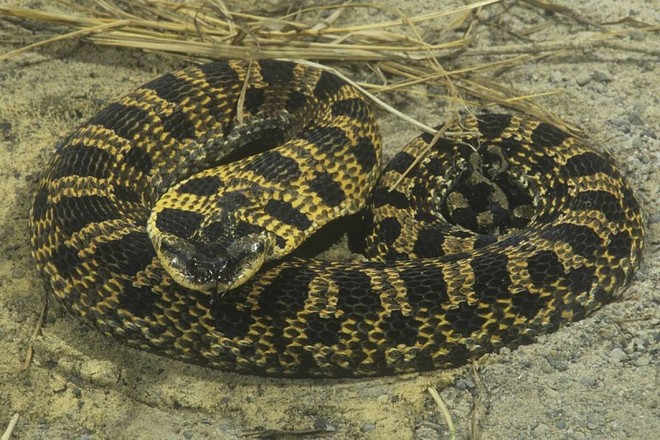
Misunderstood rattlesnakes have a tender side, study finds
Dr Azam Bugti explained, “snakebite incidents tend to increase after rain showers. Most cases are reported between April and October, but in October, when temperatures drop, snakes tend to go underground.”
He further detailed, “many snakebite victims in the region were bitten by the Sang Chor snake. While the chances of being bitten are relatively low, their venom affects the nervous system, causing breathing difficulties and weakness. If treatment is not administered within four hours, the patient’s chances of survival decrease significantly.”
Notably, snakebite incidents are common in Balochistan. Just last month, in the neighbouring district of Kohlu, a young man lost his life due to a snakebite, exacerbated by delayed medical treatment.
Following this incident, the deceased’s family protested, and a case was registered against the medical staff at Kohlu’s government hospital for their alleged negligence.
According to a report, Pakistan witnesses over 40,000 snakebite incidents annually, and nearly 3,000 individuals lose their lives due to lack of timely medical treatment.
The Balochistan Health Department stated that every year, hundreds of individuals are brought to hospitals for snakebite treatment in the province.
Dr Saeed Ahmed Essot, an expert in animal science at the University of Balochistan, explained, “In Balochistan, most snakes are not venomous. People kill non-venomous snakes out of fear of venomous ones.”
He emphasized, “snakes play a vital role in our ecosystem, as they help control rodent populations and protect crops.”
Dr Saeed Ahmed Essot concluded, “snakes are generally afraid of humans and only attack in self-defense when they feel threatened. Therefore, it is advisable to stay away from them and avoid provoking them. In the case of a snakebite, the affected area should be immobilized with a bandage, and the victim should refrain from moving or walking to prevent the spread of venom. The patient should be rushed to the hospital immediately for treatment.”
You May Also Like