- Web Desk
- Mar 18, 2026
Warmup talks: how Pakistan reached the centre stage?
Islamabad has hosted a crucial gathering today.
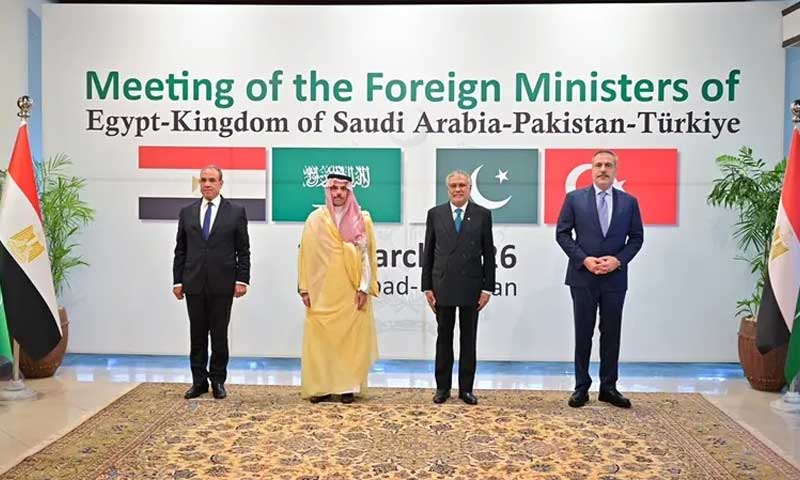
On the surface, the foreign ministers of three countries, Egypt, Türkiye, and Saudi Arabia, are meeting in Islamabad. However, this can also be described as a warm-up session for a more significant phase. These three countries are convening at a time when the threat of war spreading across the region looms large.
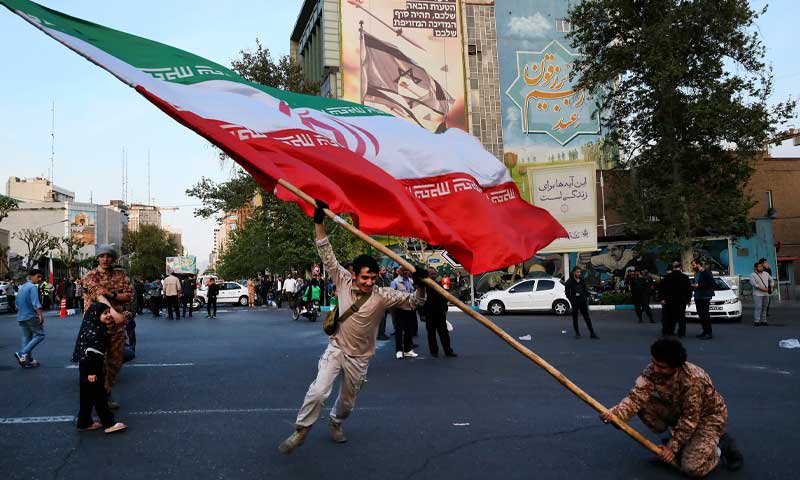
The Middle East is engulfed in flames, and this fire could expand at any moment. There is no doubt that Saudi Arabia’s prudence and restraint are commendable, yet other Gulf states could fall prey to a deeper Israeli design. Pakistan is walking a tightrope. Why is it taking this risk? Because it is the one country most likely to be directly affected first in any serious escalation. That is precisely why Pakistan has, so far, been working to prevent this fire from spreading. It seeks peace, while also trying to shield itself from the flames.
Pakistan is not mediating, but rather facilitating contacts keeping the hope of peace alive.
‘Buying Time’ Is Pakistan’s Priority
In reality, Pakistan’s primary objective throughout this phase is to ‘buy as much time as possible’ and that remains its top priority. The search for a way forward, through the acquisition of time, continues to drive Pakistan’s actions.
The efforts made by Pakistan over the past few days have not only been acknowledged but also appreciated, which is why Pakistan now finds itself at center stage.
Contacts, not an isolated move
The Field Marshal’s direct contact with President Trump was not an isolated move; it was the result of structured diplomacy conducted in Islamabad beforehand. This was not merely a phone call—it reflected prior engagement with key ambassadors, including China, and a carefully coordinated strategy that made this formal outreach possible. Following Pakistan’s request, the United States first delayed strikes on Iran’s energy facilities for five days, and later extended this pause to ten days. Most significantly, two key Iranian figures, Speaker Baqer Qalibaf and Foreign Minister Abbas Araghchi, were removed from the target list.
Trust With Pakistan
Steve Witkoff’s acknowledgment that fifteen demands were conveyed to Iran through Pakistan is a clear indication of the trust both Iran and the United States place in Pakistan. During this period, Iran also signaled a few “diplomatic gestures,” which led to an hour-long conversation between Prime Minister Shehbaz Sharif and President Pezeshkian.
Islamabad’s strategy
Islamabad’s first priority remains extending the current pause in U.S. strikes. The second is to create space and opportunities for direct dialogue between the two countries, while the third stage would involve securing guarantees from a major power between them.
(N vs N) Nightmare or normalisation
The war has now entered its second phase, with Yemen’s Houthis launching attacks on Israel and signaling further involvement. There have also been threats to close another critical maritime chokepoint in the Red Sea, the Bab al-Mandab Strait. If that happens, it could become another nightmare after the Strait of Hormuz. The scope of war in the region is expanding, while peace increasingly appears like a distant dream. Whether Pakistan’s efforts will succeed in facilitating dialogue between the U.S. Vice President and the Iranian Speaker is too early to say. However, history once again places Pakistan at center stage, much like in 1972, when it played a direct role in easing tensions between China and the United States.
You May Also Like