
- WEB DESK
- November 9, 2026
Water enters Tarbela extension project’s tunnel after rock section collapses
-

- WEB DESK
- November 9, 2026
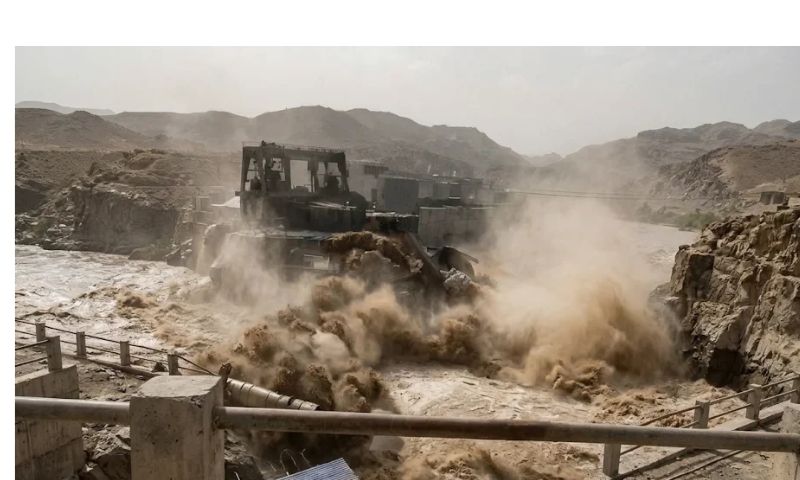
ISLAMABAD: Water entered a tunnel and the under-construction powerhouse of the Tarbela Fifth Extension Hydropower Project on Monday after a section of weak rock gave way during excavation, prompting an emergency evacuation of workers, the Water and Power Development Authority (WAPDA) said.
All workers were safely evacuated and there was no loss of life, according to a WAPDA spokesperson.
The spokesperson said the incident occurred during excavation of the second bench of the connecting tunnel, when a weak section of rock collapsed, allowing water from the reservoir’s intake structure to enter the tunnel and powerhouse.
WAPDA said that water had been completely drained from the intake structure, while the process of removing water from the under-construction powerhouse had also begun.
No further water was entering the downstream work sites, the spokesperson said, adding that senior WAPDA officials, consultants and contractors were assessing the situation to address the challenges facing the project.
The authority specifically rejected reports circulating about the collapse of Tarbela’s Tunnel No 5, saying the main tunnel, under-construction powerhouse, tailrace culvert and switchyard had not sustained any damage.
The incident comes amid an earlier setback to the project, when its protective cofferdam collapsed in August 2025, allowing water to flood the construction site and forcing work to stop.
A subsequent government inquiry held WAPDA, the contractor and the consultant responsible for the earlier collapse, citing unauthorised design changes, inadequate supervision and contractual violations.
The inquiry found that the cofferdam’s design had been changed from roller-compacted concrete to a rock-fill structure, compromising its strength and contributing to its failure.
The earlier incident contributed to significant delays and a sharp increase in the project’s estimated cost, which rose from Rs82 billion to around Rs317 billion, an increase of more than 285 per cent.
The project, which was initially expected to be completed much earlier, is now targeted for completion by the end of June 2028.
What is Tarbela Fifth Extension Project?
The Tarbela Fifth Extension Hydropower Project, also known as T5, is designed to add 1,530 megawatts of electricity generation capacity to the existing Tarbela Dam by converting its fifth irrigation tunnel into a power-generation facility.
Tarbela Dam, built on the Indus River in Khyber Pakhtunkhwa, was completed in 1976 and is one of the world’s largest earth-filled dams. It plays a crucial role in storing water for irrigation, regulating river flows and generating electricity.
The dam initially had an installed power-generation capacity of 700MW, which was expanded through successive extensions involving Tunnels 1, 2, 3 and 4.
The fourth extension, which added 1,410MW, became operational in 2018, taking the dam’s installed generation capacity to 4,888MW.
The fifth extension involves installing three generating units of 510MW each at Tunnel No 5, which was originally constructed to release irrigation water when reservoir levels are low.
The project is expected to supply approximately 1.347 billion units of relatively low-cost and clean hydropower to the national grid annually. Upon completion, it will increase Tarbela’s installed generation capacity from 4,888MW to 6,418MW.
The project is being financed through loans of $390 million from the World Bank and $300 million from the Asian Infrastructure Investment Bank (AIIB). The project is part of WAPDA’s plan to promote green, clean, and cost-effective energy.
WAPDA has said the conversion of Tunnel No 5 will allow water releases to be used for electricity generation while maintaining the tunnel’s irrigation function.
The project is also intended to improve the utilisation of Tarbela’s water resources and help address Pakistan’s growing electricity requirements.
You May Also Like


- Reuters
- November 9, 2026
More than 30 dead after migrant boat sinks off Senegal coast

- Reuters
- November 9, 2026
