
- WEB DESK
- September 16, 2026
Weak fibre network emerges as key barrier to 5G rollout in Pakistan
-

- WEB DESK
- May 3, 2026
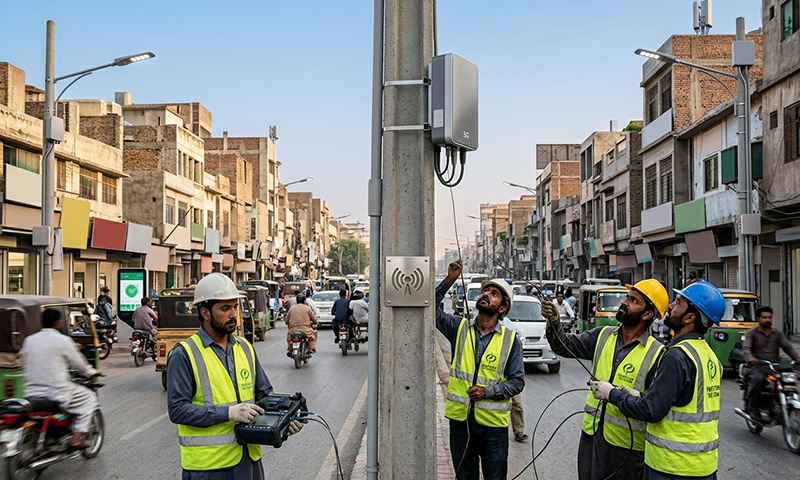
Pakistan’s plans to introduce widespread 5G services are being slowed by a critical shortage of optical fibre infrastructure, industry experts say, despite recent spectrum auctions and limited pilot projects.
While telecom operators have begun testing 5G in select urban locations, the underlying network required to support high-speed connectivity remains underdeveloped. Data from a latest report by the Pakistan Telecommunication Authority (PTA) shows that less than one-fifth of mobile towers in the country are connected to fibre, leaving the majority dependent on older microwave systems that cannot handle 5G-level data demands.
CONNECTIVITY GAP WIDENS
Although Pakistan has laid down over 200,000 kilometres of fibre cable, the distribution is uneven and insufficient for next-generation services. Major cities like Karachi, Lahore and Islamabad continue to experience relatively slow internet speeds, while more remote areas such as Balochistan and Azad Kashmir face even greater connectivity challenges.
Experts note that without a strong fibre backbone, 5G networks cannot deliver the promised speed, reliability, and low latency.
BARRIERS TO EXPANSION
The rollout of fibre networks is being held back by multiple issues, including complicated approval processes for laying cables, which often involve several government bodies and can take months to resolve. High deployment costs, economic pressures, and low returns for telecom companies have also discouraged aggressive expansion.
Operational challenges, such as difficult terrain, urban congestion, flood risks, and a shortage of trained technical workers, add further delays to infrastructure development.
WHAT NEEDS TO CHANGE
Analysts say Pakistan must significantly increase fibre connectivity, potentially to more than half of all cell sites, to make 5G viable at scale. Greater coordination between regulators, government agencies, and telecom providers will be essential, along with policy reforms to simplify approvals and encourage investment.
With demand for digital services and IT exports on the rise, improved internet infrastructure could play a key role in economic growth. However, without closing the fibre gap, Pakistan’s transition to 5G may remain slower than expected.
You May Also Like

- WEB DESK
- September 16, 2026
Petrol price rises by Rs6.88, diesel by Rs5.62


- WEB DESK
- September 16, 2026