
- WEB DESK
- November 4, 2026
Who are the Muslim winners in the US midterm elections?
-

- WEB DESK
- November 4, 2026
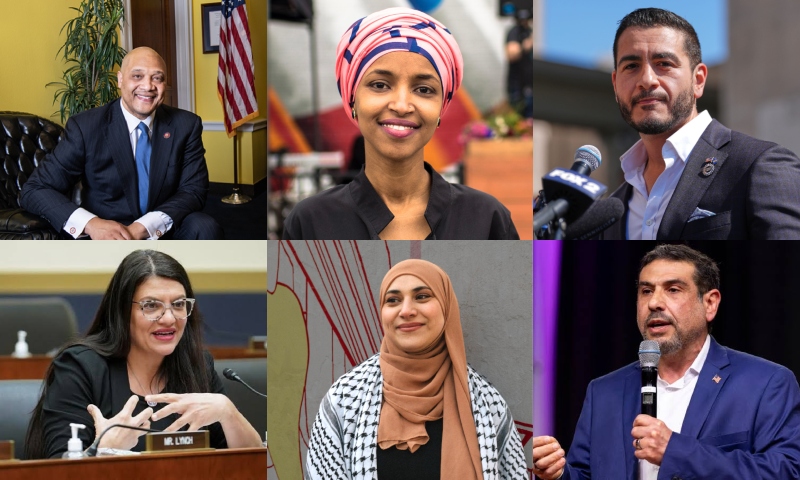
Muslim candidates made historic gains in the US midterm elections, with at least seven winning seats in Congress, including Democrat Abdul El-Sayed, who became the first Muslim elected to the US Senate.
El-Sayed defeated Republican Mike Rogers in Michigan’s Senate race, while six Muslim candidates won seats in the House of Representatives, according to initial election results and media projections.
The House winners include incumbents Ilhan Omar of Minnesota, Rashida Tlaib of Michigan, André Carson of Indiana and Lateefah Simon of California, who secured re-election, alongside newcomers Adam Hamawy of New Jersey and Darializa Avila Chevalier of New York.
The results mark a significant milestone for Muslim representation in the US legislature, with victories at a time when Muslim and Arab American candidates faced campaigns in which their religious identity and positions on US policy towards Israel became prominent issues.
US Senate
Abdul El-Sayed — Michigan
El-Sayed defeated Republican Mike Rogers in Michigan to become the first Muslim elected to the US Senate. The 42-year-old Egyptian-American is a former public health official and the son of Egyptian immigrants.
His campaign focused on healthcare, the cost of living and corporate influence in politics. He also opposed unconditional US military aid to Israel and described its military operations in Gaza as genocide.
Republican opponents sought to make his Muslim identity an issue during the campaign, including through allegations of links to the Muslim Brotherhood that were not substantiated.
US House of Representatives
Six Muslim candidates won seats in the House, including four incumbents who retained their constituencies and two newcomers.
Ilhan Omar — Minnesota’s 5th Congressional District
Omar won a fifth term representing Minnesota’s 5th Congressional District, which includes Minneapolis and surrounding communities.
A Somali-American who came to the United States as a refugee, she was first elected to Congress in 2018 and has become one of the most prominent Muslim voices in American politics.
Rashida Tlaib — Michigan’s 12th Congressional District
Tlaib secured another term representing Michigan’s 12th Congressional District, covering the Detroit and Dearborn metropolitan areas. She made history alongside Omar in 2018 as one of the first two Muslim women elected to Congress.
The Palestinian-American lawmaker has been a vocal critic of Israel’s military campaign in Gaza and a prominent advocate for Palestinian rights in Congress. She has also drawn sustained support from working-class communities and Michigan’s sizeable Arab American population.
André Carson — Indiana’s 7th Congressional District
Carson retained his seat representing Indiana’s 7th Congressional District, which covers Indianapolis. First elected in 2008, he is the longest-serving Muslim member of the House and has been a prominent figure in efforts to strengthen Muslim representation in American public life.
Lateefah Simon — California’s 12th Congressional District
Simon won another term representing California’s 12th Congressional District in the East Bay area. A civil rights activist and former president of the Akonadi Foundation, she entered Congress in 2025 and retained her seat in the midterm elections.
Adam Hamawy — New Jersey’s 12th Congressional District
Hamawy, a Democrat and the first Muslim and first Arab American elected to represent New Jersey in Congress.
Hamawy defeated Republican Gregg Mele to win New Jersey’s 12th Congressional District, which includes areas around Princeton and parts of Mercer, Middlesex, Somerset and Union counties. He fills the seat vacated by retiring long-time Democratic Representative Bonnie Watson Coleman.
The 57-year-old Egyptian-American physician is a former US Army combat surgeon and plastic surgeon based in Princeton. He served in Iraq and later volunteered at a hospital in Gaza in 2024, while also undertaking humanitarian work in conflict zones including Syria and Sudan.
His campaign focused on expanding healthcare coverage, investing in public education and conditioning foreign military aid on compliance with human rights standards. He also called for measures to address medical and student debt.
Darializa Avila Chevalier — New York’s 13th Congressional District
Chevalier won New York’s 13th Congressional District, which covers Upper Manhattan and parts of the Bronx. A civil rights investigator, doctoral student and community organiser, she has been involved in advocacy around Palestinian rights.
Her victory adds another Muslim representative to the House and brings the number of Muslim members elected to Congress in the midterms to six.
Muslim candidates elected to state senates
In addition to the seven winners in the federal legislature, two Muslim candidates also secured seats in state senates. These victories are separate from the US Senate and House results.
Aber Kawas — New York State Senate’s 12th District
Kawas won New York’s 12th State Senate District, which covers parts of western Queens, including Astoria, Long Island City, Sunnyside, Woodside and Jackson Heights.
A Palestinian-American community organiser and daughter of Palestinian refugees, she is the first Palestinian Muslim woman elected to the New York state legislature.
Nabeela Syed — Illinois State Senate’s 26th District
Syed won Illinois’ 26th State Senate District, which covers parts of the state’s northwest suburbs of Chicago. A Muslim Democrat, she defeated Republican incumbent Darby Hills to secure the seat. Syed previously served in the Illinois House of Representatives.
Pakistani-American candidates win state legislative seats
Several Pakistani-American candidates also won or retained seats in state legislatures across the United States, including in Texas, Connecticut, Georgia and Pennsylvania.
In Texas, Democratic lawmakers Salman Bhojani and Dr Suleman Lalani were re-elected to the State House of Representatives from Districts 92 and 76, respectively. Both secured around 67 per cent of the vote, according to preliminary results.
Bhojani represents District 92 and is an attorney and former Euless City Council member. He made history in 2022 as one of the first two Muslim lawmakers elected to the Texas Legislature.
Lalani, a physician based in the Sugar Land and greater Houston area, retained his seat in District 76. He was elected in 2022 and is the first South Asian and Muslim member of the Texas Legislature, according to his official legislative biography.
In Connecticut, Pakistani-American Democrat Dr Saud Anwar won re-election to the State Senate from District 3. A physician, Anwar became the first Muslim elected to the Connecticut Senate and has represented the district since 2018.
Another Pakistani-origin Democrat, Maryam Khan, won Connecticut’s State Senate District 2. Khan, who previously served in the State House of Representatives, defeated Republican Tim Knotts after securing the Democratic nomination in August.
Georgia also saw a victory for Pakistani-American Democrat Farooq Mughal, who won House District 105 with 60.8 per cent of the vote, defeating Republican incumbent Sandy Donatucci. Mughal is a former state representative who returned to the legislature after the election.
In Pennsylvania, Pakistani-origin Democrat Maryam Sabiha won House District 131, defeating Republican Milo McKenzie, according to preliminary election reports.
Another Pakistani-American Democrat, Tarik Khan, retained his seat in Pennsylvania’s House District 194. A nurse practitioner, Khan has represented the district since 2022.
A milestone for Muslim representation
The results mean at least seven Muslim candidates have won seats in the US Congress in the 2026 midterms: one in the Senate and six in the House.
The two state Senate victories by Kawas and Syed bring the number of Muslim winners among the candidates to at least nine across the federal and state legislatures.
The figures are based on reported results and media projections available on Wednesday. They should be treated as preliminary until the relevant election authorities certify the results.
You May Also Like

- WEB DESK
- November 4, 2026
