- WEB DESK
- October 7, 2026
Who was Lindsey Graham? A look at the life and career of the longtime US senator
-

- WEB DESK
- July 12, 2026
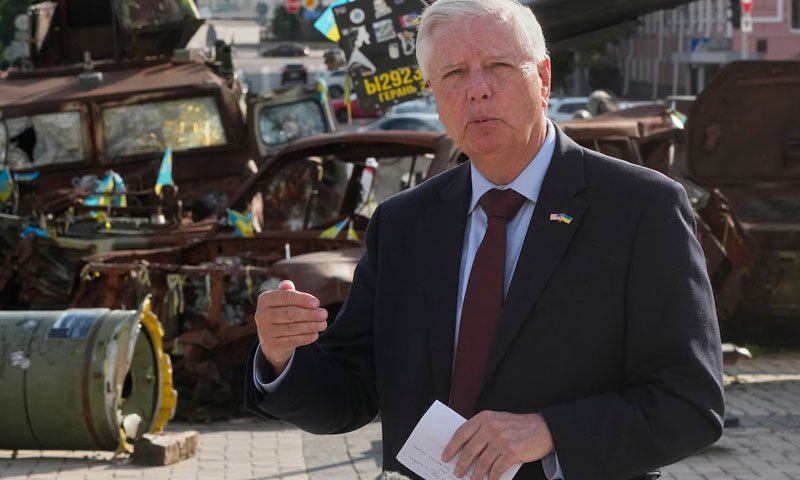
WEB DESK: Lindsey Graham, a veteran Republican politician who represented South Carolina in the US Senate for more than two decades, was one of the most recognised voices in American politics on national security and foreign affairs.
He served as a US senator from South Carolina from 2003 until he died in 2026, building a reputation as a lawmaker with a strong focus on defence, international relations and US foreign policy.
Early life and education
Born on July 9, 1955, in Central, South Carolina, Lindsey Olin Graham grew up in a working-class family. His parents, Millie Walters and Florence James “FJ” Graham, ran a family business.
He became the first member of his family to attend college and graduated from the University of South Carolina with a bachelor’s degree in psychology in 1977 and a law degree in 1981.
Military career before politics
Before entering politics, Graham served in the US Air Force Judge Advocate General’s (JAG) Corps. He joined active duty in 1982 as a military lawyer and later became the Air Force’s chief prosecutor in Europe at Rhein-Main Air Base in Germany.
After returning to South Carolina, he worked as a lawyer before beginning his political career. He served in the South Carolina House of Representatives from 1993 to 1995 and later represented the state’s 3rd Congressional District in the US House from 1995 to 2003.
Two decades in US Senate
Graham entered the Senate in 2003 after winning election in 2002 and was re-elected in 2008, 2014 and 2020. During his Senate career, he emerged as a senior Republican voice on defence, security and foreign policy matters.
Alongside politics, Graham continued his military service through the US Air Force Reserve. He was promoted to colonel and served in Iraq and Afghanistan, receiving the Bronze Star Medal in 2014 for his role as a senior legal adviser.
Criticism over supporting Israel
Graham was widely viewed as a foreign policy hawk because he supported a strong US military role overseas. He backed tougher policies toward Iran, close US-Israel relations and an interventionist approach in global affairs.
Throughout his Senate career, he was among the strongest congressional supporters of Israel. Following the Israel-Gaza war in 2023, he opposed calls for a ceasefire and rejected efforts to place conditions on US military assistance to Israel.
His positions on Israel and Iran drew criticism from human rights advocates and foreign policy analysts, who argued he relied too heavily on military responses instead of diplomacy.
Relationship with Trump and criticism
In 2015, Graham launched a campaign for the Republican presidential nomination but withdrew before the 2016 primaries. He was initially a vocal critic of Donald Trump’s campaign but later became one of Trump’s closest allies after 2017.
The change in his position drew criticism from opponents and commentators, who accused him of reversing his earlier stance for political reasons.
Supreme Court controversy
Graham also faced criticism over Supreme Court nominations. Democrats accused him of changing his position on election-year appointments after supporting the confirmation of Justice Amy Coney Barrett in 2020, despite earlier arguments that such nominations should wait until after a presidential election.
His supporters defended his approach as a commitment to US security and global leadership, while critics argued that his hawkish foreign policy favoured military intervention over diplomatic solutions.
Throughout his career, Lindsey Graham remained a significant but polarising figure in American politics. His combination of military experience, legal expertise and political influence shaped debates on US domestic and foreign policy for more than two decades.
You May Also Like