- WEB DESK
- October 4, 2026
Why did govt-PTI talks fail? Here’s what both sides say
-

- WEB DESK
- October 4, 2026
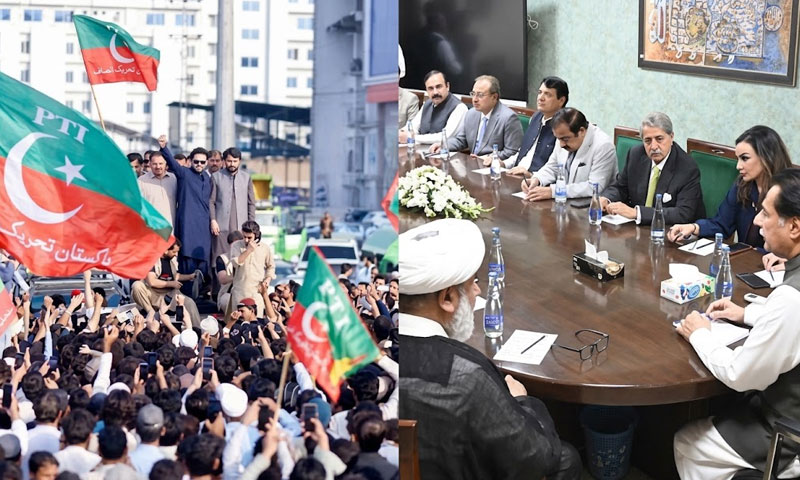
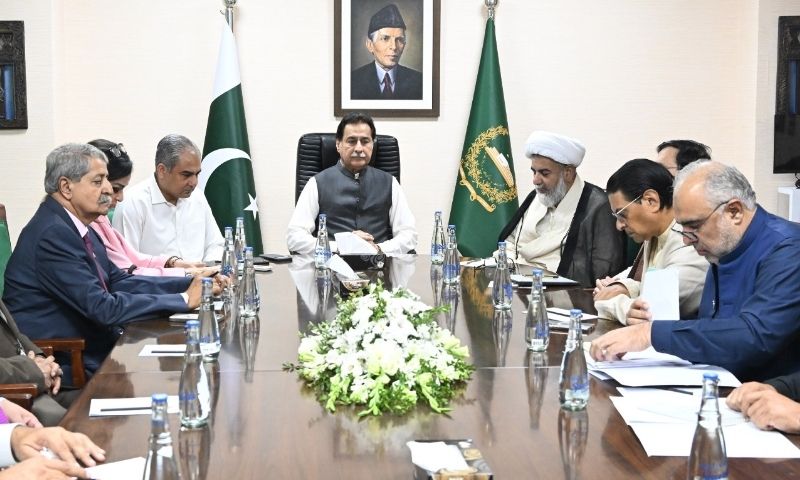
ISLAMABAD: The government and the Pakistan Tehreek-e-Insaf (PTI) have offered sharply different accounts of what brought their two-day marathon negotiations to a deadlock.
The breakdown, after talks continued until around 2:30am on Sunday, has revived the political confrontation that the negotiations were intended to defuse, with counterterrorism policy in Khyber Pakhtunkhwa and access to PTI founder Imran Khan emerging as the two central fault lines.
Following the impasse, the PTI announced that it would proceed with its long march on Islamabad, while the government has made clear that it would not allow the protest to enter the capital.
But the two sides do not even agree on what caused the negotiations to collapse.
The government’s position
For the government, the key issue was “the KP government’s unwillingness to cooperate” with the federal government and security forces in the fight against terrorism.
Interior Minister Mohsin Naqvi said that the KP government had initially agreed to sign a written agreement and submit an implementation plan within 72 hours covering counterterrorism measures, implementation of the National Action Plan and greater cooperation with the armed forces.
The proposed commitments, according to him, also included preventing militants from operating freely or establishing safe havens in the province, condemning the Tehreek-i-Taliban Pakistan (TTP), Tehreek-i-Taliban Afghanistan (TTA) and other militant groups, supporting the federal Afghan refugee policy, increasing funding for counterterrorism operations and giving the provincial government greater ownership of the fight against militancy.
Naqvi said that the KP government backed out of these commitments during the final phase of the negotiations.
The government’s other negotiators also put counterterrorism at the centre of the dispute.
Prime Minister’s Adviser on Political Affairs Rana Sanaullah said the talks failed because the KP government was unwilling to give assurances that it would support security forces in the fight against terrorism.
Minister of State for Interior Talal Chaudhry accused the provincial government of refusing to implement the National Action Plan.
From the government’s perspective, the question was not whether terrorism should be fought, but whether the KP government would unequivocally support the federal security policy.
The PTI’s position
The PTI has rejected that interpretation.
PTI Secretary General Salman Akram Raja said the primary reason for the failure was a disagreement over how counterterrorism operations in KP should be conducted.
According to Raja, the PTI-TTAP negotiating team wanted counterterrorism actions to be based on an agreement between the federal and KP governments and framed through consultation with, and the support of, political parties represented in the provincial assembly.
The opposition, he said, had “zero tolerance for terrorism” but also opposed what it described as “collateral damage” involving civilian deaths and internal displacement.
Raja argued that counterterrorism policies should have the support of local communities and be based on ground intelligence. He also called for the recommendations of a jirga of political and tribal leaders from across KP, including the merged districts, to be taken into account.
In this account, therefore, the disagreement was not over whether terrorism should be fought, but over who should determine the strategy, how operations should be conducted and what safeguards should be in place for civilians.
Where does Imran Khan fit in?
The issue of access to Imran Khan was another major sticking point.
Opposition negotiators said they had sought regular meetings between political leaders as well as legal, medical and visitation rights for Imran Khan and his wife Bushra Bibi, both incarcerated in Adiala jail.
PTI leader Aleem Adil Sheikh said the talks broke down over three “red lines”: access to Imran Khan, concerns over his health and medical treatment, and the government’s proposed approach to counterterrorism in Khyber Pakhtunkhwa.
He said the opposition had sought a meeting with Imran, involvement of his personal physicians in his treatment, and a jointly agreed counterterrorism strategy involving the federal and provincial governments and other stakeholders. According to Sheikh, the government did not accept these demands, leading to the deadlock.
The PTI’s proposed framework also called for progress on pending legal applications involving Imran, Bushra and other political prisoners, while seeking consideration of such applications within 10 days where legally possible.
Leader of the Opposition in the Senate Raja Nasir Abbas said the opposition was told that the government was not currently in a position to facilitate a meeting with Imran. The government, however, offered to facilitate meetings between his sisters and lawyers.
The issue remained unresolved, alongside the government’s demand for the cancellation of the long march as part of any understanding.
So, have the talks failed?
For now, the answer appears to be yes — at least as far as the latest negotiating round is concerned.
PTI Chairman Barrister Gohar Khan said talks hit a deadlock and both siades had not even agreed on whether another session would be held. At the same time, he stressed that “in politics, nothing is final”, leaving the door open for further engagement.
That distinction is important.
The negotiations have not produced a political agreement, but neither side has formally ruled out future talks. The immediate political reality, however, is that the PTI is preparing to mobilise supporters from KP while the government is preparing to prevent the march from entering Islamabad.
The failure of the negotiations has therefore shifted the focus from the negotiating table back to the streets, with both sides now seeking to frame the breakdown on their own terms.
For the government, the dispute is primarily about security and the KP government’s responsibility in the fight against militancy.
For the PTI, it is about political and legal rights, access to its jailed founder and ensuring that counterterrorism operations in KP are conducted with provincial and political consent.
The two positions are not necessarily mutually exclusive on the broader question of fighting terrorism. Both sides say they oppose militancy. Their disagreement is over how the fight should be conducted, who should have a say in it and what political assurances should accompany it.
Until those differences are reconciled, the possibility of another round of talks remains uncertain — and the PTI’s Islamabad march remains the immediate political flashpoint.