- WEB DESK
- October 25, 2026
AI-powered drones deployed to tackle traffic congestion in Lahore
-

- Uzair Chaudhary
- July 9, 2026
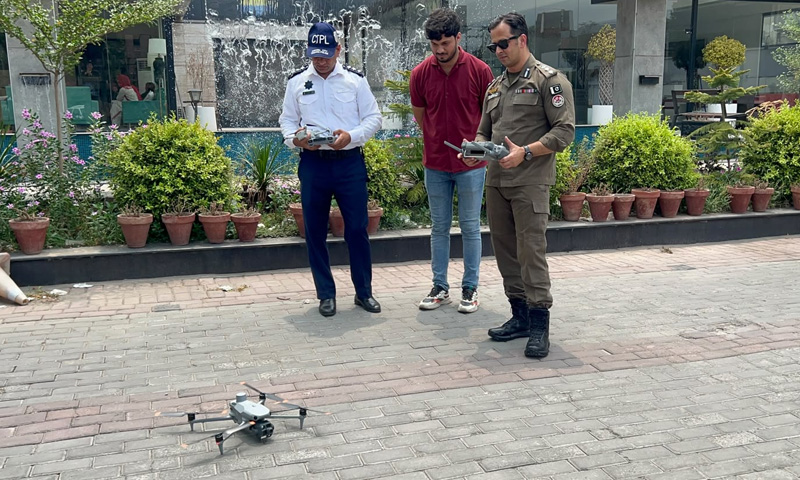
LAHORE: Lahore traffic police have officially deployed a fleet of artificial intelligence-powered drones to monitor and manage the city’s chronic traffic congestion and seasonal smog in real time.
The initiative marks a significant technological shift for Pakistan’s second-largest city, moving away from a traditional reliance on stationary CCTV networks and manual traffic warden deployments to active aerial surveillance.
The high-tech drones, equipped with thermal and high-definition cameras, are being flown over Lahore’s most congested arterial roads and bottleneck “choking points” to diagnose the structural causes of gridlock.
Rather than just logging data, the recorded video footage is fed directly into localised artificial intelligence software developed for the Lahore Traffic Police.
The predictive algorithms autonomously analyse traffic disruptions, identify illegal bottlenecks, and suggest data-driven engineering or enforcement solutions.
“Whenever traffic congestion is reported, a drone is deployed immediately to assess the underlying causes and provide real-time intelligence,” Chief Traffic Officer (CTO) Lahore Syed Abdul Raheem Shirazi told reporters during a live monitoring demonstration.
He said that the system is intended to guide long-term urban traffic planning and improve daily commuter mobility.
The aerial system is also acting as an enforcement tool in a multi-pronged crackdown on common urban violations. Authorities confirmed the drones will actively flag smoke-emitting vehicles contributing to Lahore’s severe winter air pollution, along with one-way driving violations, illegal roadside parking, and commercial encroachments that narrow usable lane space.
The CTO noted that the tech will bridge a gap between enforcement and urban planning.
Where data reveals that an intersection’s poor engineering design — rather than driver behavior — is creating the bottleneck, the video evidence will be securely shared with relevant development authorities for infrastructure modification.
You May Also Like