- WEB DESK
- October 25, 2026
AJK Supreme Court rules to retain 12 refugee seats in assembly
-

- Zafar Ali
- June 7, 2026
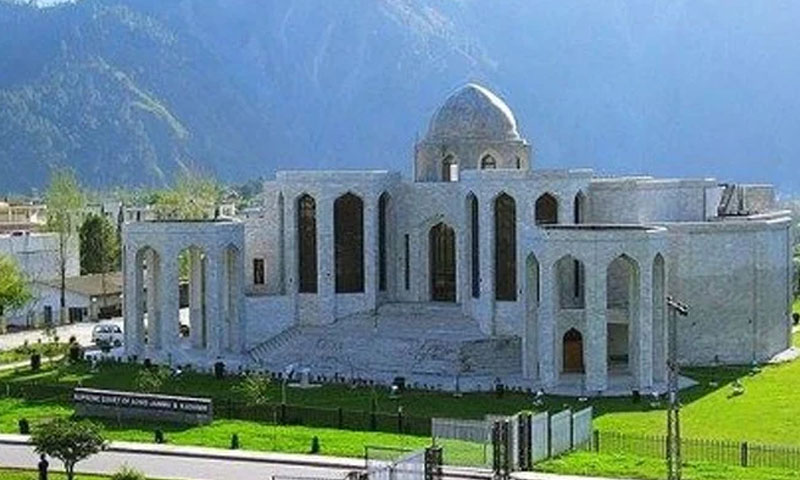
MUZAFFARABAD: The Supreme Court of Azad Jammu and Kashmir (AJK) on Sunday upheld the constitutional status of 12 legislative seats reserved for refugees living in Pakistan, delivering a blow to the Jammu Kashmir Joint Awami Action Committee (JKJAAC), which had demanded their abolition.
The Supreme Court of Azad Jammu and Kashmir had reserved its opinion on a presidential reference concerning the constitutional status of the region’s refugee seats, following the conclusion of detailed arguments from court-appointed amici curiae and all parties involved.
The top court’s advisory opinion came in response to a presidential reference filed under Article 46-A of the AJK Constitution. The reference sought clarity as JKJAAC has given a strike call and a protest aimed at eliminating the refugee quota.
The court heard extensive arguments on constitutional questions raised in the presidential reference, particularly whether the 12 reserved refugee seats in the Azad Kashmir Legislative Assembly can be abolished or altered without a constitutional amendment. The bench also examined the scope and limits of the current assembly’s authority to introduce constitutional amendments.
In its detailed opinion, a bench led by Chief Justice Raja Saeed Akram ruled that the 12 refugee seats are anchored in Article 22 of the Constitution and supported by a legislative history dating back to 1960.
“The refugee seats possess constitutional protection under Article 22 and cannot be altered or abolished through an administrative decision,” the court stated.
“Any change to these seats necessitates a formal constitutional amendment under Article 33.”
The court validated the government’s stance that any substantive changes to the constitutional structure must be left to the elected assembly rather than conceded under pressure from agitators.
The ruling directly addressed the ongoing civil unrest in the region. While the court acknowledged that peaceful protest is a fundamental constitutional right, it drew a sharp line at the disruption of public life.
The bench ruled that blocking roads and disrupting the flow of daily life does not enjoy constitutional protection.
“The exercise of one individual’s rights cannot be used as a justification to usurp the rights of other citizens,” the court remarked.
The court noted that the administration is legally bound to maintain public peace, constitutional order, and the rule of law.
The judgment also emphasized the necessity of timely elections under Article 22(4). The court clarified that political disputes or ongoing protests cannot serve as a legal barrier to the electoral process.
Earlier, senior lawyer Raja Sajjad Ahmed Khan argued that Article 33 grants the assembly full legislative powers. He told the court that members of the legislative assembly had already expressed their views on the refugee seats issue during an all-parties conference. However, the court-appointed amicus maintained that the matter should first have been considered by a high-powered committee.
References were also made during the hearing to negotiations between a federal committee and the Joint Awami Action Committee. Lawyers including Barrister Humayun Nawaz, Raja Sadaqat Hussain and Sardar Abdul Razzaq presented arguments on various legal aspects of the case.
Former prime minister Raja Farooq Haider Khan and legislator Abdul Majeed Khan were present in court during the proceedings. Bar representatives, including Supreme Court Bar Association president Raja Aftab, Central Bar president Raja Zaigham Iftikhar and High Court Bar president Raja Jahangir Aslam, also appeared before the bench.
Demand raised for separate representation of refugees residing in AJK
During the hearing, representatives of refugees residing in Azad Kashmir since 1989 urged the court to consider allocating a separate assembly seat for their community. The bench also sought views on the legal validity of attempts to halt elections or exert pressure for constitutional amendments.
Former additional secretary Farhat Ali Mir, Khawaja Manzoor Qadir and M Tanveer Chaudhry also presented their positions before the court.
Court to convey constitutional opinion to president
After hearing all parties, the division bench had reserved its decision, marking a significant stage in the legal debate over the constitutional future of the 12 refugee seats.
The SC directed that its constitutional opinion be formally conveyed to the President of Azad Kashmir on Monday, bringing the high-profile reference a step closer to resolution. The court’s opinion is expected to clarify the legal and constitutional framework governing refugee representation in the legislative assembly and could have far-reaching implications for the region’s electoral and constitutional structure.
You May Also Like