- WEB DESK
- October 17, 2026
All candidates for UN secretary-general receive veto in latest Security Council poll
-

- AFP
- October 17, 2026
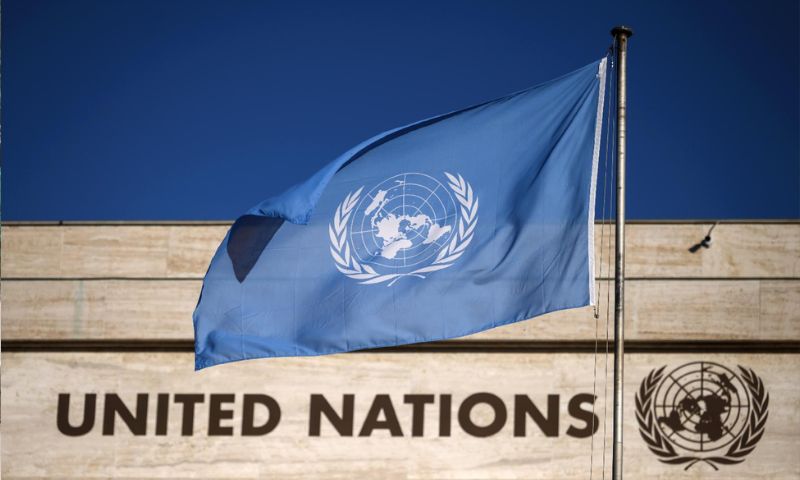
UNITED NATIONS: All seven candidates seeking to become the next United Nations secretary-general received at least one “discourage” vote from a permanent member of the UN Security Council in the latest informal poll, a diplomat said on Friday.
The latest vote marked the first time during the anonymous polling process that Britain, China, France, Russia and the United States used coloured straws to indicate their vetoes. The council’s 10 elected members continued to use plain markers.
Costa Rica’s Rebeca Grynspan, who emerged as a frontrunner in the first five rounds of polling, received the highest number of “encourage” votes in Friday’s round. However, she also received five “discourage” votes, including two from permanent Security Council members.
US media reports have suggested that Washington opposes all seven candidates currently competing for the position.
The US envoy to the United Nations, Mike Waltz, declined to comment on the reports but said on Friday: “We have always said we just simply need the best.”
Asked whether additional candidates could enter the race, Waltz said countries were free to nominate more contenders.
“Countries, if they want to put more candidates in, that’s certainly within their sovereign rights,” he said.
Several potential candidates have been mentioned by diplomats, including Nickolay Mladenov, the high representative for Gaza under the US-backed “Board of Peace”, and Lana Nusseibeh, the United Arab Emirates’ minister of state for foreign affairs.
Feridun Hadi Sinirlioglu of Turkey, who serves as secretary-general of the Organization for Security and Co-operation in Europe (OSCE), has also been mentioned as a possible contender.
Grynspan recorded the strongest average performance across the first five rounds of informal polling and again topped Friday’s round, despite receiving two votes against her from permanent members.
The other candidates in the race are Guyana’s former foreign minister Carolyn Rodrigues-Birkett; Rafael Grossi of Argentina, who currently heads the UN nuclear watchdog; Senegal’s Macky Sall; Ecuador’s Ivonne A-Baki and Maria Fernanda Espinosa; and Uganda’s Olara Otunnu.
The outgoing secretary-general, Antonio Guterres of Portugal, is due to complete his second five-year term on December 31, 2026.
To advance through the Security Council, a candidate must secure at least nine votes from its 15 members while avoiding a veto from any of the five permanent members. The major powers remain deeply divided over the selection process.
Once a candidate clears these hurdles, the Security Council will recommend the nominee to the General Assembly, comprising all UN member states, for confirmation.
The informal Security Council straw poll was introduced in the early 1980s in an effort to resolve a deadlock between two candidates whose nominations had been blocked by vetoes. The process has continued in various forms despite criticism from countries that oppose its lack of transparency.
Under the procedure, all 15 Security Council members anonymously assign each candidate one of three options: “encourage”, “discourage” or “no opinion”.
By tradition, the UN’s top position is expected to rotate among different regions. Under this convention, the next secretary-general should come from Latin America, although several candidates from other regions are also in the running, including Sall and Otunnu from Africa.
You May Also Like

- AFP
- October 17, 2026