- WEB DESK | Javed Soomro
- October 26, 2026
Allies back govt but criticise budget in NA debate
-

- Zafar Ali
- June 16, 2026
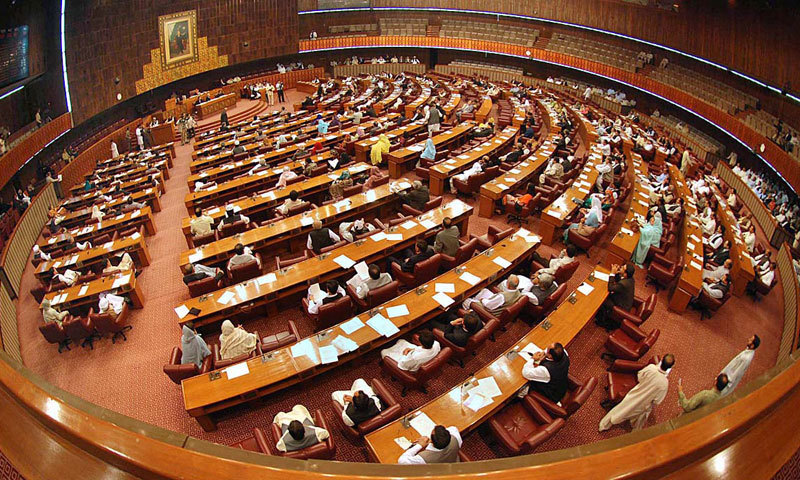
ISLAMABAD: The National Assembly witnessed a fiery fiscal debate on Tuesday, exposing deep political fractures within the ruling coalition and drawing sharp rebukes from the opposition over the proposed federal budget for the fiscal year 2026-27.
The session, chaired by NA Speaker Speaker Ayaz Sadiq, highlighted the complex political dynamics between the ruling Pakistan Muslim League-Nawaz (PML-N), its critical coalition partner the Pakistan People’s Party (PPP), the allied Muttahida Qaumi Movement-Pakistan (MQM-P), and the opposition Pakistan Tehreek-e-Insaf (PTI).
PPP lawmaker Abdul Qadir Patel, delivered a paradox-laden speech. While he confirmed that the budget would be passed without requiring constitutional amendments, he vehemently criticized its contents.
“There is absolutely nothing for the poor in this budget,” Patel said, mocking a 7 per cent salary increase for government employees. “Is seven supposed to be a lucky number?”
Patel hit back at critics for accusing the PPP of political horse-trading, stating that while the party would never compromise its integrity for another party’s interest, it would “make every deal necessary in the supreme national interest.”
Despite slamming the government’s economic priorities, Patel offered glowing praise for Pakistan’s military apparatus amid ongoing geopolitical tensions.
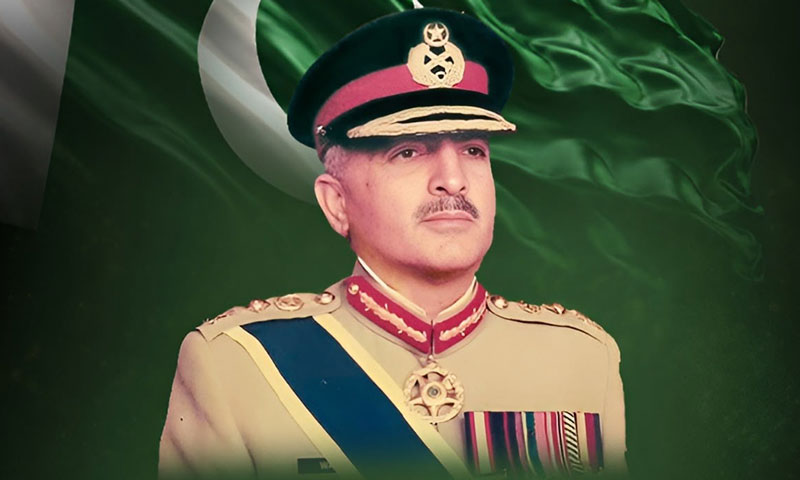
“Pakistan’s political and military leadership has done work that will be remembered for centuries. We saved the world from World War III,” Patel said, before declaring Army Chief General Asim Munir a national hero.
“Field Marshal Syed Asim Munir is a hero,” Patel added.
Federal Minister for National Health Services Mustafa Kamal, representing the coalition partner MQM-P, shifted the focus to Pakistan’s staggering demographic crisis, warning that the federal budget must adapt to “ground realities.”
Kamal presented grim statistics, noting that Pakistan’s population expands by 6.7 million people annually.
“If this trajectory continues, Pakistan will become the world’s fourth largest country by 2030, with 300 million people, and 400 million by 2040,” Kamal warned.
He noted that the expanding population has placed a crushing burden on state infrastructure, requiring 66,000 new primary schools, 680,000 teachers, and 3,600 new hospitals with 165,000 additional beds.
The health minister also highlighted severe systemic failures, noting that 11,000 mothers die annually during childbirth and 40 per cent of Pakistani children suffer from stunted growth due to malnutrition.
Demand for Islamic Banking
Kamal demanded an immediate end to Riba (interest-based banking) in the national economy, framing the country’s financial woes as a spiritual transgression.
“How can the economy improve when we are at war with Allah and His Messenger?” Kamal asked.
“By continuing with interest, we are rebelling. Take interest out of the economy, and it will fix itself.”
He questioned why no practical steps had been taken to enforce the constitutional amendments aimed at eliminating institutional interest.
Opposition Slams ‘Forced’ Provincial Cuts
Representing the opposition, PTI lawmaker Atif Khan launched a scathing attack on the PML-N and PPP dynasties, accusing them of historical mismanagement.
“Whenever a problem arises here, they blame Imran Khan. They ruled for 35 to 40 years, while we were only in power for three,” Khan said, alleging that the only entities that grew during past tenures were the personal factories and sugar mills of the PPP and PML-N leadership.
Khan sharply criticized the federal government’s fiscal management of the National Finance Commission (NFC) award, which dictates revenue sharing between the center and provinces.
“A minister claimed the NFC wasn’t touched, yet Rs1.2 trillion are being forcibly taken from the provinces this time,” Khan alleged.
“On one hand, they claim the economy is improving; on the other, they cut provincial funds because the federal government is broke.”
Turning to Pakistan’s chronic energy crisis, the PTI lawmaker rejected federal allegations of electricity theft in KP, shifting the blame onto lucrative sovereign contracts signed with Independent Power Producers (IPPs).
“Stopping electricity theft is your job, not ours. Go arrest those who signed these predatory contracts with the IPPs.”
Khan concluded by linking Pakistan’s economic survival directly to political stability and the release of Imran Khan.
“There will be no foreign investment in this country until this parliament is genuinely free, and until Imran Khan walks out of prison,” Khan said, adding that the country’s Election Commission had failed entirely and “should be shut down.”
You May Also Like