
- Asmat Aman Sumalani
- October 10, 2026
Atta Tarar calls PTI ‘TTP’s B team’, reiterates that KP govt facilitates terrorism
-

- WEB DESK
- October 10, 2026
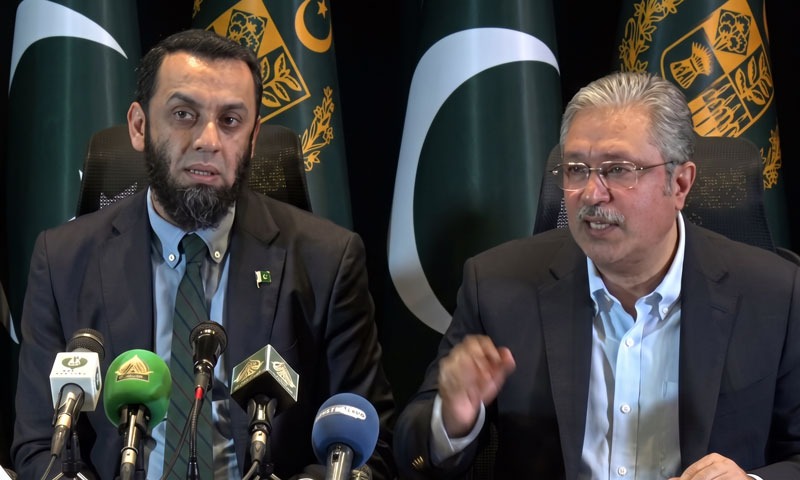
Information Minister Atta Tarar on Saturday accused Pakistan Tehreek-e-Insaf (PTI) of acting as the banned Tehreek-e-Taliban Pakistan’s (TTP) “B team”, alleging that the party’s government in Khyber Pakhtunkhwa (KP) had failed to address terrorism and prioritised political activity over governance.
“They have always been the TTP’s B team. I say this openly; this has been my position from the beginning, and I stand by it,” Tarar said at a press conference alongside Co-Ordinator to Prime Minister of Pakistan for Information & Khyber Pakhtunkhwa Affairs Ikhtiar Wali Khan, criticising successive PTI-led provincial governments for their handling of security and development.
He alleged that PTI had facilitated the return of militants to settled areas after military operations, contributing to renewed attacks in parts of the province. The allegations were made by Tarar; he did not present supporting evidence during the remarks provided.
Tarar accuses KP government of neglecting governance
Tarar said KP had once been a source of pride and a peaceful destination for tourists, but alleged that 13.5 years of PTI-led provincial rule had taken the province “to the Stone Age”.
He contrasted the provincial government’s performance with initiatives undertaken by PM Shehbaz, including the inauguration of Islamabad’s IT Park. Tarar said the project, which he described as previously stalled, had been revived to provide incubation centres, startup facilities and IT skills training for university students, with the aim of increasing exports and contributing to economic growth.
He questioned how much time Chief Minister Sohail Afridi devoted to governance, claiming he had spent “zero point zero hours” on it. Tarar said the chief minister could have focused on building universities, schools, hospitals, roads and other infrastructure instead of concentrating on efforts to secure the release of PTI founder Imran Khan.
The minister also criticised the provincial government for allegedly failing to install safe-city cameras in districts, claiming other provinces had taken such measures.
“You did not install them because you ate up that money,” Tarar alleged, accusing the provincial government of misusing funds intended for the public. He said the province had received Rs700 billion during PTI’s tenure to undertake development and security projects, but alleged that the money had instead been spent on protests.
“You do not even give half an hour a day to governance, but you hold six-hour meetings for unrest and sabotage,” he said.
Tarar questioned whether the people of KP could afford a government that, in his view, devoted little time to administration but spent hours on political agitation.
‘People of KP are trapped by terrorism’
Tarar said residents of KP were burdened by poverty, inadequate healthcare and education, poor roads and bridges, and a lack of basic infrastructure. He described terrorism as another form of confinement for the province’s population.
“The biggest prison in which you have confined the people of KP is the prison of terrorists,” he said.
He accused PTI of allowing militants to return to settled areas after operations Zarb-e-Azb and Radd-ul-Fasaad had cleared them. Tarar alleged that militants had been welcomed back and claimed PTI’s approach had emboldened them to carry out attacks in Kohat, Hangu and Dera Ismail Khan.
“How do these terrorists find the courage to come and attack Kohat, Hangu and Dera Ismail Khan? It is because you brought them back and resettled them,” he said, holding PTI responsible for the attacks.
Tarar referred to the deaths of security personnel and rescue workers, as well as the killing of a child in an attack on the Aman Mela checkpost in Dera Ismail Khan. He questioned whether the chief minister and his cabinet bore responsibility for the bloodshed, while accusing them of maintaining ties with militants.
“Your political interests are dearer to you than the national interest,” he said.
The minister also criticised what he described as ideological similarities between PTI and the Taliban, citing restrictions on women under Taliban rule and questioning whether such an ideology should be imposed on KP.
He expressed condolences over the death of police constable Faheemullah, who was killed in Kohat, and criticised the provincial leadership for what he described as its failure to speak firmly against terrorism.
Tarar questions counterterrorism spending
Tarar alleged that despite receiving substantial federal funding through the National Finance Commission (NFC), the provincial government had not invested adequately in counterterrorism capacity.
He questioned the state of the province’s Counter Terrorism Department (CTD), forensic facilities and police resources, arguing that the government should have used available funds to strengthen law enforcement and improve security.
The minister also criticised Chief Minister Afridi’s record on major development projects, asking what significant hospitals, universities, highways or IT skills initiatives had been delivered under his leadership. He contrasted the provincial government’s performance with what he described as visible work by chief ministers in Punjab, Sindh and Balochistan.
Ikhtiar Wali alleges universities nearing financial collapse
Wali said PTI had come to power promising change within 90 days and a revolution within six months, along with equal standards of justice, education and healthcare for rich and poor.
He said the party had also promised to turn governor and chief minister houses into libraries, colleges and universities, but alleged that the opposite had happened.
“Universities have started shutting down, and there are no vice-chancellors,” Wali said, claiming that 18 of KP’s 34 universities were on the brink of bankruptcy.
He alleged that the provincial government had failed to build new hospitals and disputed claims by a provincial information minister that several new universities had been established.
Wali said land at sites being described as university campuses remained vacant, adding that he had been carrying documents on the issue for four months and had challenged the minister to debate the matter on a television programme.
“I ask him again to accept the challenge and come forward,” Wali said, alleging that the government had failed to build even one university.
Spending on merged tribal districts
Wali said road infrastructure in the former tribal districts had been developed under previous Pakistan Muslim League-Nawaz (PML-N) governors, naming Sardar Mehtab Abbasi. He alleged that subsequent governments had failed to build schools, colleges and police stations in the areas.
He said the federal government had promised separate funding for the tribal districts after their merger with KP, with the money to be spent specifically on those areas.
According to Wali, however, funds were deposited into Account No. 1 and were not spent as intended. He alleged that during Imran Khan’s government, money had instead been used for political activities and social media campaigns.
Wali further claimed that PTI had paid around 30,000 to 35,000 social media influencers a monthly stipend of Rs50,000. These claims were made by Wali and were not independently verified in the remarks provided.
‘Corruption in healthcare and police funding’
Wali criticised the province’s healthcare system, saying it would need to be rebuilt from scratch. He alleged that Nosherwan Burki, whom he described as Imran Khan’s cousin and a figure appointed to oversee healthcare in 2013, had influence over medicine procurement and surgical equipment contracts.
Wali also alleged irregularities in the Sehat Card programme, claiming that not all hospitals were included on its panel and that payments were demanded to secure inclusion. He accused Burki and people associated with him of benefiting financially from hospital surgeries and monthly earnings. The allegations were not independently verified in the material provided.
Turning to security, Wali said police and the Counter Terrorism Department (CTD) had been left inadequately equipped to confront militants, despite suffering casualties. He alleged that funds intended for the war against terrorism had been misused instead of being spent on strengthening law enforcement.
He further alleged that money intended for education, police and healthcare had been used by PTI figures to acquire expensive properties, including a palace in Swat and the Serena Hotel in Peshawar.
‘Deforestation and unexplained wealth’
Wali also accused the provincial government of failing to protect forests, claiming forest cover had fallen by 20 per cent and alleging that a former provincial forest minister had enabled extensive tree-cutting and the growth of a timber network.
He questioned how some PTI figures had accumulated wealth during their time in government, claiming that a person who owned a small private school in 2013 later became the owner of 200 schools, while a former minister who had earned a modest salary had become the owner of a hospital chain.
Wali asked residents of KP to question whether they were receiving the same public services and opportunities as people in other provinces. He said that, when visiting Punjab, Sindh and even Balochistan, he felt that their residents were better served by their governments.
He urged journalists to report on conditions on the ground in KP, saying the province’s residents deserved the same rights and facilities as other citizens of Pakistan.
Fuel relief scheme and federal initiatives
Tarar also defended the federal government’s fuel relief scheme, saying 10 million unique registrants had benefited. He clarified that repeated token redemptions were counted separately and said changes had been made in response to public feedback. He added that the minimum fuel requirement had been removed and the age limit for motorcycles had been raised from 15 to 20 years.
He also criticised Imran Khan’s record in office, claiming the former prime minister had held 25 meetings with spokespersons and had spent limited time at his office. Tarar cited these claims to contrast what he described as PTI’s approach to governance with the federal government’s development initiatives.
‘Accountability over alleged unexplained wealth’
Wali said residents of Khyber Pakhtunkhwa had a right to better public services and vowed that an accountability process would begin in the province.
“An accountability court and an accountability office will be opened. Accountability will start from there,” he said, alleging that people who had recently acquired wealth would be questioned about how their circumstances had changed so dramatically.
He urged students, doctors, engineers, paramedics and people from other walks of life to raise questions with their provincial and national lawmakers about the province’s condition after 13 to 14 years of PTI rule.
“How have your circumstances changed overnight, while the province is moving towards decline?” Wali asked, alleging that the wealth of some individuals had grown while ordinary people’s living conditions had deteriorated.
‘Conditions in KP resemble Thar’
Wali compared conditions in Khyber Pakhtunkhwa to those in Thar, arguing that poverty and inadequate access to basic services affected communities across the province.
He alleged that in the constituencies of two provincial political figures, horses, donkeys, mules and people had to drink from the same water source. He challenged the representatives to explain why such conditions persisted despite the billions of rupees allocated to the province.
Wali also questioned how some people who, he alleged, had previously been involved in stolen motorcycle or mobile phone businesses had become extremely wealthy.
“How did people who could not afford the fare to travel from Swat to Peshawar end up living in palaces?” he asked, calling for scrutiny of their sources of wealth. The allegations were made by Wali and were not independently verified in the material provided.
Youth should ‘challenge provincial lawmakers’
Wali called on young people and other residents to use social media and raise their concerns directly with their elected representatives. He alleged that some lawmakers had gone into hiding and then claimed they had been abducted.
He said he had been criticised and targeted online for speaking out, but vowed to continue his campaign.
“People told me that I was fighting alone and that I was being trolled, but I said I consider this work a jihad,” Wali said.
He likened the provincial government to groups he blamed for disorder, saying it was a collective national responsibility to confront this “fitna“.
“We are ready to pay the cost, whatever the cost is,” he said.
Wali added that while it might be the misfortune of Khyber Pakhtunkhwa’s people to have been governed by corrupt individuals for 13 to 14 years, he did not believe this had to determine their future. He urged residents to speak up against what he described as injustices affecting both the current population and coming generations.