
- WEB DESK
- September 14, 2026
China signals possible return of fuel exports from May
-

- Sadiq Khan
- April 28, 2026
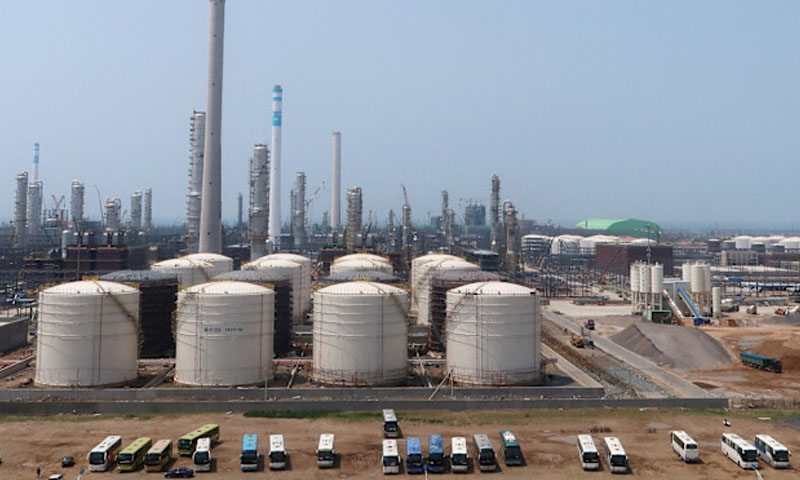
BEIJING: China signals possible return of fuel exports from May as major state oil companies apply for export permits, with shipments of jet fuel, gasoline and diesel expected to resume, according to the Financial Times citing trading sources.
Beijing is reportedly planning to prioritise jet fuel exports to Asian countries facing tight supply conditions, the report added, citing a person familiar with China’s export intentions.
Separately, the United Arab Emirates has announced it will withdraw from the Organization of the Petroleum Exporting Countries (OPEC), marking a significant rupture in the global oil producers’ alliance amid escalating regional tensions and disruption in Middle East energy routes.
The decision, which will take effect on May 1, deals a blow to the cartel and its de facto leader Saudi Arabia, and comes at a time when global energy markets are already under strain from conflict-related disruptions and volatility in oil prices.
The UAE energy ministry said the move followed a comprehensive review of its production policy and long-term strategy, adding that leaving OPEC would provide Abu Dhabi with greater flexibility to respond to market conditions.
The ministry expressed appreciation for OPEC and its broader OPEC+ alliance, saying it wished the group success despite the departure.
The UAE, one of the world’s largest oil exporters and a key regional business hub, joined OPEC in 1967 through the Emirate of Abu Dhabi and remained a member after the formation of the UAE in 1971. It has played a significant role in shaping production decisions within the group.
The withdrawal represents a rare fracture in an organisation that has historically sought to present a unified front despite internal divisions over production quotas, pricing strategy and geopolitical tensions.
Meanwhile, Euro zone bond yields rose to multi-week highs on Tuesday after an ECB survey showed consumers expect higher inflation, increasing bets that the European Central Bank may raise interest rates in the coming months.
Germany’s two-year yield, which is sensitive to interest rate changes, climbed to 2.6668 per cent, its highest level since April 7, before easing slightly to 2.6446 per cent. The 10-year German bond yield also touched a two-week high of 3.086 per cent and was last up 3.3 basis points at 3.0718 per cent.
The rise in yields came as investors reacted to growing inflation concerns, driven by higher energy prices and ongoing geopolitical tensions. Markets remain worried about disruptions in energy supplies, especially due to continued uncertainty in the Strait of Hormuz, which has helped push oil and gas prices higher.
Sentiment was also affected by fading hopes of an early end to the conflict between the US, Israel and Iran, which has already disrupted global energy flows. Tensions in the Gulf region have added further pressure on energy markets, increasing inflation risks.
At the same time, investors are closely watching signals from central banks. Many now believe the ECB could be forced to tighten policy to control inflation, even though higher interest rates may slow economic growth.
Adding to concerns, the ECB survey showed a sharp jump in inflation expectations. One-year-ahead expectations rose to 4.0 per cent in March from 2.5 per cent in February, while three-year expectations increased to 3.0 per cent from 2.5 per cent, both well above the ECB’s 2 per cent target.
You May Also Like




- Reuters
- September 14, 2026