
- WEB DESK
- September 4, 2026
Climbers’ urine is accelerating glacier melt on Everest, study warns
-

- WEB DESK
- September 4, 2026
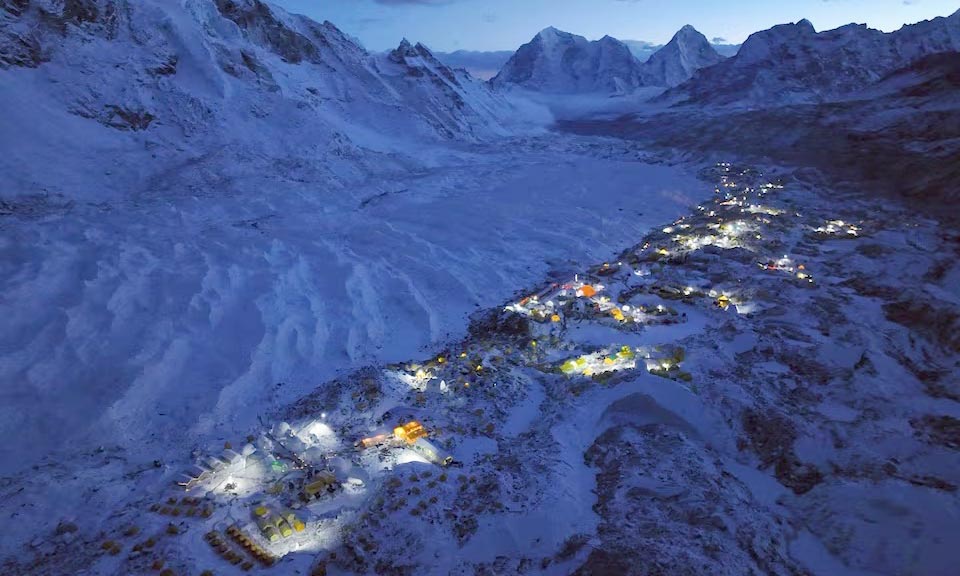
Activities at the Everest Base Camp are contributing to the melting of the Khumbu Glacier, with fuel burned at the site and urine discharged onto the ice generating enough heat to melt an estimated 2,492 tonnes of snow and ice each year, according to new research.
The international study, reported by The Independent, examined the impact of human activity at the glacier, where thousands of climbers, guides and support workers gather during the spring climbing season. The findings were published in the journal Regional Environmental Change.
Everest Base Camp, on the Nepalese side of the world’s highest mountain, becomes a temporary settlement during the climbing season. The camp has grown to include cafes, large-screen televisions, high-speed internet, hot showers and heated tent floors.
Researchers examined energy use at the camp during the 50-day spring season in 2023. About 1,600 tents were operating there, consuming 824 canisters of liquefied petroleum gas, 18,935 litres of kerosene and 5,130 litres of petrol for cooking, heating and electricity.
The researchers calculated that the combined heat generated by fuel use and human urine amounted to 849,174 megajoules.
That energy was estimated to be sufficient to melt 2,492 tonnes of ice and snow. The researchers put the possible range at between 1,964 and 3,020 tonnes.
The amount of water produced by that melting would be equivalent to the capacity of an Olympic-sized swimming pool, about 83 tanker trucks or roughly 16,700 standard bathtubs.
Human urine accounted for a notable share of the estimated heat.
People at high altitude consume large quantities of water to avoid dehydration, with climbers and guides at the camp producing an estimated 6,000 litres of urine each day.
While solid human waste is collected and transported down the mountain, much of the urine is released directly onto the glacier, according to the study.
The researchers estimated that heat from urine alone could melt around 154 tonnes of ice during a single climbing season.
The study also found evidence of a broader warming trend around the base camp. Researchers analysed Landsat satellite imagery covering the period from 1991 to 2023 and found that surface temperatures at the camp had increased by an average of 0.28C per year.
That rate was about twice the increase recorded across the surrounding Khumbu Glacier.
The research team, which included Kim Lal Gautam, a senior surveyor at Nepal’s Department of Land Management, said the estimated human impact was likely an underestimate.
The calculations did not include heat generated by helicopter flights, climbers themselves or the yaks used to transport supplies to the camp.
The researchers stressed that climate change remained the main factor driving the melting of Everest’s glaciers. However, they said concentrating thousands of people on a glacier already experiencing rapid ice loss was not sustainable over the long term.
The team said relocating the base camp to a nearby, more stable area should be considered.
You May Also Like