- WEB DESK
- September 14, 2026
Coordinated militant attacks strike Mali’s capital and regional hubs
-

- Sadia Basharat
- April 25, 2026
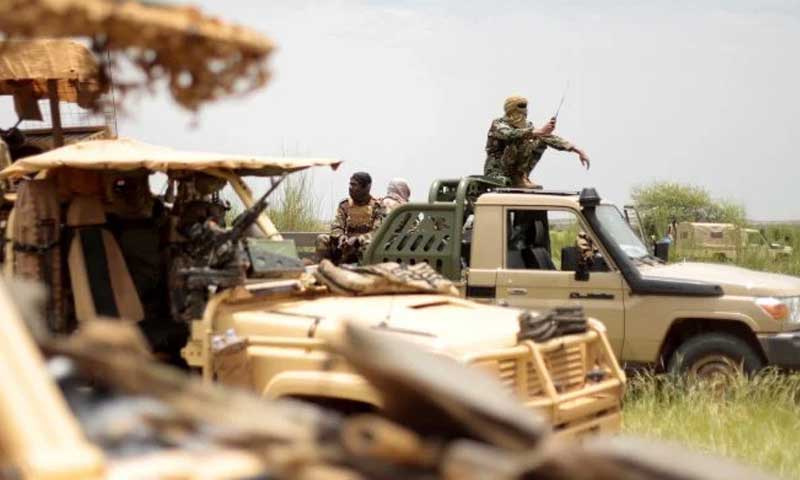
WEB DESK: Militant groups launched a wave of coordinated attacks across Mali on Saturday morning, targeting the capital, Bamako, and several key military installations.
The Malian army has confirmed that operations are currently ongoing to repel the insurgents, while urging the public to remain calm amidst the widespread unrest, according to Pakistan Today.
Explosions and gunfire disrupt the capital
The assault began shortly before 6:00 am local time, with witnesses reporting two powerful explosions followed by sustained gunfire near Kati, the country’s primary military base situated just outside Bamako.
In the wake of the blasts, security forces were deployed to seal off major roads, bringing the capital to a virtual standstill.
The violence was not contained to the outskirts; reports emerged of gunfire near a military camp adjacent to Bamako’s international airport.
This specific facility is known to house Russian mercenary forces, who have been a cornerstone of the ruling junta’s security strategy since the 2020 and 2021 coups.
While the airport itself was not the primary target, the proximity of the clashes has raised significant concerns regarding the security of vital infrastructure.
Escalation across the north and central regions
The scale of the offensive suggests a high level of coordination between various insurgent factions. Beyond the capital, heavy fighting was reported in the central town of Sevare, as well as the northern strongholds of Kidal and Gao.
Mohamed Elmaouloud Ramadane, representing the Azawad Liberation Front a Tuareg-dominated rebel alliance claimed on social media that his forces had successfully seized multiple positions in the north, though these claims remain independently unverified.
Security sources have also linked the al-Qaeda affiliate JNIM (Jama’at Nusrat al-Islam wal-Muslimin) to the morning’s events.
The simultaneous nature of the attacks across such vast distances underscores the persistent volatility in Mali, despite the government’s shift toward new security partnerships.
While the administration of Assimi Goita has historically leaned on Russian support, recent reports indicate a pivot toward the United States, with a potential intelligence-sharing agreement involving drone surveillance currently on the horizon.